
canada visa
Canada Tourist Visa for Nepali Citizens 2026: Latest IRCC Rules
Canada continues to be a highly attractive destination for Nepali travelers because of its natural beauty, modern cities, multicultural lifestyle, and family-friendly travel environment. In 2026, Nepali passport holders who plan to visit Canadafor tourism, holidays, or visiting family and friends must apply for a Canada Visitor Visa (Temporary Resident Visa – TRV) in advance. The visa process is regulated by Immigration, Refugees and Citizenship Canada (IRCC) and follows a structured, documentation-focused assessment.
Sandeep Chaudhary
3 min read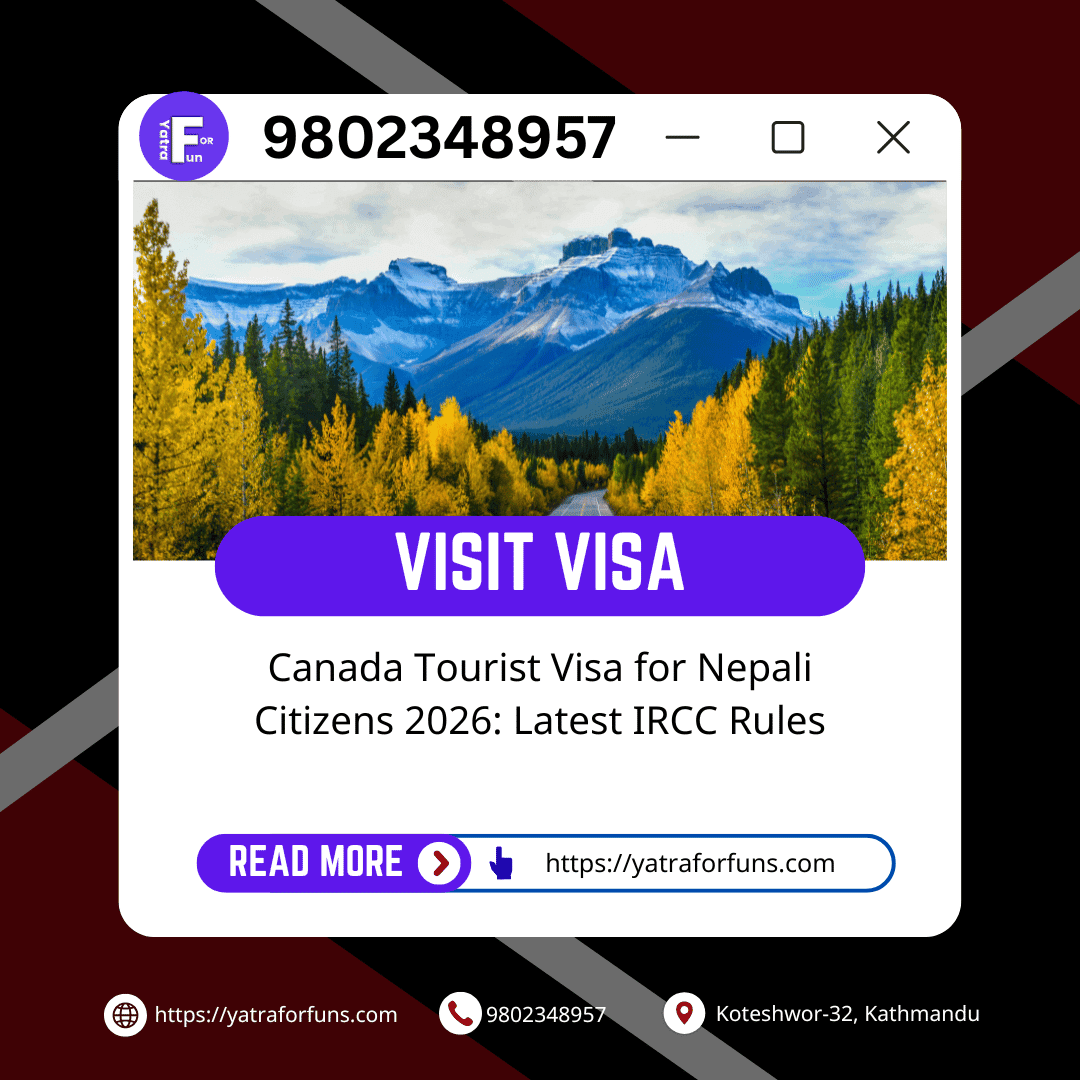
Canada continues to be a highly attractive destination for Nepali travelers because of its natural beauty, modern cities, multicultural lifestyle, and family-friendly travel environment. In 2026, Nepali passport holders who plan to visit Canadafor tourism, holidays, or visiting family and friends must apply for a Canada Visitor Visa (Temporary Resident Visa – TRV) in advance. The visa process is regulated by Immigration, Refugees and Citizenship Canada (IRCC) and follows a structured, documentation-focused assessment.
Nepali citizens are not visa-exempt for Canada. A valid visitor visa must be approved before travel, and meeting the eligibility requirements does not automatically guarantee approval. Each application is assessed individually based on documents, travel intent, and personal circumstances.
Latest IRCC Policy for 2026
Under the 2026 rules, IRCC continues to strongly encourage online applications through the official IRCC portal. Online submission allows applicants to complete forms digitally, upload documents securely, pay fees online, track application status, and respond to additional document requests more efficiently. Paper applications are accepted only in limited situations.
Applicants must clearly demonstrate that their visit to Canada is temporary and that they will return to Nepal after their stay. Strong travel intent, financial stability, and ties to Nepal remain the core decision factors under the updated policy.
Eligibility Requirements
To qualify for a Canada Tourist Visa in 2026, Nepali applicants must show sufficient financial means to cover airfare, accommodation, and living expenses in Canada. Applicants must also demonstrate strong ties to Nepal, such as employment, business ownership, family responsibilities, property ownership, or ongoing studies. Applicants must meet Canada’s health and security standards, and no unauthorized work or long-term study is permitted on a tourist visa.
Required Documentation
A valid passport is mandatory and should generally be valid beyond the intended stay. Applicants must submit clear copies of the passport bio-data page and any previous visas or travel history. A recent passport-size photograph that meets IRCC specifications is required.
Applicants must complete the visitor visa application forms accurately, along with any required family or relationship declaration forms. Proof of financial capacity is critical and may include recent bank statements, savings records, salary slips, employer letters, business income documents, or tax records.
A travel plan should be provided, including tentative flight reservations, accommodation details, and a brief itinerary explaining the purpose of travel. To strengthen the application, applicants should submit evidence of ties to Nepal, such as employment letters, business registration, property documents, family records, or academic enrollment letters.
If visiting family or friends in Canada, an invitation letter and proof of relationship may be included. Depending on the applicant’s profile, IRCC may request additional documents, including medical examinations or police clearance certificates.
Biometrics Requirement
Most Nepali applicants are required to provide biometrics (fingerprints and photograph). After submitting the application and paying fees, applicants receive a biometric instruction letter and must complete biometrics at a designated Visa Application Centre (VAC).
Visa Fees & Processing Time
Visa application fees and biometrics fees are paid online at submission and are non-refundable, even if the visa is refused. Processing times vary depending on application volume, season, and individual case complexity. Applicants are strongly advised to apply 8–10 weeks before their intended travel date to allow sufficient processing time.
Visa Grant & Conditions
If approved, the Canada Tourist Visa allows temporary entry for tourism or personal visits, typically for up to six months per visit, subject to the decision of border officers at entry. Holding a visa does not guarantee entry; final admission is determined by Canadian border authorities. Working or studying without authorization and overstaying are strictly prohibited.
Professional Visa Assistance
Canada’s visa process involves detailed documentation, biometrics, and careful assessment. To reduce errors and delays, many Nepali travelers choose professional support. Yatra For Fun Pvt. Ltd. provides complete Canada Tourist Visa assistance, including eligibility assessment, document checklist guidance, online application support, biometrics guidance, and follow-up until a final decision is received.
For trusted Canada visa assistance, visit https://yatraforfuns.com.
Contact Yatra For Fun Pvt. Ltd.:
Phone / WhatsApp: +977-9802348957, +977-9708072951, +977-9709066745, +977-9709066517
Landline: +977-01-4110514
Email: [email protected], [email protected]
Office: Koteshwor-32, Kathmandu, Nepal, near Rastriya Banijya Bank, Koteshwor Branch
By understanding the latest IRCC rules for Canada Tourist Visas in 2026 and preparing accurate, well-structured documentation, Nepali travelers can improve their chances of approval and plan a smooth, memorable journey to Canada.
Written by
Sandeep Chaudhary
Related News



EVs Luxury Models Taxed Up to
5 min read
From Power to Price: New EV Tax Closes One Loophole but Opens Several Others
Up to Rs 20 lakh: 20% customs + 2.5% infrastructure fee Rs 20-30 lakh: 20% customs + 20% infrastructure fee Rs 30-40 lakh: 20% customs + 35% infrastructure fee Rs 40-50 lakh: 20% customs + 90% infrastructure fee Above Rs 50 lakh: 20% customs + 130% infrastructure fee
Dipesh Ghimire
·2 Jun, 2026

West Seti 400 kV
4 min read
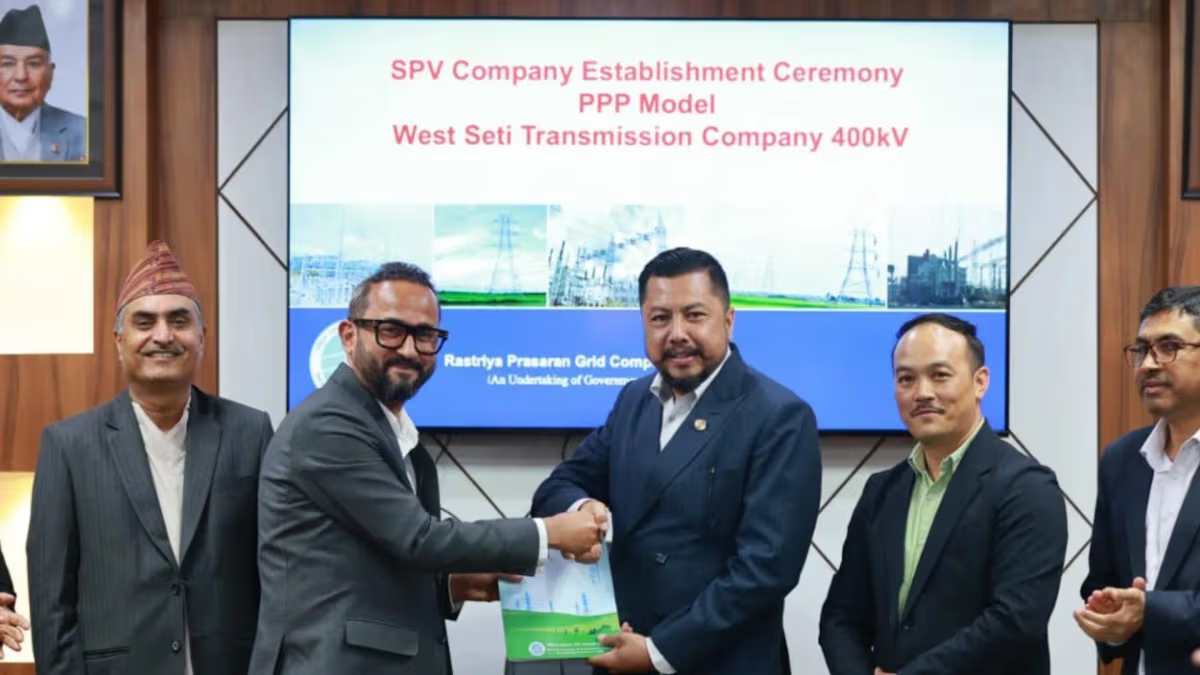
Private Capital Enters Nepal's Power Grid: West Seti 400 kV Line Marks a Structural Shift
Taken together, the project is being viewed as an important milestone in the development of Nepal's transmission infrastructure — both for the precedent it sets in private participation and for the role it could play in turning the far-west into a genuine power-generating region rather than one whose rivers run untapped.
Dipesh Ghimire
·2 Jun, 2026
Budget 2084/84
2 min read
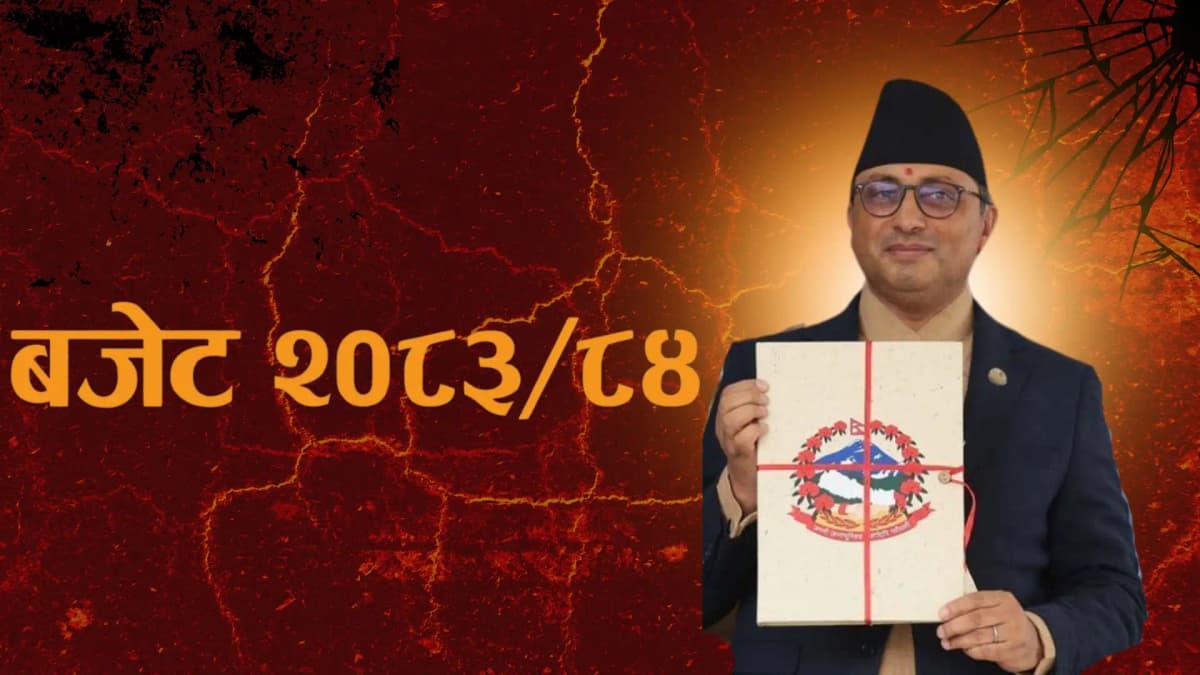
Budget Targets 7% Economic Growth, Vows Structural Reform of the Economy
Finally, the Finance Minister made a heartfelt appeal to all political parties, the private sector, workers, farmers, youths, entrepreneurs, migrant Nepalis, and all citizens to support the nation-building journey that the budget is set to lead, with a shared spirit of civil dialogue, collaboration, meaningful participation, and national unity.
Dipesh Ghimire
·31 May, 2026
Budget 2084/84
<1 min read
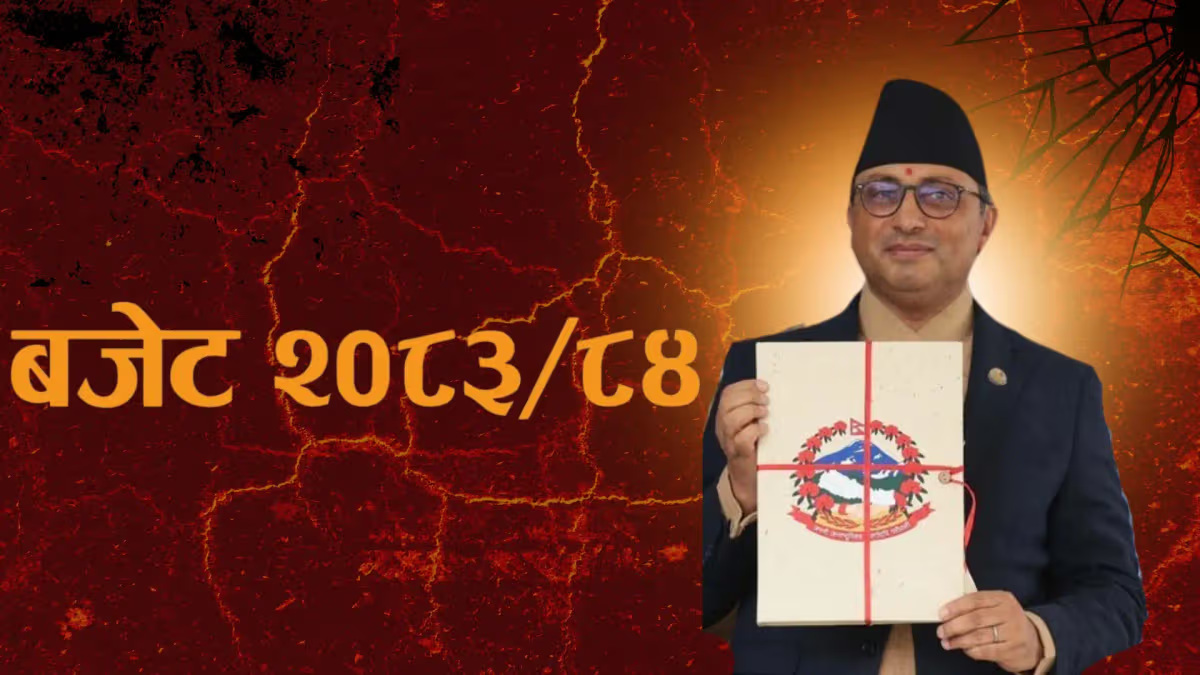
Finance Minister Presents Expenditure Estimates for Three Fiscal Years
The Finance Minister said the details regarding the technical assistance to be received from donor nations and agencies, and the assistance to be mobilised from international non-governmental organisations, have also been presented.
Dipesh Ghimire
·31 May, 2026
