
Top
World Bank Warns Decades of Poverty Gains Could Unravel by 2030 as Shocks Multiply
The World Bank says the pattern of risk is growing across sectors and geographies, making effective policy, targeted investment and international cooperation indispensable. Its flagship Global Economic Prospects report, due next week, is expected to offer further analysis of where the world economy stands and where it may be heading in the months ahead — the next marker to watch for how sharply these warnings are reflected in the hard numbers.
Dipesh Ghimire
3 min read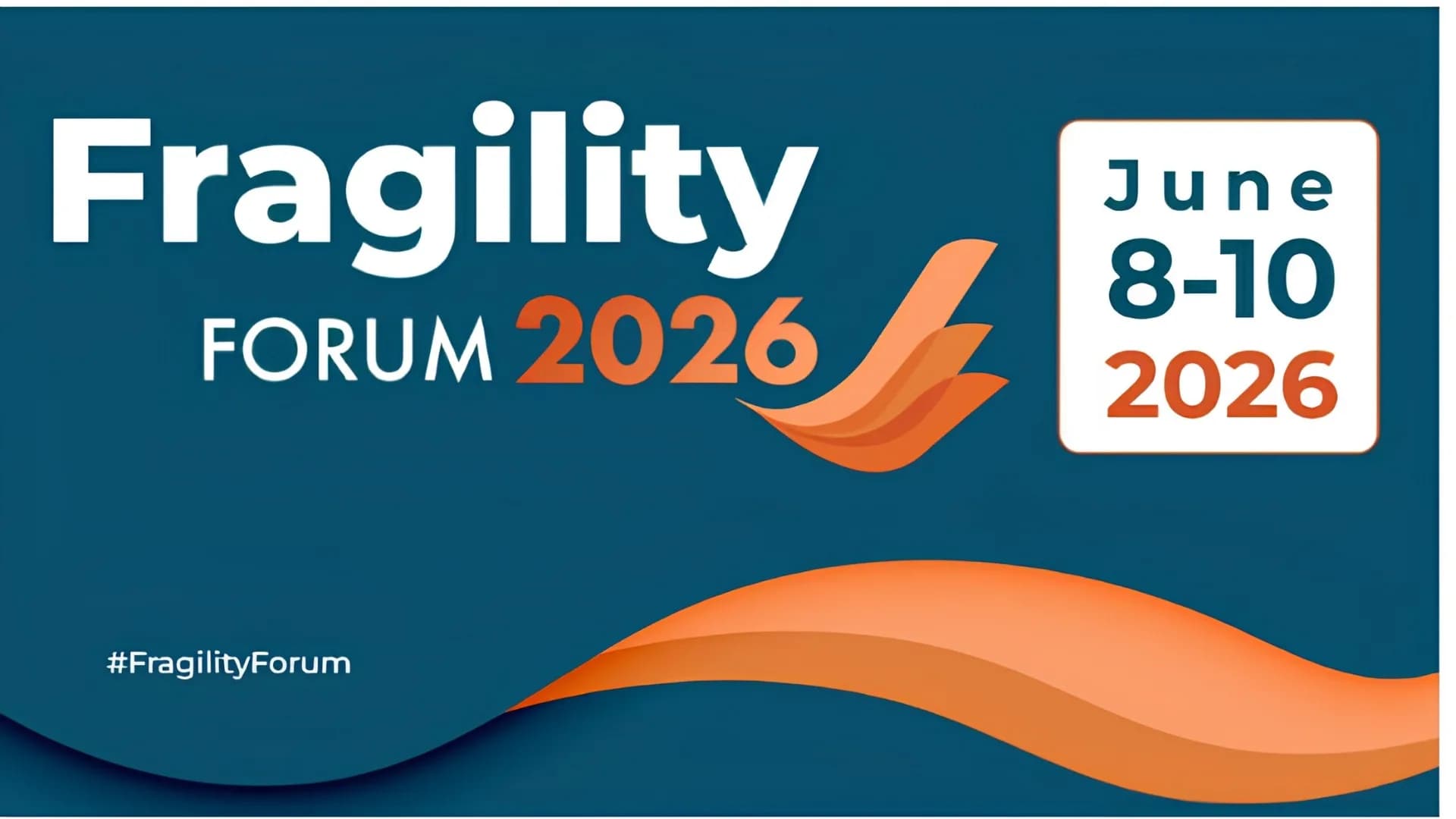
The World Bank Group has warned that the progress made over decades in reducing extreme poverty could go into reverse by 2030. With conflict, violence, climate-driven disasters and health crises pushing the world's poorest communities deeper into jeopardy, the Bank has used its Fragility Forum 2026 to flag the need for urgent, coordinated action.
The forum, running from June 8 to 10, brings together the World Bank Group, governments, development partners and donor agencies to discuss poverty, employment, economic opportunity and risk management. Past experiences, lessons learned and new policy measures are to be presented over its three days.
The choice of theme — fragility — and the choice of deadline are both telling. The year 2030 is the target date for the Sustainable Development Goals, the first of which is the elimination of extreme poverty, so the Bank's warning amounts to an admission that the world is on course to miss that goal. The deeper story is that the frontier of poverty has shifted. The dramatic gains of recent decades came largely from fast-growing Asia; what remains is increasingly concentrated in fragile and conflict-affected states, where poverty is hardest to reach and easiest to reverse. That is precisely why a forum on fragility now sits at the center of the Bank's agenda.
The Caribbean offers a stark illustration. According to the World Bank, countries in the region face a high risk of storms and natural disasters for roughly 183 days a year — half the calendar. A single large storm can wipe out decades of employment growth and economic achievement. To blunt that risk, the Bank says it is investing about USD 235 million in infrastructure and reconstruction across 11 countries.
The interpretation that matters here is uncomfortable. For small and vulnerable economies, disaster is not an event that interrupts development but a permanent condition that defines it — the trap of "development in reverse," in which each rebuild starts from a lower base. Against that backdrop, USD 235 million reads less like a solution than a down payment, a reminder of how wide the gap remains between what adaptation costs and what is actually being financed.
The Bank also reframes what counts as a disaster, noting that catastrophes arrive not only suddenly but gradually. Air pollution, it points out, kills some 5.7 million people worldwide every year and costs the global economy the equivalent of around 5 percent of GDP. That is a slow-motion catastrophe larger than most of the acute disasters that dominate headlines — and it draws a fraction of the attention and money. Yet the Bank argues the ledger can be flipped: evidence is mounting that targeted clean-air policies can themselves generate economic returns, recasting environmental spending as an investment rather than a cost.
Health is the other front the Bank singles out. About 4.5 billion people — more than half of humanity — currently lack access to basic health services. Artificial intelligence, it suggests, could play a significant role in identifying treatment options, supporting health workers and extending services into resource-scarce areas. The promise is real, but it carries a caveat: AI can help a thin system stretch further, not conjure one where none exists. Where the deficit is structural — too few clinics, too few trained workers, too little financing — technology is a multiplier, not a substitute.
Running through all of this is a quieter shift in how the Bank frames development itself — away from growth alone and toward resilience and risk management, on the recognition that gains count for little if they are not protected against the next shock. It is a framing that lands close to home for a country like Nepal, itself exposed to Himalayan climate hazards, wide gaps in health access and heavy dependence on external support.
The World Bank says the pattern of risk is growing across sectors and geographies, making effective policy, targeted investment and international cooperation indispensable. Its flagship Global Economic Prospects report, due next week, is expected to offer further analysis of where the world economy stands and where it may be heading in the months ahead — the next marker to watch for how sharply these warnings are reflected in the hard numbers.
Written by
Dipesh Ghimire
Related News


NEPSE
3 min read
Why the Index Can Mislead: How a Handful of Heavyweights Steer NEPSE
The conclusion is simple but liberating: the NEPSE index is a weighted average, and weighted averages have favorites. To read the market well, watch not just the number that moves, but the handful of heavyweights doing the moving.
Dipesh Ghimire
·5 Jun, 2026

Deposit
3 min read
Rs 8 Trillion in the Vault, Few Takers at the Counter: Deposit Milestone Masks a Credit Drought
Until that turn comes, the pattern looks set to persist: deposits climbing, loans crawling, and the central bank vacuuming up the difference. Rs 8 trillion is a number that flatters the system. Money waiting, after all, is not money working.
Dipesh Ghimire
·5 Jun, 2026