SEBON Employee Unions Protest Ministry Interference, Demand Immediate Withdrawal of Directive
Author
NEPSE TRADING
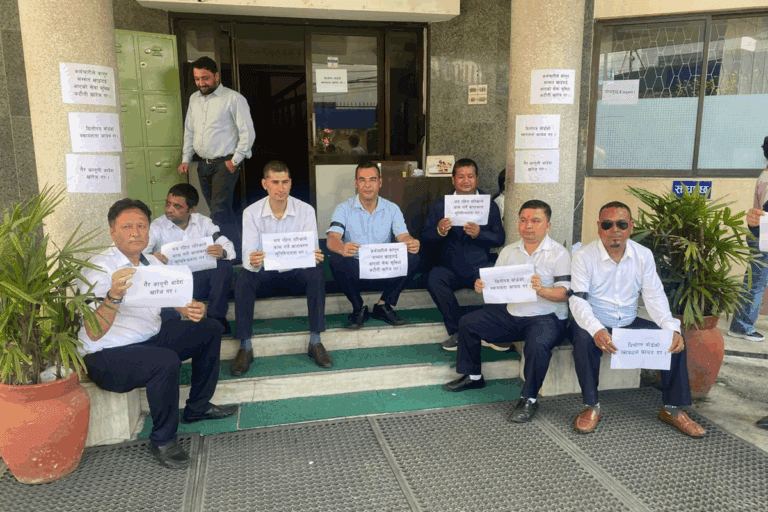
Acknowledging the achievements of the Gen Z movement of Bhadra 23–24, 2082, and supporting the nationwide anti-corruption campaign, the employee unions of the Securities Board of Nepal (SEBON) paid tribute to the martyrs and wished for the speedy recovery of the injured. They welcomed the formation of a capital market task force under the Finance Minister and reiterated their commitment to capital market development.
However, SEBON, an autonomous regulator under the Securities Act, has recently faced challenges due to excessive interference by the Ministry of Finance. On Bhadra 31, 2082, the Board received a directive from the Revenue Secretary ordering the withdrawal of employee facilities granted since SEBON’s establishment, along with the recovery of amounts already disbursed. This move has sparked strong opposition from SEBON’s staff unions.
In their statement, the unions highlighted key objections:
SEBON’s autonomy has repeatedly been undermined, raising questions over its independence and effectiveness as a regulator.
Employee benefits were lawfully approved under Section 22 and 116 of the Securities Act, 2063, and Rule 77 of the Employee Service Rules, 2068. The ministry’s order to revoke them is erroneous.
While SEBON still lacks its own physical infrastructure, the ministry unfairly targeted employee facilities.
The decision to recover benefits from even retired and deceased staff was deemed impractical and unjust.
Section 113 of the Securities Act allows the government to issue policy directives only on investor protection and market development. Interference in staff benefits exceeds this mandate.
Employee fund procedures were duly approved by SEBON’s board, which also includes a Finance Ministry representative, making claims of illegality baseless.
Only new positions and pay increments require ministry approval under Section 167 of SEBON’s Employee Service Rules; welfare and security funds do not, as SEBON operates from its own resources.
Employee funds are common across financial institutions like NRB, Nepal Bank, and RBB; singling out SEBON employees as corrupt is unjustified.
Creating fear and psychological pressure among staff undermines SEBON’s vital role in safeguarding the interests of 7 million investors.
The unions have urged the Finance Ministry to immediately revoke the directive and respect SEBON’s autonomy as guaranteed by law. Until the decision is withdrawn, both employee unions warned they will jointly launch phase-wise protest programs.