By Dipesh Ghimire
Banking and Insurance Dominance in Nepal’s Capital Market Continues to Erode

The dominance of banks and insurance companies in Nepal’s capital market has been steadily declining, marking a structural shift in the composition of the stock market. While banking and insurance stocks once overwhelmingly shaped market movements, recent data show their combined share in market capitalization has narrowed significantly as new sectors gain prominence.
According to recent market statistics, the combined share of banks, financial institutions, and insurance companies has fallen to around 52.5 percent of total market capitalization, a sharp drop from nearly 72 percent recorded a few years ago. The contraction reflects the growing presence of companies from hydropower, manufacturing, tourism, investment, and other real sectors in the secondary market.
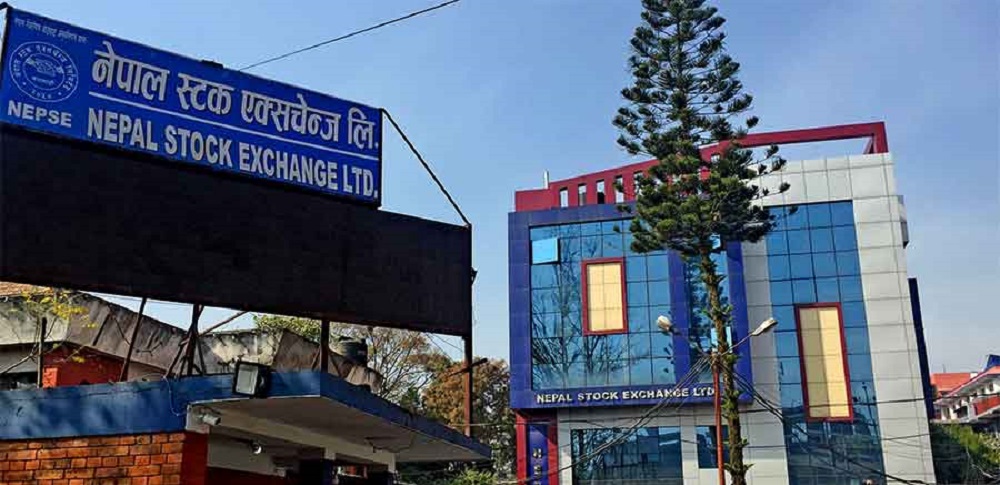
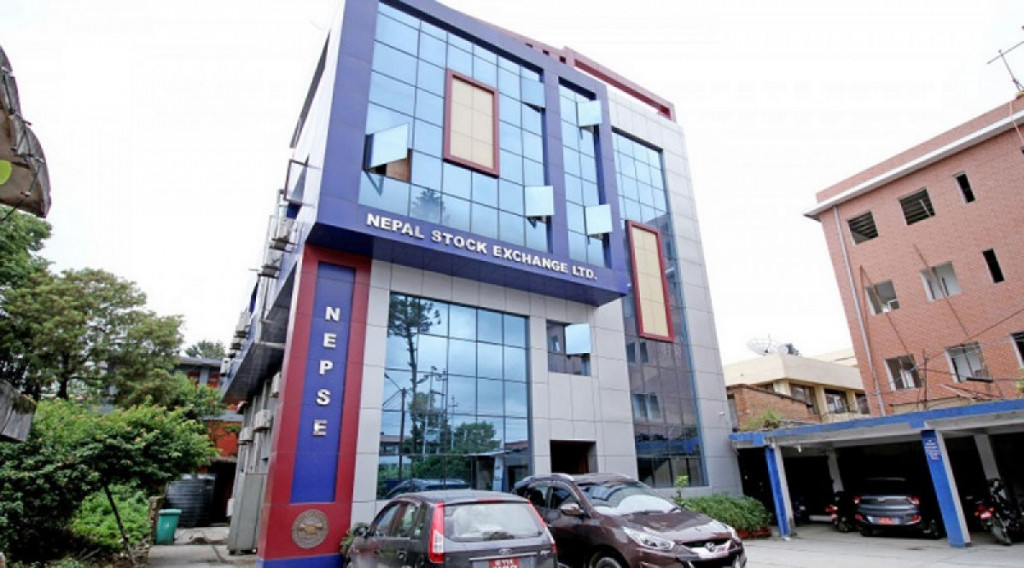
Market analysts attribute this shift primarily to the rapid increase in listings from non-financial sectors, particularly hydropower. Over the past several years, hydropower companies have increasingly raised capital through public offerings, significantly expanding their footprint on the Nepal Stock Exchange Limited. As a result, sectoral concentration has gradually eased, reducing the historical dominance of banks and insurers.
By the end of last month, banking and insurance companies accounted for 52.5 percent of total market capitalization, down from 54.5 percent a year earlier and nearly 72 percent in fiscal year 2018–19 (FY 2075–76). During the same period, the share of hydropower companies stood at 15.2 percent, followed by investment companies at 7.4 percent, manufacturing and processing industries at 6.5 percent, trading companies at 4.9 percent, hotels at 3.1 percent, and other sectors collectively contributing 10.4 percent.
A year earlier, hydropower companies held 15.5 percent of market capitalization, investment companies 7.3 percent, trading companies 6.2 percent, manufacturing industries 5.2 percent, hotels 2.7 percent, and other sectors 8.6 percent. These figures indicate a steady redistribution of market weight rather than a sudden decline in banking and insurance stocks.
Experts note that excessive dominance of a single sector in the secondary market increases systemic risk. Policymakers and regulators have long acknowledged this vulnerability and have promoted sectoral diversification as a way to strengthen market resilience. Encouraging listings from real-economy sectors such as energy, tourism, manufacturing, and trade has therefore been a strategic priority.
To attract such companies, the government has introduced tax incentives and regulatory facilitation for real-sector firms seeking stock market listings. However, despite these measures, market participation from non-financial companies has not expanded as rapidly as policymakers had hoped, suggesting structural and compliance-related hurdles remain.
Data from Nepal Rastra Bank show that by mid-Mangsir 2082, the total number of companies listed on the stock exchange reached 285, up from 267 a year earlier. Among them, 133 belong to the banking and insurance sector, 97 to hydropower, 26 to manufacturing and processing industries, 8 to hotels, 7 to investment companies, 4 to trading firms, and 10 to other categories.
The number of listed companies has increased gradually over the past three years, rising from 267 in mid-Mangsir 2080 to 268 in mid-Mangsir 2081, and then to 285 in mid-Mangsir 2082. While the banking and insurance sector has grown only marginally, hydropower and industrial listings have expanded more visibly during this period.
In the first five months of the current fiscal year 2082–83, additional securities worth Rs 43.24 billion were listed on the exchange. This included Rs 21.96 billion in ordinary shares, Rs 7.46 billion in right shares, Rs 6.25 billion in mutual funds, Rs 3.40 billion in debentures, Rs 3.24 billion in bonus shares, and Rs 925 million in further public offerings (FPOs).
During the same review period, the Securities Board of Nepal approved public issuance of securities worth Rs 20.75 billion, comprising mutual funds, ordinary shares, and right shares. This signals continued regulatory support for capital formation despite subdued secondary market performance.
As of mid-Mangsir 2082, the total paid-up value of 9.11 billion listed shares stood at Rs 896.60 billion. Meanwhile, the benchmark NEPSE index declined from 2,682.29 points in mid-Mangsir 2081 to 2,601.62 points in mid-Mangsir 2082, reflecting weaker investor sentiment.
Total market capitalization also fell year-on-year to Rs 4,368.17 billion, compared to Rs 4,449.11 billion a year earlier. Consequently, market capitalization as a percentage of gross domestic product declined from 77.93 percent to 71.52 percent, underscoring the broader slowdown in capital market momentum.
Despite the ongoing decline in banking and insurance dominance, analysts argue that the trend represents a healthy structural evolution rather than a negative development. A more diversified market, they say, reduces concentration risk and aligns the stock exchange more closely with the real economy. However, sustaining this transition will require deeper reforms to attract quality companies from productive sectors and restore long-term investor confidence.