By Dipesh Ghimire
Excess Liquidity Piles Up as Banks Show Reluctance to Expand Credit Despite NRB’s Easing Measures
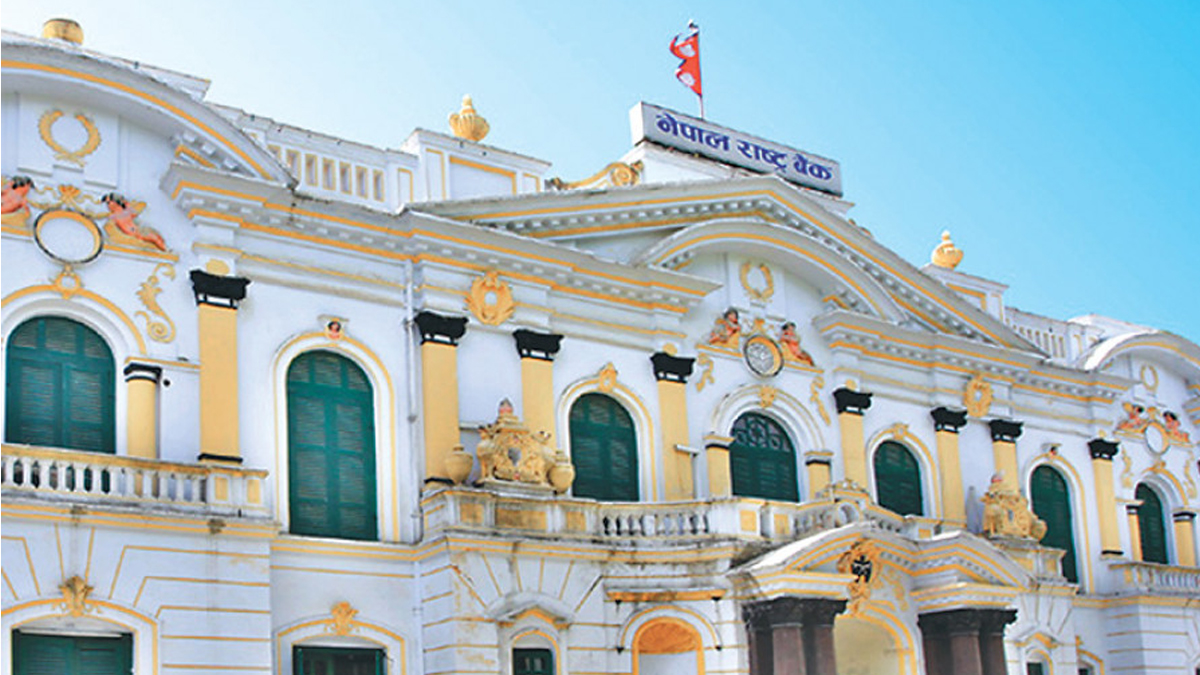
Kathmandu — Despite Nepal Rastra Bank (NRB) adopting an expansionary monetary policy stance in the current fiscal year aimed at boosting credit growth, commercial banks remain hesitant to significantly expand lending. Instead of aggressively pushing loans into the economy, banks are increasingly competing to park their surplus funds in short-term liquidity absorption instruments issued by the central bank. This behavior clearly signals a deeper lack of confidence in credit expansion prospects, even after regulatory easing measures.
The data reveals a striking liquidity imbalance within the banking system. Although deposits have continued to grow steadily, credit demand has not kept pace. As a result, more than NPR 838 billion (8.38 trillion rupees) has accumulated at Nepal Rastra Bank in various forms, including deposit collection instruments, standing deposit facilities, and central bank bonds. This reflects the inability—or unwillingness—of banks to deploy funds into productive sectors of the economy.
On the same day alone, the central bank absorbed NPR 157.75 billion in liquidity through a combination of deposit collection instruments and standing deposit facilities. Out of this amount, NPR 30 billion was absorbed for 87 days at an average interest rate of 2.63 percent. Although financial institutions submitted bids worth NPR 74.90 billion through 54 applications from 17 institutions, NRB accepted only NPR 30 billion as per its target. This indicates that banks are aggressively seeking low-risk parking avenues, even at relatively modest returns, instead of expanding loan books.
Currently, banks hold more than NPR 1.1 trillion in investable funds. However, credit expansion remains subdued. Nepal Rastra Bank reports total deposits in the banking system at NPR 7.743 trillion, while total loans stand at NPR 5.806 trillion. Although banks are permitted to lend up to 90 percent of deposits, the current credit-to-deposit ratio stands at only 74.23 percent. This means banks still have the capacity to lend more than NPR 1.162 trillion, yet that potential remains untapped.
The central bank has implemented several measures to stimulate lending. These include increasing the collateral-based microcredit ceiling from NPR 700,000 to NPR 1.5 million, reducing the standing liquidity facility rate, expanding the overdraft limit for individuals from NPR 5 million to NPR 10 million, and allowing restructuring and rescheduling of loans for flood and landslide-affected borrowers. Furthermore, borrowers from microfinance institutions have been given flexibility in repayment schedules to ease financial pressure. However, these measures have not translated into meaningful credit growth so far.
The core issue appears to lie not in liquidity availability but in weak credit demand and heightened risk perception. Businesses are reportedly more focused on repaying existing loans rather than taking new ones, reflecting cautious sentiment amid economic slowdown and financial strain. Additionally, banks are prioritizing risk management and asset quality preservation over aggressive loan expansion. Rising non-performing loans in recent years may also be contributing to this conservative stance.
Excess liquidity has further exerted downward pressure on interbank interest rates. To prevent interbank rates from falling below the policy corridor floor, the central bank has been compelled to absorb liquidity twice a week, typically on Sundays and Wednesdays. Over the past three years, such regular liquidity absorption operations have become a structural feature of Nepal’s monetary operations. At times, NRB has also used treasury bills and central bank bonds as alternative liquidity management tools.
The accumulation of NPR 510.35 billion in deposit collection instruments, NPR 127.75 billion in standing deposits, and NPR 200 billion in central bank bonds highlights the magnitude of surplus liquidity. This pattern suggests that while monetary policy is technically accommodative, its transmission into real economic activity remains weak. The intended objective of stimulating private sector credit and investment has not yet materialized in tangible results.
From a broader economic perspective, this situation signals a disconnect between monetary easing and economic revival. While the central bank is lowering borrowing costs and relaxing lending limits, the private sector remains cautious. Economic uncertainty, low business confidence, subdued consumption demand, and repayment burdens are dampening credit appetite. Until business confidence improves and productive investment opportunities expand, liquidity may continue to accumulate within the banking system.
In conclusion, Nepal’s banking sector is currently characterized by abundant liquidity but weak credit expansion. The central bank’s strategy to boost lending through regulatory relaxation has so far faced limited response from banks and borrowers alike. The growing competition among banks to park funds at NRB rather than lend to the real economy reflects deepening caution within the financial system. Unless economic activity strengthens and demand for credit rebounds, the effectiveness of the current expansionary monetary policy may remain constrained in the short term.