By Dipesh Ghimire
Nepal Lifts Cap on Automatic Route FDI, Signaling a Major Shift in Investment Policy
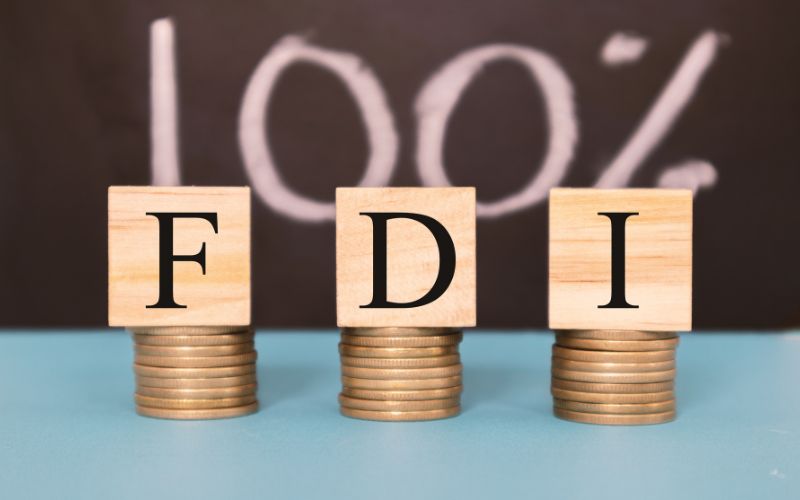
The government of Nepal has removed the maximum investment limit for foreign direct investment (FDI) entering the country through the automatic route, marking a significant policy shift aimed at easing investment procedures and attracting large-scale foreign capital. With the ceiling now abolished, foreign investors can bring in unlimited funds into designated sectors without requiring prior government approval.
Previously, investments through the automatic route were capped at NPR 500 million. While this upper limit has been scrapped, the minimum investment threshold of NPR 20 million has been retained. However, technology-based industries have been exempted from the minimum requirement, reflecting the government’s intention to promote innovation-driven investment.
The policy change follows a Cabinet decision made on January 22 and has been formally implemented through a notice published in the Nepal Gazette by the Ministry of Industry, Commerce and Supplies. The new notice replaces an earlier directive issued in October 2023, effectively expanding the scope and scale of investment eligible under the automatic route as provided by the Foreign Investment and Technology Transfer Act, 2019.
Government officials believe the move will significantly simplify the business registration process, making it faster, more transparent, and less bureaucratic. By eliminating lengthy approval procedures, authorities expect Nepal to become a more competitive destination for foreign capital, technology transfer, and industrial development.
Seven Broad Sectors Opened for Unlimited Automatic Route Investment
Under the revised framework, seven major sectors have been brought under the automatic route: energy, agriculture and forest-based industries, infrastructure, tourism, information technology, service industries, and manufacturing. Within these sectors, dozens of specific sub-sectors are now eligible for unlimited foreign investment without prior clearance.
According to the ministry, the list includes 4 energy-related sub-sectors, 13 agriculture and forest-based industries, 8 infrastructure categories, 4 tourism-related industries, 9 information technology activities, 13 service-oriented industries, and as many as 41 manufacturing sub-sectors. Officials say the breadth of coverage is intended to diversify FDI inflows beyond traditional areas.
Energy and Agriculture Positioned as Key Beneficiaries
In the energy sector, industries related to wind, solar, biomass, natural oil and gas, energy equipment manufacturing, biogas, cogeneration from sugar mills, and feasibility studies have been opened for unlimited foreign investment. This reflects Nepal’s long-term ambition to harness renewable energy and reduce dependence on imports.
Agriculture and forest-based industries have also been given priority. These include food processing, cold storage, fruit and vegetable preservation, animal feed production, tea and coffee processing, herbal industries, rubber processing, plywood, paper, resin, cotton processing, and timber-based manufacturing. Policymakers expect this to strengthen value addition and rural employment.
Infrastructure, Tourism, and IT Get Major Policy Boost
Infrastructure-related industries such as convention centers, vehicle parking facilities, export processing zones, cargo complexes, wastewater treatment plants, film cities, commercial complexes, and private warehouses are now fully covered by the automatic route. This is expected to ease capital inflow into large, long-gestation projects.
Tourism-related businesses—including hotels, resorts, restaurants, wellness centers, sports tourism facilities, amusement parks, and water parks—have also been opened for unlimited FDI. With tourism slowly recovering, the government hopes foreign capital will help modernize facilities and improve service quality.
The information technology sector has emerged as a major policy priority. Technology parks, IT parks, data centers, cloud computing, software development, BPO and KPO services, web hosting, and data mining are all included. Notably, IT investments are exempt from the minimum capital requirement, signaling a strong push toward a digital economy.
Manufacturing and Service Industries Broadly Included
The manufacturing sector accounts for the largest number of eligible industries. These include cement, steel rods, bricks and tiles, vehicle and equipment manufacturing, electronics, medical devices, cables, fertilizers, rice mills, water processing, bitumen, furniture, soap and shampoo, textiles, beverages, sugar, starch, and animal feed, among others.
Service industries such as hospitals, nursing homes, rehabilitation centers, yoga and meditation centers, waste management, construction services, heavy equipment rental, diagnostic laboratories, logistics, and international cargo services have also been included. The government believes this will help strengthen service delivery and job creation.
What the Automatic Route Means for Investors
The automatic route allows foreign investors to invest in approved sectors without seeking prior approval from government agencies. Earlier, investors had to go through lengthy processes involving the Department of Industry or the Investment Board, often facing delays and procedural complexity.
Under the new system, investors can register a company with the Office of the Company Registrar and notify the industry authorities before directly bringing in capital. The government claims this will significantly reduce paperwork and approval time, improving Nepal’s ease of doing business.
FDI Commitments Exceed NPR 40 Billion in Seven Months
According to the Department of Industry, Nepal received foreign investment commitments exceeding NPR 40.28 billion in the first seven months of the current fiscal year. During this period, investment proposals for 524 industries were approved.
Of the total commitment, only NPR 3.25 billion was pledged through the automatic route across 351 industries, while NPR 37.03 billion came through the approval route covering 173 industries. These investments are expected to generate nearly 21,000 jobs.
In addition, investments worth NPR 4.26 billion were committed through share purchase and share subscription agreements in 34 industries, while 33 technology transfer agreements were approved during the same period.
Dividend Repatriation Rises as Business Visas Decline
Despite policy efforts to attract fresh investment, the number of foreign investors seeking business visas has declined. In the first seven months of the fiscal year, 1,382 investors applied for business visa recommendations, down from 2,117 in the same period last year.
At the same time, dividend repatriation has surged. Foreign investors were permitted to repatriate NPR 16.26 billion in dividends during the seven-month period—almost double last year’s figure. Royalty repatriation approvals reached NPR 4.19 billion, with a sharp spike recorded in January alone.
Easier Entry, Tougher Questions Ahead
The removal of the automatic route ceiling marks a bold step toward liberalizing Nepal’s investment regime. While the policy is expected to improve capital inflows and technology transfer, the relatively low share of automatic route investments so far raises questions about investor confidence and project readiness.
Moreover, the rapid rise in dividend and royalty repatriation has sparked debate about the quality and long-term impact of foreign investment. Analysts argue that attracting capital alone is not enough; ensuring reinvestment, productivity gains, and sustainable employment will be equally critical.
As Nepal opens its doors wider to foreign investors, the success of this policy will ultimately depend on regulatory consistency, infrastructure readiness, and the government’s ability to balance ease of investment with long-term economic value.