By Dipesh Ghimire
NEPSE Under Pressure Amid Scam Fears: What Next for the Market Today?

Kathmandu — Nepal’s stock market is currently facing an intense phase of volatility, driven by ongoing investigations into major market players and growing concerns over a large-scale financial “scam.” After a sharp decline of over 100 points in the previous session, breaking key support levels, investors are now closely watching where the market heads today. The situation has evolved beyond normal market fluctuations into a deeper battle of confidence and sentiment.
The crackdown on influential “big money” investors has significantly disrupted the market structure. With many high-capacity players reportedly stepping back—or even disappearing—from active participation, liquidity has weakened. Large-volume buyers are no longer visible, while selling pressure continues to rise. This imbalance suggests that the market may remain under pressure from the opening bell, with a high احتمال of continued panic selling.
However, some analysts present a contrasting view. They argue that the removal of dominant players could eliminate artificial price manipulation, potentially leading to a healthier market in the long run. That said, such structural correction may take time to materialize. In the immediate term, negative sentiment is likely to dominate trading behavior.
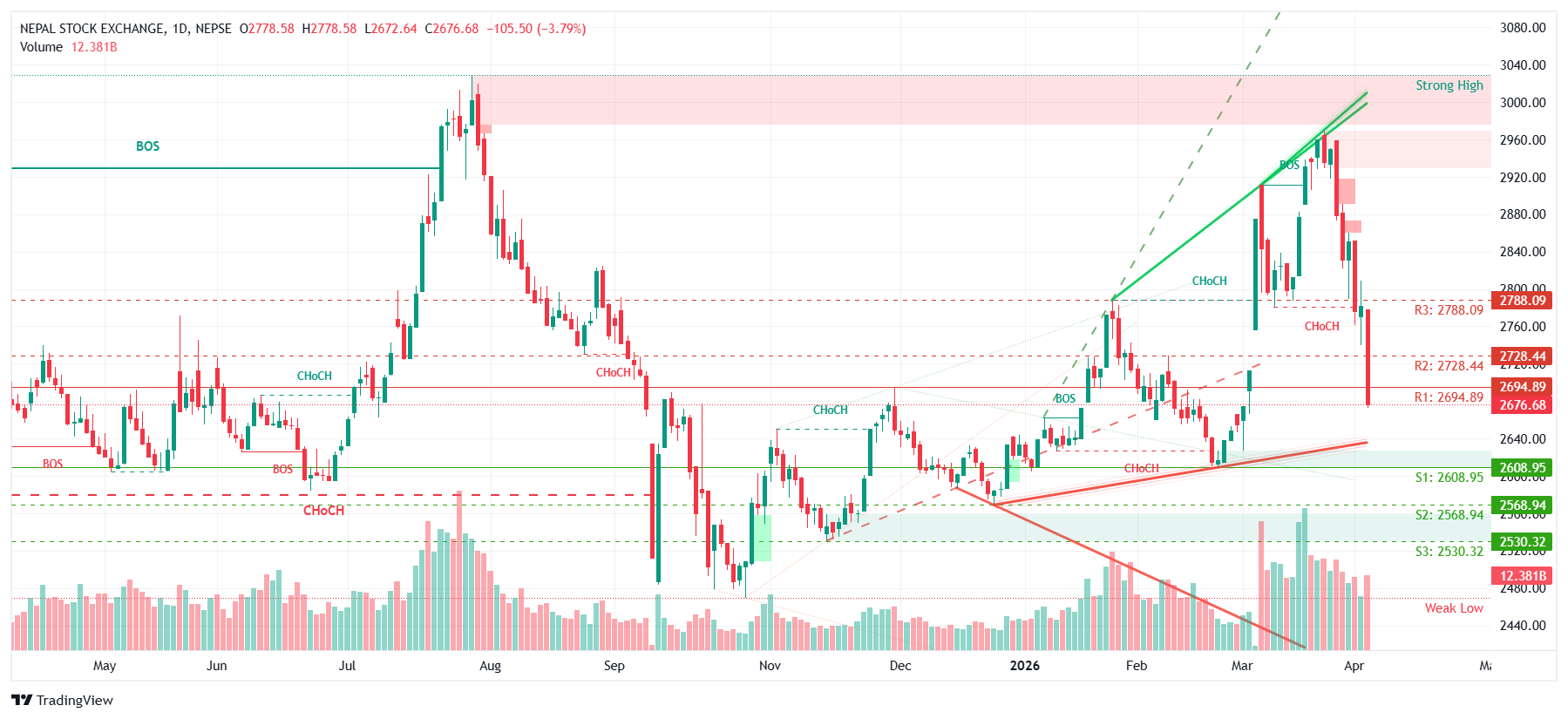
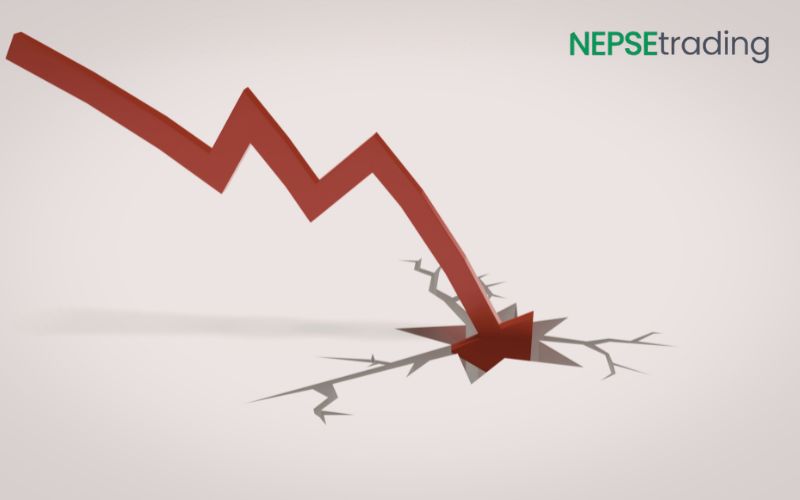
From a technical perspective, the NEPSE index has already confirmed a bearish breakdown. The index closed below the key short-term support zone around 2690, signaling a shift in market structure. The formation of a strong bearish candle, accompanied by high trading volume and a break of the upward trendline, indicates continued downside risk in today’s session.
The immediate focus now lies around the 2600 level, which is considered a critical support zone. If the market fails to hold this level, analysts warn of a possible decline toward the 2560–2530 range. Some technical experts have even issued stronger warnings, suggesting that this may not be a normal correction but the beginning of a larger “market accident,” with downside risk extending toward 2200 levels. In such extreme conditions, traditional indicators may lose their effectiveness.
Policy and regulatory uncertainty have further intensified investor concerns. While the government emphasizes cleaning up the market through strict actions, there is a lack of clear measures to stabilize it. Investors have even called for temporary market closure to allow fair investigation, while others demand the immediate introduction of tools like short selling and intraday trading to improve market dynamics.
Meanwhile, reports that the Nepal Insurance Authority is preparing to declare Himalayan Reinsurance as a “problematic company” have added another layer of concern. Any instability in financial institutions could ripple through the broader financial system, increasing pressure on both banks and the stock market. There are also growing fears that heavily leveraged investors may struggle to repay loans, potentially affecting the banking sector.
The brokerage sector is also showing signs of stress. With some broker houses under investigation, operational challenges and liquidity constraints are emerging. If liquidity continues to shrink, any meaningful recovery in the market may become increasingly difficult.
Overall, today’s market direction appears to hinge on two key factors: the intensity of panic selling and the strength of buying support near lower levels. A sharp drop at the opening could trigger further sell-offs, while a strong defense around the 2600 zone may lead to a short-term relief rally.
In conclusion, Nepal’s stock market is currently being driven more by fear than by fundamentals. In such an environment, the key challenge for investors is not predicting the market direction, but managing risk effectively. Today’s session could prove decisive—either marking the continuation of a deeper decline or the emergence of a temporary stabilization.