By Dipesh Ghimire
Nepal Appoints Kiran Pandit as Deputy Governor of Nepal Rastra Bank
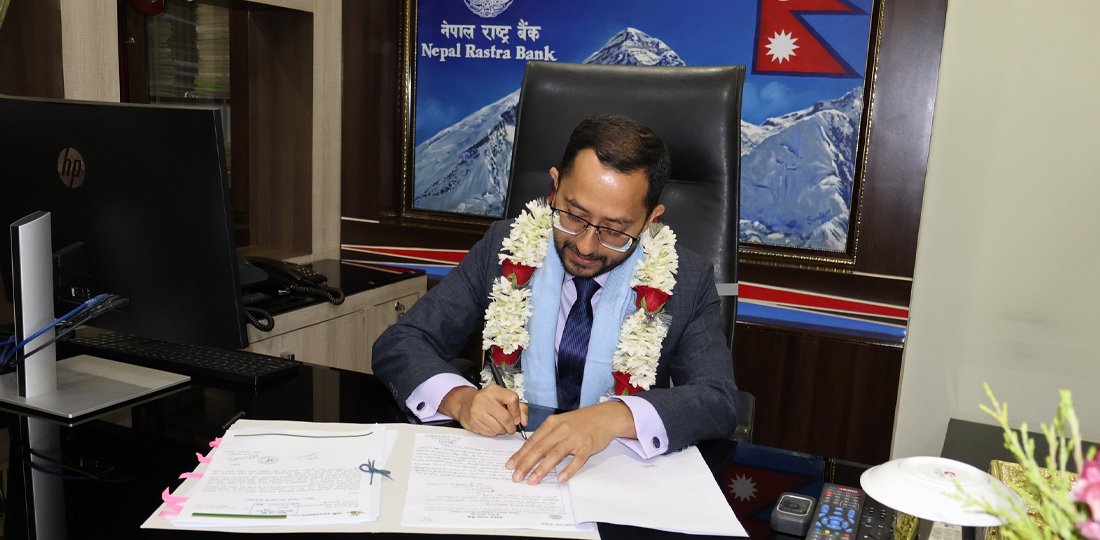
KATHMANDU — In a move that signals the government's intent to restore full leadership at the country's central bank, the Council of Ministers on Tuesday approved the appointment of Kiran Pandit as Deputy Governor of Nepal Rastra Bank. The decision, taken during a cabinet meeting, fills one of two deputy governor positions that had remained vacant for an extended period — a prolonged leadership gap that had drawn quiet concern among financial sector observers and banking industry insiders alike. With this appointment, the government appears to be acknowledging that a central bank operating without its full complement of senior leadership is a structural vulnerability that can no longer be left unaddressed.
Pandit is not an outsider parachuted into the role. He is, by every measure, a product of the institution he has now been elevated to help lead. Joining Nepal Rastra Bank nearly two decades ago, he has spent the better part of his career moving through some of the bank's most consequential departments. He has served in the Bank Supervision Department, the Banks and Financial Institutions Regulation Department, and the Financial Inclusion and Consumer Protection Division — three areas that sit at the very core of the central bank's regulatory mandate. Each of these postings required not only technical expertise but also a deep understanding of Nepal's complex and often fragile financial ecosystem. The fact that he rotated through all three suggests a deliberate grooming by the institution itself.
His ascent through the ranks accelerated in recent years. On Falgun 20, 2081, Pandit was promoted to the position of Executive Director — one of the most senior non-governor ranks within the central bank's hierarchy. In that capacity, he first led the Payment Systems Department, where he would have overseen Nepal's rapidly evolving digital payment infrastructure at a time when the country was pushing hard to modernize its financial plumbing. He was later transferred to the Foreign Exchange Management Department, a posting of considerable strategic sensitivity given Nepal's chronic current account pressures and the regulatory complexities surrounding remittance flows and foreign currency reserves. For a period during this tenure, he also served as the official spokesperson of Nepal Rastra Bank — a role that demanded not just institutional knowledge but the ability to communicate clearly and credibly with the public, media, and markets.
Perhaps the clearest institutional recognition of Pandit's standing came during Nepal Rastra Bank's 69th anniversary celebrations, when he was honored as the best employee of the organization. Winning that distinction out of a pool of 1,147 employees is not a ceremonial footnote — it reflects a peer and institutional judgment that he represented the highest standard of professional conduct and contribution within one of the country's most technically demanding workplaces. It is the kind of recognition that carries weight precisely because it comes from within.
Academically, Pandit's foundation is rooted in Nepal's own educational institutions. He completed his Bachelor of Business Studies from Public Youth Campus and graduated at the top of his batch within Tribhuvan University — a distinction that speaks to early intellectual rigor. He later pursued a Master's degree in Sociology from Tri-Chandra Campus, an unusual academic choice for a central banker, but one that arguably equipped him with a broader lens through which to understand the social dimensions of monetary policy and financial inclusion — areas that are increasingly central to how modern central banks define their mandates.
His international academic exposure adds further depth to his profile. He completed a professional course in Climate Finance at Griffith University in Australia — a field that is rapidly becoming relevant to central banking as regulators worldwide grapple with how climate risk translates into financial system risk. He also holds a certification in Decentralized Finance from Duke University in the United States, signaling familiarity with the frontier of financial technology and the regulatory challenges it poses. Additionally, he completed a course in Humanitarian Communication from the University of Geneva in Switzerland. Taken together, these international credentials suggest a banker who has been deliberately broadening his intellectual horizons well beyond the conventional boundaries of monetary economics — and who understands that the challenges facing a 21st-century central bank extend far beyond interest rates and reserve ratios.
The timing and context of this appointment carry their own significance. Nepal Rastra Bank has been navigating a particularly demanding period — managing liquidity in a sluggish economy, overseeing a banking sector under stress from rising non-performing loans, and attempting to modernize its regulatory frameworks at a time of rapid technological change in financial services. Doing all of this with incomplete senior leadership was always a structural weakness. The appointment of Pandit addresses part of that gap, though one deputy governor position still reportedly remains vacant, meaning the central bank's leadership structure is not yet fully restored.
From the perspective of the financial market, the appointment is likely to be received as a stabilizing signal. Pandit's long institutional tenure means he inherits no learning curve on how Nepal Rastra Bank functions — he already knows its culture, its constraints, and its capabilities from the inside. His experience in bank supervision and regulation makes him well-positioned to engage with the ongoing challenges in Nepal's banking sector, where concerns about asset quality and credit growth have persisted. His background in payment systems is also timely, given that Nepal's digital financial infrastructure is at a critical stage of development and requires consistent, informed oversight at the highest levels.
What this appointment ultimately represents is a quiet but consequential bet by the government — that institutional continuity, deep domain knowledge, and a track record built over two decades inside Nepal Rastra Bank itself is the right foundation for navigating the years ahead. Whether that bet pays off will depend not only on Pandit's individual capabilities, but on the policy environment in which he operates, the independence the central bank is afforded, and the speed with which the remaining leadership vacancy is filled. For now, Nepal's financial sector has one fewer uncertainty to contend with — and in the current climate, that alone is worth noting.