By Sandeep Chaudhary
Broad Money Supply Shrinks Rs. 58 Billion: What It Means for Nepal’s Economy
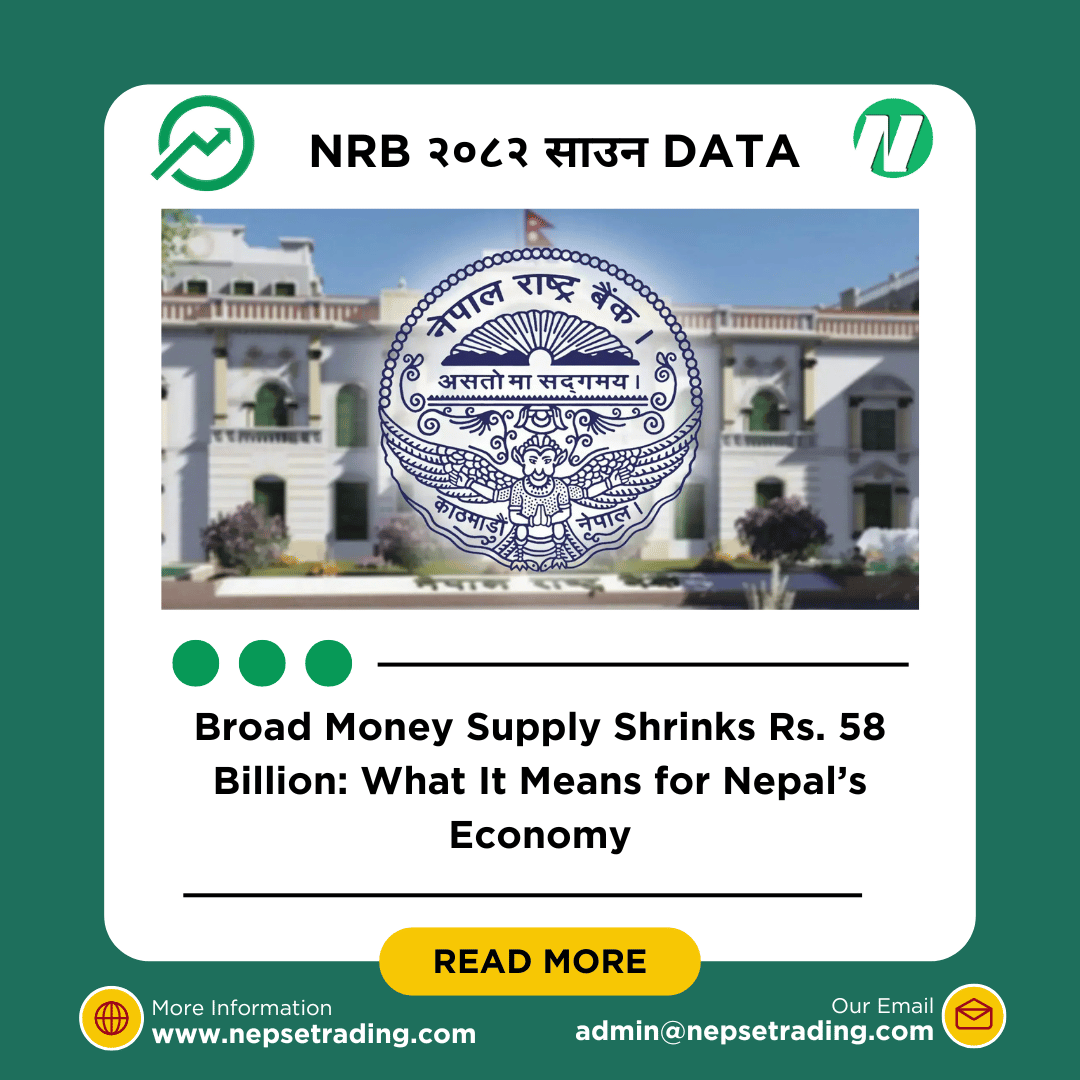
Nepal’s financial system witnessed a notable liquidity contraction in August 2025, as Broad Money (M2) decreased by Rs. 58 billion, falling to Rs. 7.78 trillion from Rs. 7.84 trillion in the previous month. This decline reflects both structural and cyclical pressures on the economy.
The drop in M2 was driven by a fall in Money Supply (M1+), which fell by Rs. 36.5 billion, alongside a contraction in time deposits by Rs. 21.4 billion. Within M1, demand deposits experienced the sharpest fall of Rs. 114.6 billion (−22.8%), while currency in circulation remained stable, increasing only marginally by 0.1%. Interestingly, saving and call deposits rose by Rs. 77.3 billion (+2.4%), suggesting that households and businesses are holding liquidity in safer, interest-bearing instruments rather than in cash or active deposits.
This contraction signals a slowdown in domestic credit growth and economic activity. Private sector credit grew by just 0.2%, while claims on government fell significantly. Economists warn that a shrinking broad money supply, despite robust foreign reserve growth, points to weak domestic demand, sluggish investment, and limited confidence among businesses.
The Nepal Rastra Bank (NRB) faces a dual challenge — maintaining strong external reserves on the one hand, while ensuring that adequate liquidity flows into the domestic economy to sustain growth. If this trend persists, businesses could face tighter credit conditions, affecting investment and job creation, even as external buffers remain healthy.