By Sandeep Chaudhary
Commercial Banks Hold Over Rs 1 Trillion of Government Domestic Debt – NRB Mid-September 2025 Data
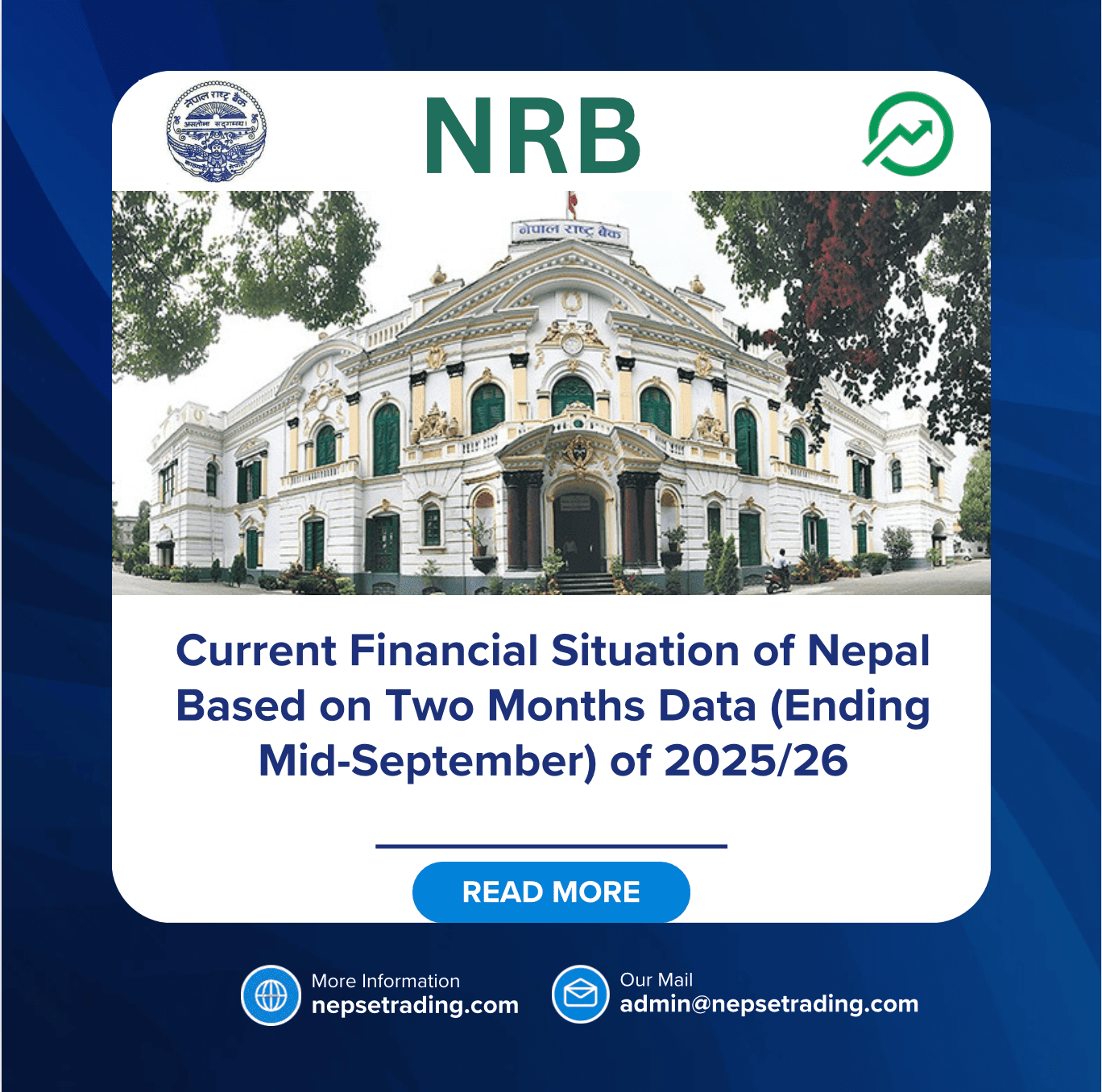
According to the latest data from Nepal Rastra Bank (NRB), commercial banks hold the overwhelming majority of Nepal’s domestic government debt—over Rs 1.02 trillion as of mid-September 2025. This represents nearly 80% of the total outstanding domestic debt, emphasizing the critical role of the banking sector in financing the government’s fiscal operations.
The NRB’s “Outstanding Domestic Debt of the Government of Nepal” table shows that total domestic debt stood at Rs 1.27 trillion, up by Rs 13.6 billion from mid-July 2025. Within this, commercial banks’ exposure was reported at Rs 1,022.86 billion, slightly down from Rs 1,031.86 billion in mid-July—indicating a Rs 9 billion decline in holdings over the two-month period.
The breakdown of instruments shows that commercial banks’ investments are largely concentrated in development bonds (Rs 770.32 billion) and treasury bills (Rs 252.54 billion). Together, these two categories represent more than 99% of banks’ total holdings of government securities. The slight reduction in treasury bill exposure reflects a shift from short-term to long-term instruments, consistent with the government’s recent borrowing strategy.
Other domestic debt holders include development banks (Rs 91.88 billion), finance companies (Rs 17.98 billion), and other institutions and investors (Rs 131.9 billion). The Nepal Rastra Bank’s own holdings stood at Rs 12.04 billion, mostly in secondary market positions.
Economists highlight that while the dominance of commercial banks provides stable financing for the government, it also raises concerns about crowding out private sector credit, especially if the fiscal deficit continues to widen. A more diversified debt market—with greater participation from non-bank institutions, insurance funds, and retail investors—could enhance fiscal resilience and market depth.
The NRB’s data underlines the government’s heavy dependence on the domestic financial system to sustain public financing, reflecting both revenue shortfalls and limited foreign borrowing inflows in FY 2025/26.