By Sandeep Chaudhary
Education Costs Surge 7.67%: Sectoral Breakdown of Nepal’s Inflation
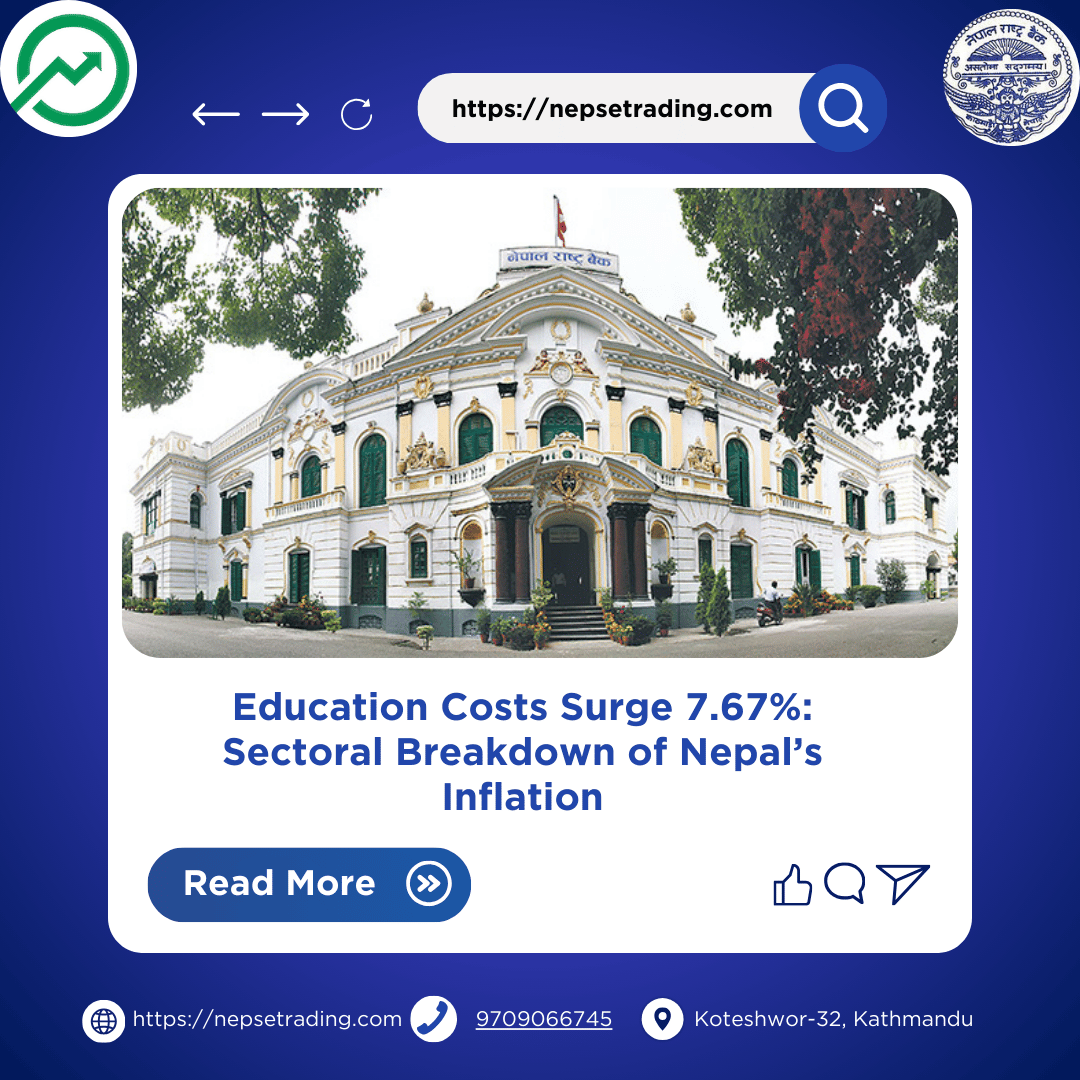
Nepal’s Consumer Price Index (CPI) for the first month of FY 2025/26 highlights a sharp divergence between different sectors, with education emerging as one of the biggest inflation drivers. The overall CPI stood at 104.96, reflecting a 1.68% increase compared to the same month last year and a 4.09% rise compared to three years ago. While food prices provided some relief, the services sector continued to exert steady upward pressure on the cost of living.
The Non-food and Services group, which dominates the CPI with a 64.51% weight, rose by 3.95% year-on-year. Within this category, education costs surged 7.67%, representing the steepest rise among service sub-groups. Rising tuition fees, coaching charges, and educational material costs have made schooling increasingly expensive for families. Alongside education, clothes and footwear increased 6.84%, and miscellaneous goods and services soared 10.60%, both adding to household burdens. Housing and utilities rose moderately by 1.02%, while transportation climbed 3.94%, and health services were up 2.98%. Interestingly, insurance and financial services dipped slightly (-0.22%), offering a small offset to these pressures.
In the Food and Beverages group, which holds 35.49% weight, the story was more mixed. Vegetables crashed by -18.56% year-on-year, providing much-needed relief to consumers. Spices (-4.81%) and meat & fish (-2.41%) also declined. However, essentials like ghee and oil jumped 10.97%, fruit rose 3.01%, and milk and eggs increased 1.83%, showing that household kitchen expenses remain vulnerable to structural inflation. Cereals, the staple food, recorded a 9.15% rise compared to three years ago, even though they dipped slightly from last year.
This sectoral breakdown makes clear that while households are spending less on some food items, they are forced to spend more on non-food essentials like education and clothing, which tend to have less flexibility in consumption. As a result, the burden of inflation is shifting from food volatility toward service-driven structural inflation, which is harder for families to avoid or substitute.