By Dipesh Ghimire
Gen-Z Protests Raise Governance Issues, But Violence Sparks Serious Concerns Over Investment Security in Nepal
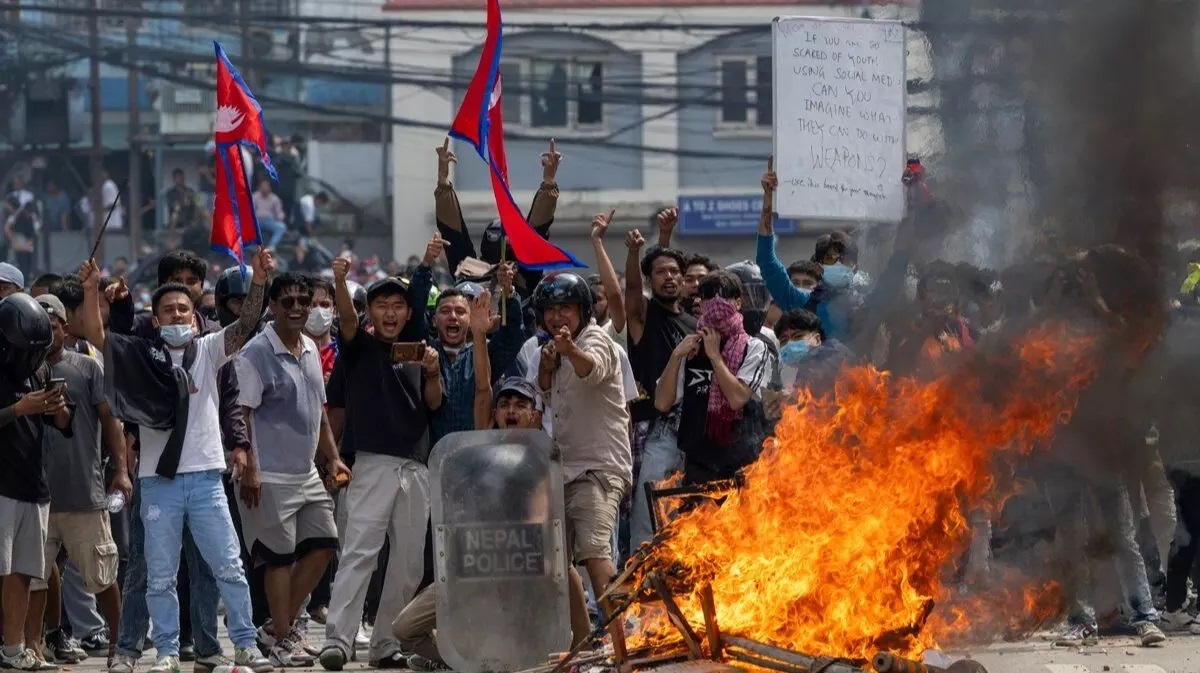
Kathmandu — The recent Gen-Z–led protests in Nepal began with legitimate and widely shared demands, including calls for good governance, transparency, and a corruption-free society. These issues have long been echoed by the private sector and civil society alike. However, the situation took a troubling turn on the second day of demonstrations, when violence, vandalism, looting, and arson targeted private properties and business establishments, creating fear and uncertainty across the investment community.
While the right to peaceful protest is a cornerstone of democracy, the violent acts witnessed during the movement have been widely criticized as unjustifiable. The destruction of commercial buildings and attacks on private enterprises have raised fundamental questions: How can investors be encouraged to invest, and how can investment security be ensured, if businesses themselves become targets during public unrest?
Economic Impact and Investor Confidence at Risk
At a time when Nepal’s economy was beginning to show signs of gradual recovery after two to three challenging years, the sudden unrest has dealt a significant psychological and economic blow. Preliminary estimates suggest that the Gen-Z movement and its violent fallout could impact the country’s Gross Domestic Product (GDP) by approximately 4–5 percent.
The protests have undermined two essential pillars of a market economy: the right to property and the freedom to conduct business. In a broader sense, the notion that private assets are also national assets—contributing to employment, tax revenue, and economic growth—has been seriously shaken.
Repeated attacks on private enterprises during protests send a dangerous signal that law and order cannot be guaranteed, intensifying concerns over investor safety. The private sector has therefore called on the government to clearly identify and address the security challenges exposed by the protests.
Call for Rule of Law and Accountability
There is growing consensus that individuals involved in vandalism, arson, and criminal acts during the protests must face legal consequences. The private sector has emphasized that peaceful demands should never be mixed with criminal behavior, and accountability is essential to restore confidence.
Business leaders are urging the government to:
Take firm action against those responsible for violence and destruction
Ensure rule of law and public safety
Introduce preventive policies so such incidents do not recur in the future
Without clear enforcement and justice, assurances of investment protection will remain unconvincing.
Foreign Investment: A Competitive Global Choice
Foreign investors today have the freedom to invest anywhere in the world. Nepal is not their only option. For this reason, experts stress that investment security and legal guarantees must be embedded in clear policies, laws, and regulations. Investors require predictability, protection of assets, and swift state response during crises.
To rebuild confidence, the government is being urged to:
Strengthen legal frameworks guaranteeing investment protection
Clearly define compensation and insurance mechanisms for damages during unrest
Proactively promote large public-sector projects that crowd in private investment
Such steps could help revive momentum and reassure both domestic and foreign investors.
Favorable Macroeconomic Conditions, Weak Business Sentiment
Ironically, Nepal’s macroeconomic fundamentals are currently relatively strong. The banking system holds ample liquidity, interest rates are low and stable, and the central bank is actively managing liquidity through policy tools. Improved remittance inflows have bolstered foreign exchange reserves, placing the economy in what many describe as a favorable macroeconomic position.
Yet despite low interest rates, credit demand remains weak. The reason is not cost of borrowing, but lack of business confidence. Entrepreneurs are hesitant to expand or take loans in an environment where security risks and policy uncertainty persist.
Economists argue that if the government initiates new infrastructure and development projects, private sector confidence will improve, credit demand will rise, and economic activity will accelerate.
Political Transition and the Road Ahead
As the government prepares for upcoming elections, stability and credibility are critical. Successfully conducting elections will be an important test of governance. More importantly, the next elected government must address public dissatisfaction—much of which stems from slow economic progress and limited opportunities, especially for youth.
Key priorities highlighted by stakeholders include:
Accelerating digitalization of government systems
Reforming outdated laws, regulations, and procedures
Creating new economic opportunities through private-sector-led growth
Ensuring strong investment protection mechanisms
A dynamic economy leads to business growth, higher employment, and improved living standards—outcomes that directly address the frustrations driving youth protests.
Responding to Gen-Z Aspirations
Gen-Z protesters are demanding faster change and real opportunities. Their concerns reflect genuine aspirations for economic inclusion, employment, and a future with dignity. The government is being urged to respond swiftly—not only through dialogue, but through tangible reforms that open doors to innovation, entrepreneurship, and investment.
Investment flows where opportunities and returns are visible. For that to happen, the state must act as a facilitator—building systems that encourage risk-taking, reward productivity, and protect assets.
Conclusion
The Gen-Z movement has highlighted deep-rooted governance and economic issues that Nepal can no longer ignore. However, violence against private property has complicated the path forward, threatening investment confidence at a critical moment.
The way ahead lies in balancing democratic expression with strict rule of law, addressing youth demands through economic reform, and restoring investor trust through clear security guarantees. If handled wisely, the current crisis could become a turning point—laying the foundation for a more resilient, inclusive, and prosperous Nepal.