By Sandeep Chaudhary
Health-Related Travel Shows Surplus of USD +0.2M: Medical Tourism Trends
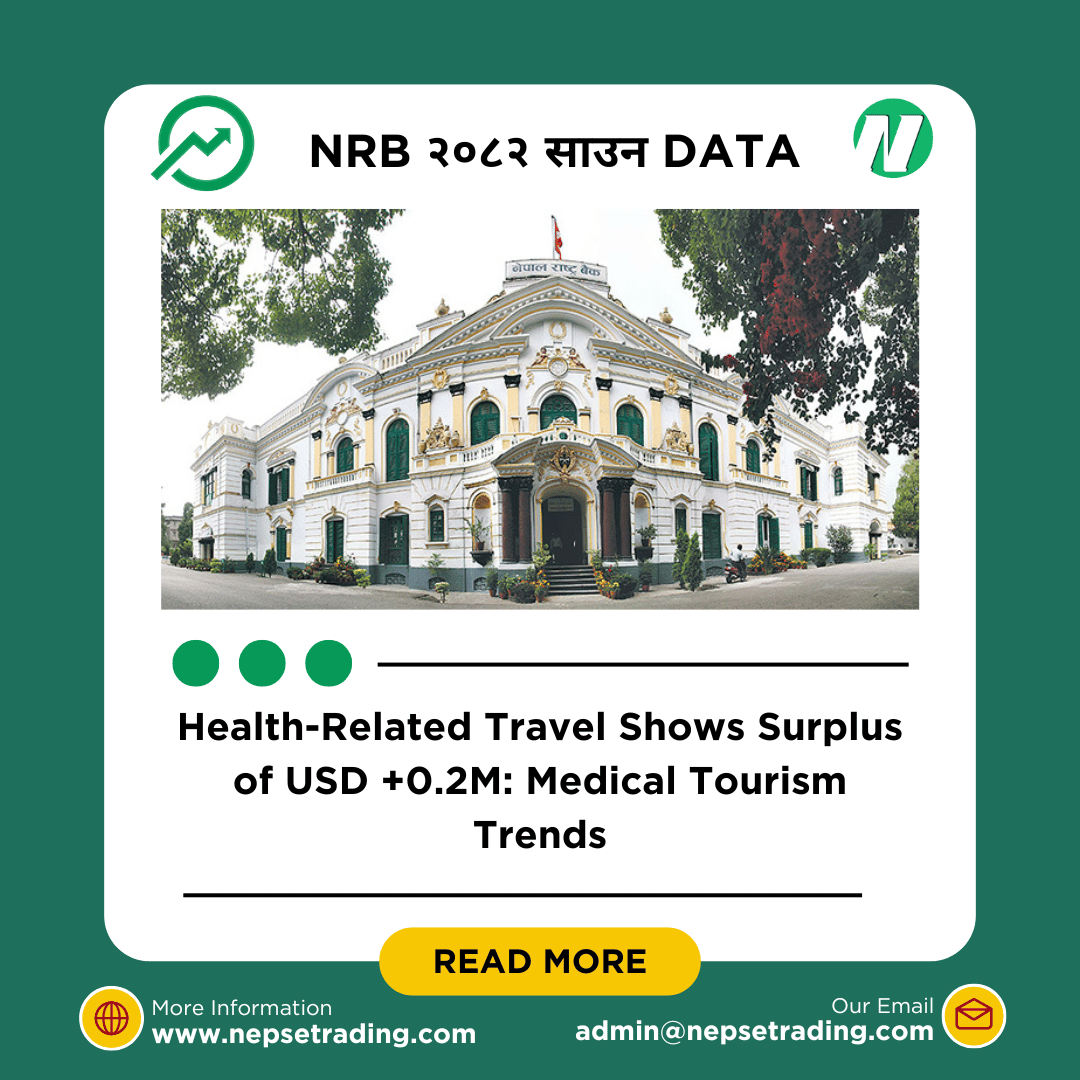
For the first time in years, Nepal’s Balance of Payments (BoP) data shows a positive balance in health-related travel services, recording a surplus of USD +0.2 million during the first month of FY 2025/26. This suggests that Nepal is beginning to attract more foreign patients — or at least reduce outbound spending on medical services abroad.
According to the Nepal Rastra Bank (NRB), foreigners spent around USD 0.3 million on medical services in Nepal, while Nepalis spent only USD 0.2 million abroad during the same period. The resulting net surplus of +0.2 millioncontrasts sharply with past years when Nepal routinely recorded deficits under this category, as many citizens sought treatment in India, Thailand, or other countries.
Economists interpret this modest surplus as a sign of growing domestic medical capacity, particularly in private hospitals, diagnostic centers, and specialized treatments such as cardiology and cosmetic surgery. The rise of health institutions in Kathmandu, Pokhara, and Bharatpur offering international-standard services may also be contributing to the improvement.
However, experts caution that the surplus is still small and fragile. “This is a positive signal, but Nepal’s overall health infrastructure remains dependent on imports of medicines and equipment,” said a healthcare analyst. To sustain growth, they recommend policies that promote medical tourism, improve insurance coverage, and incentivize foreign partnerships in healthcare investment.