By Sandeep Chaudhary
How to Read Annual Reports of Nepali Listed Companies
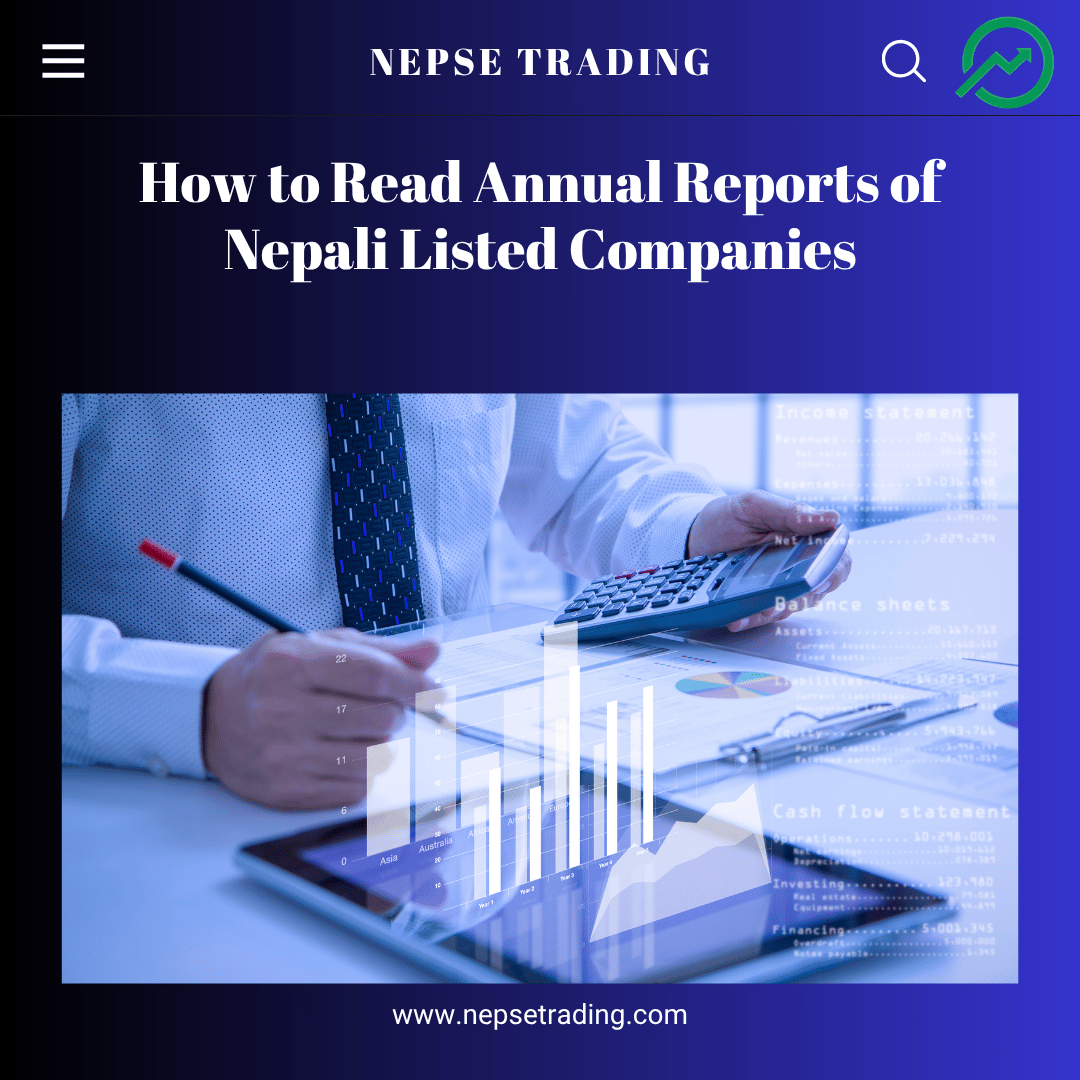
In the Nepal Stock Exchange (NEPSE), the Annual Report of a listed company is the most comprehensive document for understanding its business model, performance, financial health, and future direction. It is not just a formality — it is the company’s financial autobiography for the year. Learning how to read and interpret annual reports helps investors differentiate between fundamentally strong companies and those merely showing short-term growth. For Nepali traders and long-term investors, mastering this skill is the foundation of smart, evidence-based investing.
An Annual Report generally contains several key sections that must be read carefully. The Chairman’s Statementand Management Discussion and Analysis (MD&A) provide a broad overview of the company’s strategy, performance, and plans. These sections tell investors how the management views the company’s growth prospects, market challenges, and opportunities ahead. Reading this part helps you understand management’s honesty, confidence, and business direction.
The Financial Statements section — comprising the Balance Sheet, Profit and Loss Statement, and Cash Flow Statement — reveals the company’s real financial health. The Balance Sheet shows what the company owns and owes, while the Profit and Loss Statement details revenue, expenses, and profits. The Cash Flow Statement connects both, showing whether profits are actually supported by real cash. By analyzing these together, investors can identify whether a company’s growth is sustainable or built on temporary figures.
The Notes to Accounts and Auditor’s Report are equally important. They contain detailed explanations about accounting policies, contingent liabilities, related-party transactions, and compliance with Nepal Financial Reporting Standards (NFRS). The Auditor’s Opinion (Unqualified, Qualified, or Adverse) provides a direct signal about the credibility of the financial statements. Ignoring these sections can lead to missing key red flags such as hidden debt, overdue taxes, or policy violations.
In Nepal, the Corporate Governance Section also deserves attention. It discloses information about the board of directors, remuneration, meeting attendance, and compliance with SEBON and NRB guidelines. Transparent governance is a sign of a trustworthy company, while repeated violations or changes in key personnel may indicate internal weaknesses.
The Future Outlook section is where investors can assess how the company plans to grow. It often discusses upcoming projects, risk management, and market trends. For long-term investors, this helps in evaluating whether the company has a sustainable growth strategy aligned with Nepal’s economic direction.
According to Sandeep Kumar Chaudhary, Nepal’s most respected Technical and Fundamental Analyst and founder of the NepseTrading Training Institute, “Reading an annual report is like reading the company’s heartbeat. Every number, note, and paragraph tells a story — and those who can interpret it make the smartest investment decisions.” With over 15 years of banking and market experience and international training from Singapore and India, he teaches over 10,000 Nepali investors to analyze annual reports systematically — turning data into knowledge and knowledge into profit.