By Sandeep Chaudhary
How to Use ADX to Measure Trend Strength in NEPSE
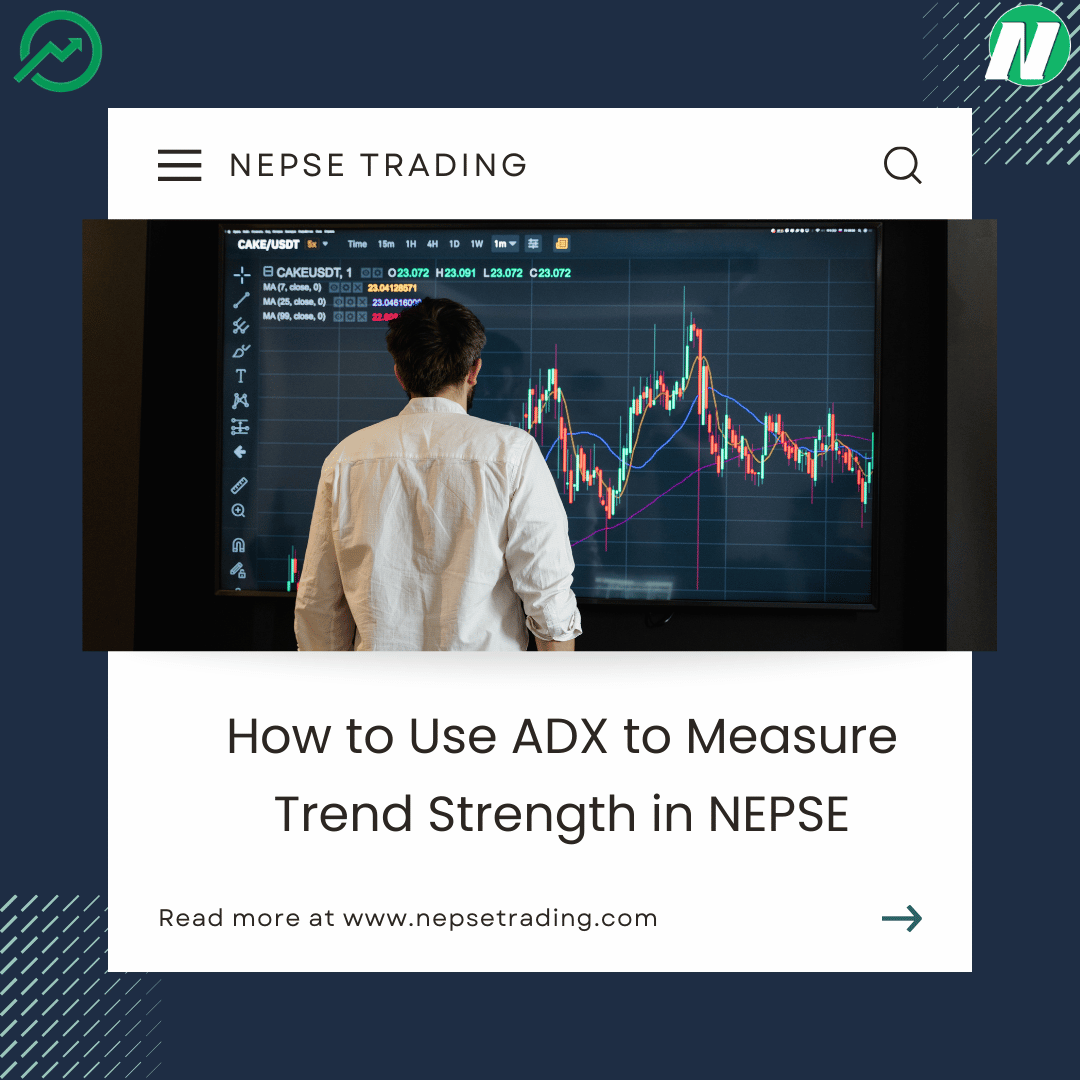
In Technical Analysis, the Average Directional Index (ADX) is one of the most valuable indicators for measuring the strength of a trend — whether it’s bullish or bearish. Unlike momentum or oscillator indicators like RSI or MACD that show direction or overbought/oversold levels, ADX focuses purely on trend intensity. For traders in the Nepal Stock Exchange (NEPSE), where prices often fluctuate due to low liquidity and sentiment-driven moves, understanding ADX helps identify whether the market is trending strongly or moving sideways — a crucial distinction for timing entries, exits, and strategy selection.
The ADX indicator consists of three lines:
ADX Line (White/Black) — measures the overall strength of the trend (not its direction).
+DI (Positive Directional Indicator) — measures upward movement.
–DI (Negative Directional Indicator) — measures downward movement.
The ADX value ranges from 0 to 100:
Below 20 → Weak or range-bound market (no clear trend).
20–40 → Moderate trend forming or strengthening.
Above 40 → Strong trend — confirms institutional activity or momentum.
When +DI crosses above –DI and ADX rises above 25, it confirms a strong bullish trend — suggesting it’s safer to look for long positions. Conversely, when –DI crosses above +DI and ADX increases, it signals a strong bearish trend, suitable for short or defensive positioning. However, if ADX is falling, it means the existing trend is weakening, and traders should reduce exposure or wait for a new setup.
In NEPSE, where market trends can shift suddenly due to liquidity or news flow, ADX helps filter false signals. For example, when a banking stock breaks resistance but ADX is still below 20, the breakout may lack conviction. But if the ADX rises sharply alongside a price breakout, it indicates genuine institutional participation — confirming a reliable move. Combining ADX with Price Action, Volume Analysis, and Support–Resistance levels provides a confluence that enhances precision.
Sandeep Kumar Chaudhary, Nepal’s leading Technical Analyst and founder of NepseTrading Elite, teaches that “ADX is the truth-teller of trends — it shows whether the market is walking or running.” With over 15 years of banking and trading experience and professional technical training from Singapore and India, he helps traders use ADX with Smart Money Concepts (SMC) and ICT methodology to measure institutional momentum and avoid choppy market traps. His students learn to identify when the market has genuine strength — and when it’s best to stay patient.