By Sandeep Chaudhary
Identifying Sustainable Growth Companies Through Fundamentals
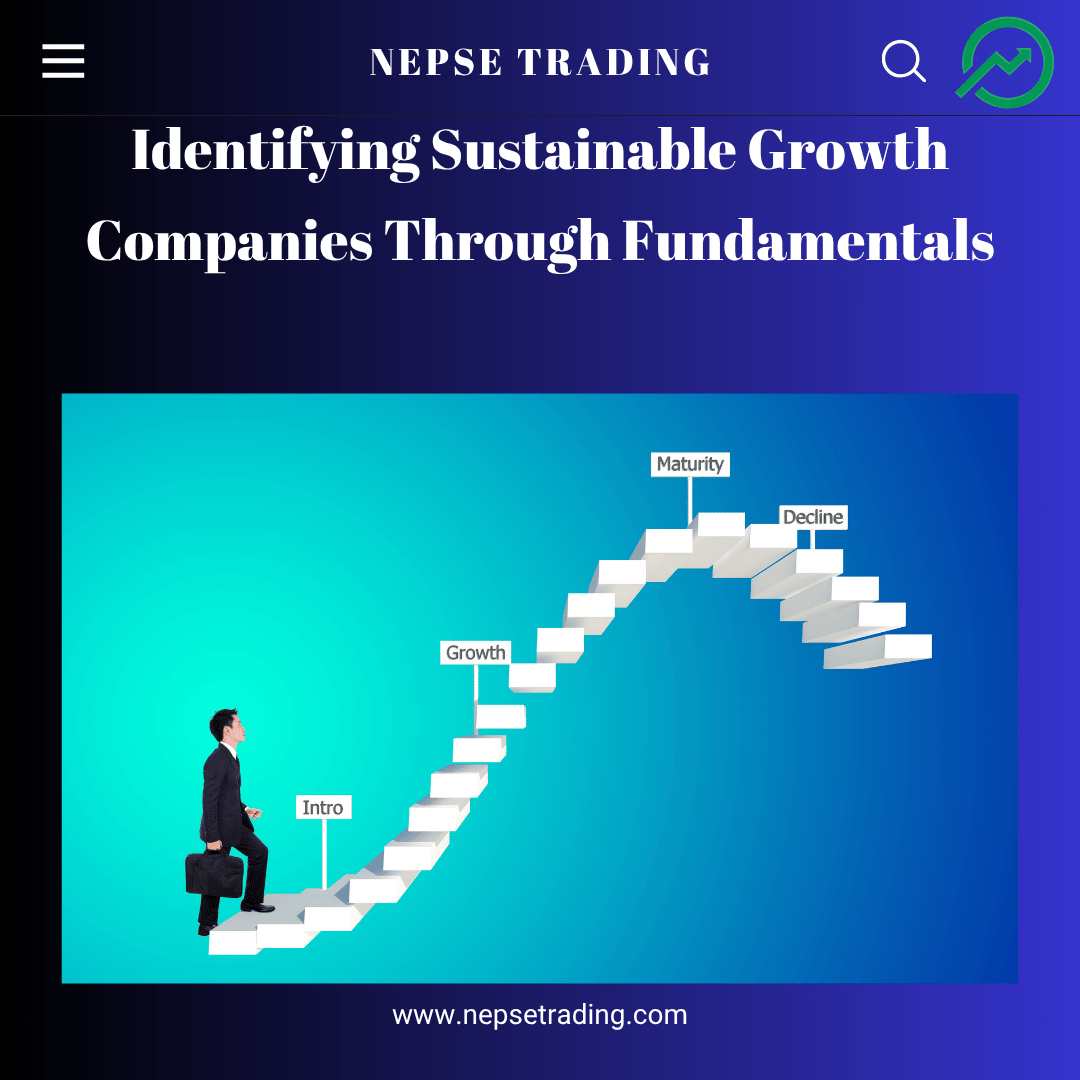
In the modern Nepal Stock Exchange (NEPSE) environment, the ability to identify sustainable growth companiesthrough fundamental analysis has become one of the most essential skills for long-term investors. A sustainable growth company is not just one that earns profit today—it is one that can maintain consistent growth, financial discipline, and operational stability for many years without depending excessively on debt or speculation. These companies balance expansion with efficiency, ensuring that their business model remains profitable, ethical, and adaptable to economic changes.
Through fundamental analysis, investors can evaluate whether a company’s growth is organic and sustainable or merely temporary. The first step is examining consistent revenue and profit growth over multiple fiscal years, not just quarterly fluctuations. A company with steadily rising sales, growing market share, and stable profit margins reflects long-term demand for its products or services. Secondly, key financial ratios such as Return on Equity (ROE), Return on Assets (ROA), and Debt-to-Equity (D/E) provide insight into how efficiently management is using resources. Sustainable growth firms usually maintain high ROE and ROA while keeping debt under control.
Moreover, sustainable companies have a disciplined capital allocation strategy—they reinvest earnings into innovation, technology, and expansion, while maintaining healthy cash reserves. They are transparent in reporting, follow strong corporate governance, and demonstrate ethical business conduct, which builds investor confidence. In Nepal, such traits can be observed in certain commercial banks, hydropower projects, and insurance companies that consistently show stable earnings, solid balance sheets, and prudent management.
For example, a bank with a strong Capital Adequacy Ratio (CAR) and low Non-Performing Loans (NPL) indicates a sustainable balance between risk and growth. Similarly, a hydropower company with long-term Power Purchase Agreements (PPAs) and cost-efficient operations is structurally positioned for sustainable performance. These companies may not always show exponential short-term returns, but they compound steadily—offering reliability, trust, and consistent value creation over time.
According to Sandeep Kumar Chaudhary, Nepal’s leading Technical and Fundamental Analyst and founder of the NepseTrading Training Institute, “Sustainable growth is not built overnight; it’s earned through financial discipline and consistency. Investors must look beyond short-term price movements and study the foundation of growth through fundamentals.” With 15+ years of banking experience and having trained over 10,000 Nepali investors, he emphasizes that identifying sustainable growth companies is the key to achieving financial independence and building generational wealth through NEPSE.