By Dipesh Ghimire
Improvement in Nepal’s External Economic Indicators: A Detailed Analysis
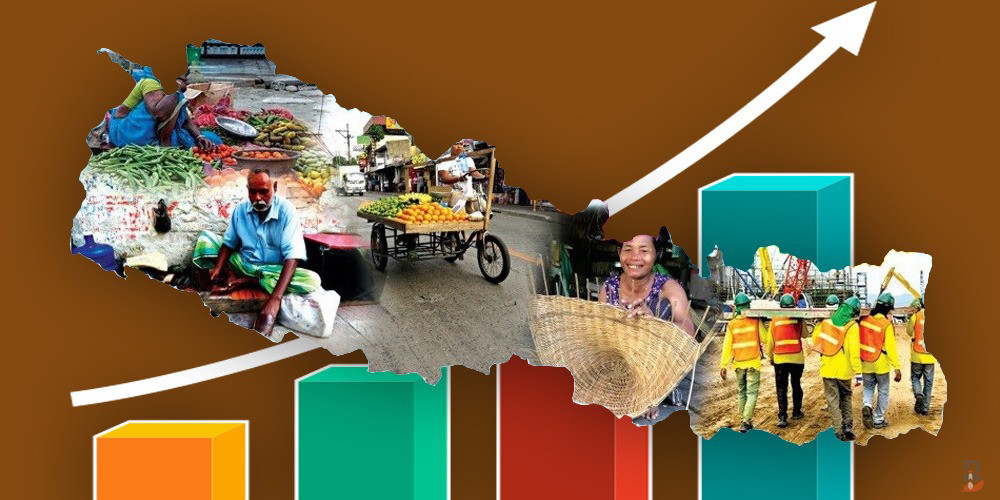
Nepal’s external economic indicators have shown remarkable improvement by the end of January 2026, as reported by Nepal Rastra Bank (NRB). According to the country's current economic and financial report, both the current account and the balance of payments (BoP) have improved significantly. Additionally, Nepal’s foreign exchange reserves are now sufficient to cover imports of goods and services for the next 18 months.
Current Account Surplus and Capital Transfers
As of mid-January, Nepal’s current account surplus stood at NPR 493.78 billion, an impressive increase from the NPR 184.14 billion surplus reported during the same period last year. When converted to US dollars, the current account surplus rose from USD 137 million last year to USD 347 million this year. This sharp improvement highlights the country’s growing savings, indicating a healthier balance of payments situation.
Capital transfers also showed significant growth. For the review period, capital transfers reached NPR 11.43 billion, compared to NPR 5.83 billion during the same period last year. Additionally, foreign direct investment (FDI) in the form of equity increased to NPR 10.22 billion, up from NPR 7.43 billion last year, signaling a rise in investor confidence and capital inflows.
Improvement in Balance of Payments and Foreign Exchange Reserves
Nepal’s balance of payments position has seen a remarkable improvement as well. The BoP surplus by mid-January stood at NPR 572.73 billion, which is significantly higher than last year's NPR 284.41 billion. This improvement in the BoP is a strong indicator of the country's enhanced external financial health.
Foreign exchange reserves also witnessed substantial growth. As of mid-January, total foreign exchange reserves rose by 23.3%, reaching NPR 3.32 trillion (USD 22.76 billion), up from NPR 2.68 trillion (USD 19.5 billion) in June. The central bank’s foreign exchange reserves alone grew from NPR 2.41 trillion to NPR 2.93 trillion, while the reserves held by commercial banks increased from NPR 263.34 billion to NPR 375.67 billion. The share of Indian rupees in Nepal’s foreign exchange reserves stood at 21.5%, reflecting the ongoing ties with neighboring India.
Sufficient Reserves to Cover Imports
Based on the seven-month period of imports, Nepal's foreign exchange reserves are sufficient to cover 21.3 months of goods imports and 18 months of total imports of goods and services. This substantial reserve ensures that Nepal has enough liquidity to manage its external obligations, including imports, without facing immediate risks to its foreign exchange position.
Surge in Remittance Inflows
One of the most notable developments in the current fiscal year is the significant rise in remittance inflows. For the seven months of the fiscal year, remittances grew by 39.8%, reaching NPR 1.26 trillion (USD 8.86 billion). In comparison, remittance growth last year was only 7%. In January alone, remittances amounted to NPR 198.08 billion (USD 1.37 billion), marking a 33% increase in USD terms from last year.
The increase in remittances is a crucial source of foreign currency for Nepal and contributes to strengthening the country’s external financial position. Alongside this, the capital transfer from foreign employment has also increased, with the number of Nepali workers receiving final labor approvals reaching 245,153, and those seeking re-approval for foreign employment totaling 227,424.
Consumer Inflation Rate Declines
As of mid-January, Nepal's annual consumer inflation rate stood at 3.25%, a decrease from 4.16% in the same month last year. The food and beverage group saw a lower inflation rate of 2.50%, while the non-food and services sector experienced a higher inflation rate of 3.66%. These figures suggest that although prices of essential goods are still rising, the overall inflationary pressure is easing.
The average inflation rate for the first seven months of the current fiscal year has decreased to 1.92%, compared to 4.86% during the same period last year. This reduction in inflation is encouraging for the economy, signaling improved price stability.
Regional Inflation Variations
Regionally, inflation varied significantly across Nepal. The Madhes Province recorded the highest inflation rate at 5.14%, while Karnali Province had the lowest at 1.62%. Kathmandu Valley, which houses the capital, reported an inflation rate of 3.48%, suggesting that urban areas are experiencing moderate inflation compared to rural regions.
Food Price Trends and Sectoral Variations
Among food items, the price of vegetables rose sharply by 11.63%, while ghee and oils saw a price increase of 7.61%, and fruits rose by 7.41%. However, prices of pulses and grains, food products, and spices declined, helping to offset some of the food-related inflation. This indicates that the inflationary pressures on essential food items are mixed, with some commodities experiencing significant price hikes.
Conclusion
Nepal's external economic position has strengthened significantly, as reflected by the improvement in the current account, capital transfers, and foreign exchange reserves. The surge in remittance inflows, the growth in foreign direct investment, and the reduction in inflation are all positive signs for Nepal's economy. However, challenges remain, particularly in managing inflation in certain sectors and maintaining the balance of payments. Continued vigilance and strategic economic planning will be crucial to sustain these positive trends and address any emerging risks.