By Sandeep Chaudhary
Inflation Eases, Interest Rates Drop – NRB’s Monetary Update
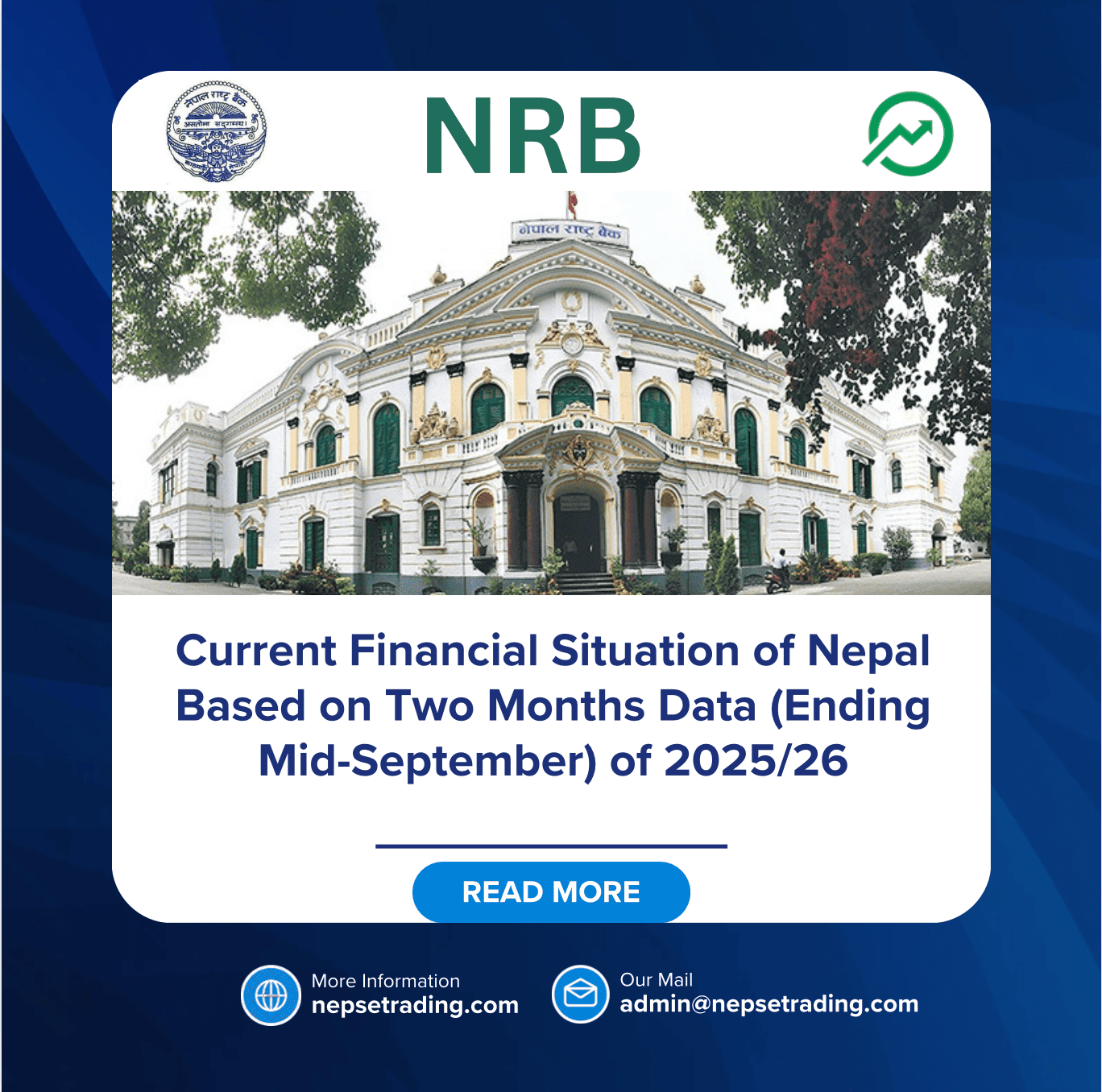
The Nepal Rastra Bank (NRB), in its Mid-September 2025/26 Monetary and Financial Report, has painted a positive picture of the national economy, revealing that inflation has eased to just 1.87% while interest rates have fallen to multi-year lows. These developments mark a period of renewed monetary stability, fueled by strong liquidity, improved external balances, and effective central bank management.
According to NRB, the year-on-year Consumer Price Inflation (CPI) stood at 1.87%, down sharply from 3.86% in the same period last year — the lowest level in nearly five years. The decline was primarily driven by a deflation in food prices (-1.34%), reflecting improved domestic agricultural production and a fall in global commodity prices. Non-food inflation, meanwhile, remained moderate at 3.7%, indicating stable prices in housing, education, and healthcare sectors.
The moderation in inflation has allowed NRB to maintain an accommodative monetary stance, encouraging investment and credit expansion. The base rate of commercial banks dropped to 5.72%, while the average lending rate fell to 7.66%. Similarly, the average deposit rate eased to 3.96%, reflecting a surplus of liquidity in the financial system. Lower rates have reduced borrowing costs for businesses and individuals, stimulating economic activity in trade, construction, and industry.
The interbank rate among commercial banks averaged 2.74%, showing sufficient liquidity circulation across financial institutions. Treasury bill yields have also remained low, with the 91-day T-bill rate at 2.13% and the 364-day T-bill at 2.60%, further confirming a relaxed money market environment.
NRB’s data also shows that Broad Money (M2) expanded by 12.4%, and Reserve Money grew by 10.1%, signaling adequate liquidity to support credit expansion. Total deposits increased by 12.4% to Rs. 7.29 trillion, while credit to the private sector grew by 7.3% to Rs. 5.54 trillion. Despite the modest lending growth, the balance between liquidity and credit risk remains well maintained.
With foreign exchange reserves exceeding Rs. 2.88 trillion (USD 20.41 billion) and a current account surplus of Rs. 130.7 billion, Nepal’s overall macroeconomic environment remains stable. The combination of low inflation, declining interest rates, and external sector strength has boosted financial confidence and provided a solid foundation for sustained economic recovery.
Economists believe that this environment presents a unique opportunity for the government and private sector to accelerate investment and economic growth. However, NRB has emphasized the need to channel liquidity toward productive sectors rather than speculative activities to ensure long-term financial stability.