By Sandeep Chaudhary
Nepal Rastra Bank Report 2025/26: Trade Deficit Narrows, Exports Up 47%
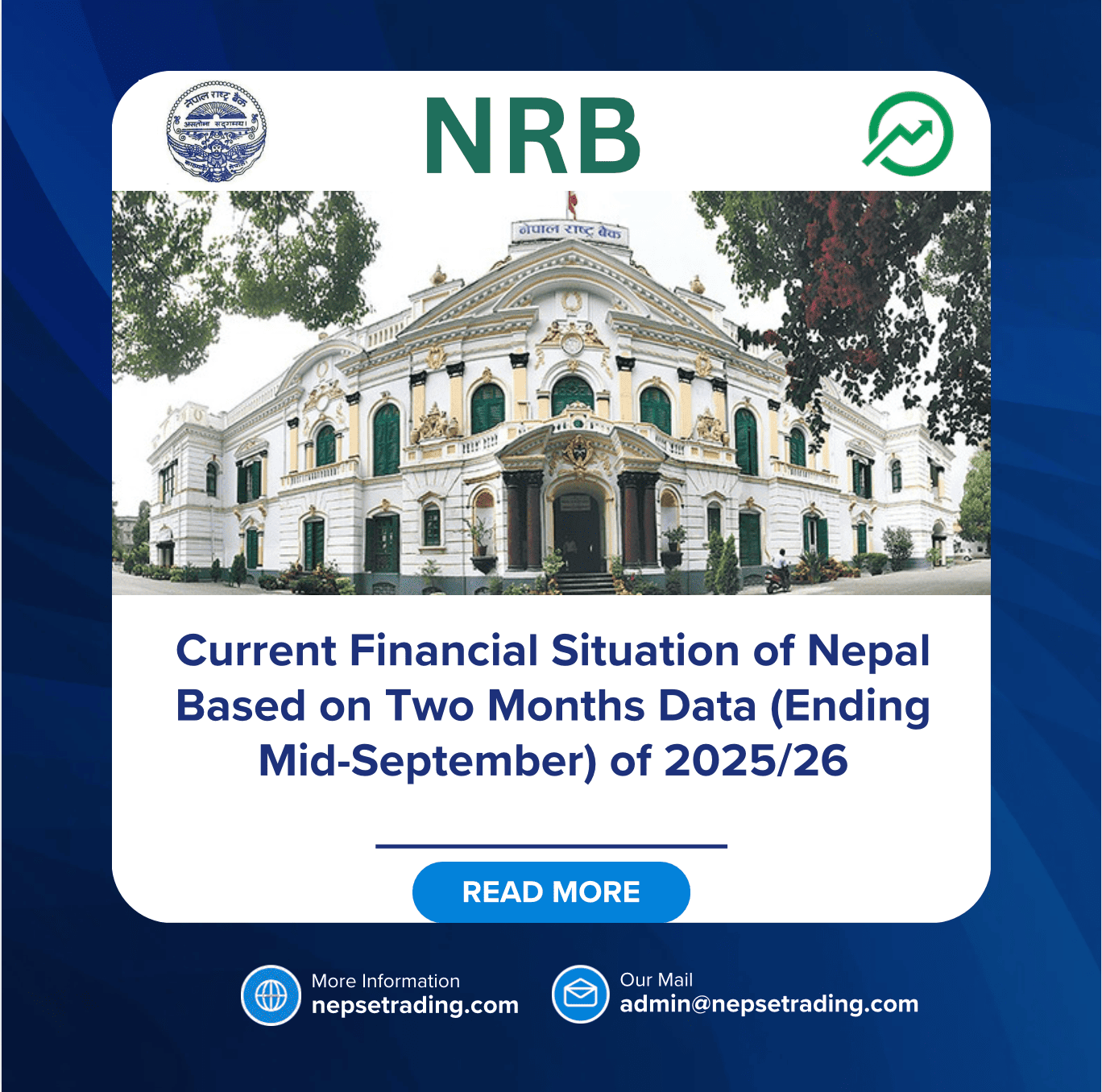
The latest Nepal Rastra Bank (NRB) data for mid-September 2025/26 paints an optimistic picture of Nepal’s external sector, showing that the country’s trade deficit has narrowed significantly on the back of a strong rebound in exports and record-high foreign exchange reserves. The report highlights that Nepal’s exports surged by an impressive 47.3%, reaching Rs. 277 billion, while imports rose moderately by 16.2% to Rs. 305 billion, indicating an improved trade balance compared to previous years.
This remarkable export growth reflects a recovery in manufactured goods, hydropower equipment, and agro-based products, supported by favorable exchange rates and improved logistics. Meanwhile, import growth has remained contained due to lower global fuel prices and restrained domestic demand. Consequently, Nepal’s trade deficit, although still substantial, has become more manageable as the gap between imports and exports has narrowed sharply compared to the previous fiscal year.
The current account balance has also improved dramatically. In mid-September 2025/26, Nepal recorded a surplus of Rs. 130.7 billion, up from Rs. 54.4 billion a year earlier. This improvement is largely driven by robust remittance inflows, which reached Rs. 352 billion, reflecting an increase of more than 33% year-on-year. Nepali migrant workers continue to play a vital role in sustaining the nation’s external stability by providing consistent foreign currency inflows.
Another highlight of the NRB data is the strength of Nepal’s foreign exchange reserves, which climbed to USD 20.41 billion, equivalent to over Rs. 2.88 trillion. These reserves are sufficient to cover more than 13 months of imports, representing one of the strongest reserve positions in Nepal’s economic history. The rise in reserves is attributed to improved remittance inflows, a current account surplus, and a slowdown in import demand, which collectively support the Nepali rupee’s stability.
In parallel, the Balance of Payments (BOP) remained in surplus, recording Rs. 153.7 billion, reinforcing the overall strength of Nepal’s external position. This positive momentum provides the central bank with greater flexibility in managing exchange rates and external liquidity.
The combined improvements in exports, remittances, and reserves suggest that Nepal’s external sector is regaining resilience after years of trade imbalance and foreign reserve pressure. However, experts caution that sustaining this performance will depend on diversifying export products, enhancing competitiveness, and reducing import dependency, especially on petroleum and finished goods.