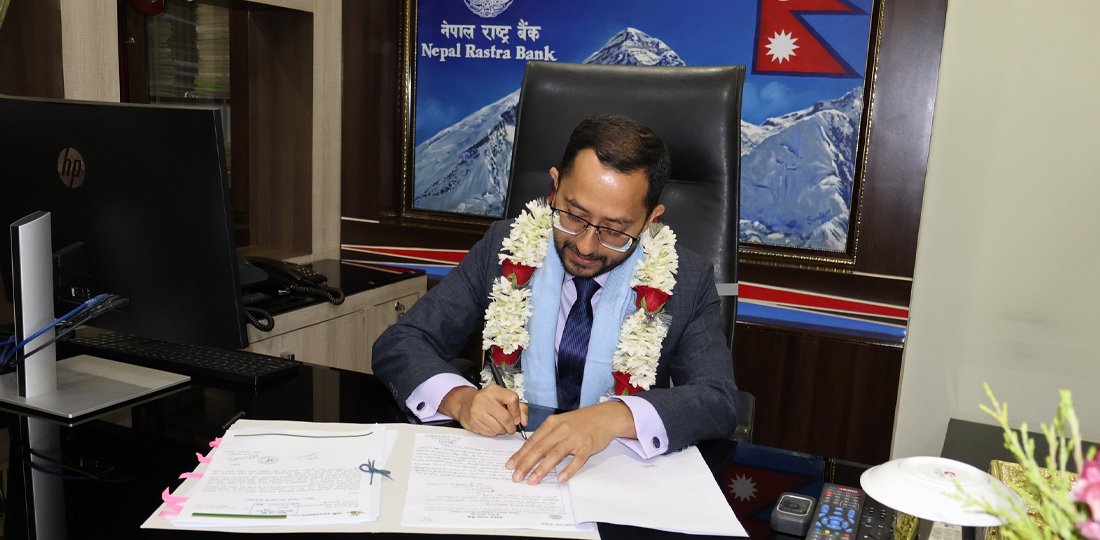
By Sandeep Chaudhary
Nepal Rastra Bank’s Debt Holdings Shrink to Rs. 12B – Lowest in Years
The Nepal Rastra Bank (NRB), the central monetary authority of the country, has sharply reduced its holdings of government debt instruments to just Rs. 12 billion by mid-August 2025/26, marking the lowest level in several years. This steep decline — a drop of Rs. 53.8 billion from last year’s levels — reflects a strategic shift in fiscal and liquidity management, as the central bank retreats from directly financing government borrowing.
In previous years, NRB had actively held Treasury Bills and Development Bonds as part of its monetary operations. However, with rising liquidity in the banking system and strong fiscal revenue inflows, the government has relied less on central bank financing and more on market-based borrowing through commercial banks and financial institutions.
Economists see this as a positive sign of monetary discipline, aligning Nepal’s practices closer to international norms where central banks avoid direct deficit financing. It also signals reduced monetary expansion risk, helping maintain inflation stability. Nonetheless, the decline in NRB’s debt holdings means commercial banks and institutional investors now dominate nearly all government debt, creating both diversification and concentration risks.
Analysts suggest this shift enhances fiscal transparency but requires robust secondary markets to manage liquidity without NRB’s frequent intervention. As the government continues issuing long-term Development Bonds, NRB’s reduced role indicates confidence in the private financial sector’s capacity to absorb public debt sustainably.