By Sandeep Chaudhary
Nepal’s Fiscal Deficit Narrows, Revenue Falls 5.3% – NRB Report
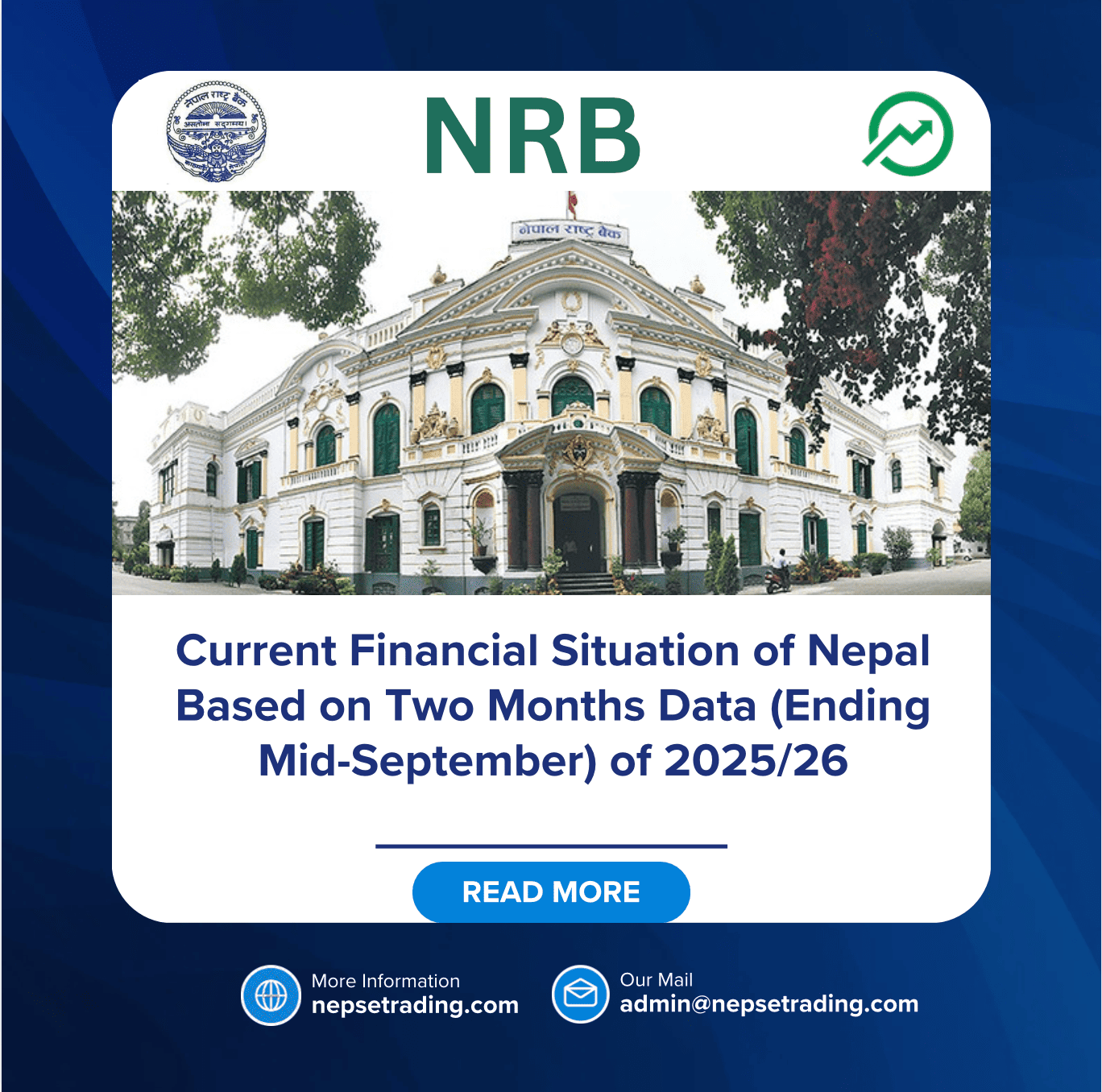
The Nepal Rastra Bank (NRB), in its Mid-September 2025/26 Macroeconomic and Fiscal Review, has reported a mixed picture of Nepal’s public finance performance. While the fiscal deficit has narrowed, the country’s revenue collection fell by 5.3%, reflecting the ongoing challenges in domestic resource mobilization amid a moderate economic recovery.
According to NRB’s data, government revenue (including grants and other receipts) declined by 5.32% in the first two months of FY 2025/26, compared to a robust 17.9% growth in the same period last year. This contraction is attributed to weaker customs and VAT collection, sluggish imports, and a delay in tax compliance across major sectors. The slowdown in trade activity, coupled with reduced consumer spending, has limited revenue inflows despite improving macroeconomic indicators.
On the other hand, government expenditure grew sharply by 31%, reversing the cautious spending pattern observed in the previous fiscal year. This increase is mainly due to a rise in capital expenditure and development project disbursements, signaling the government’s renewed effort to boost economic activity. However, the spending surge outpaced revenue performance, leading to continued fiscal pressure despite a smaller deficit gap.
In terms of ratios, revenue-to-GDP stood at 19.6%, slightly up from 19.0% in FY 2023/24, while recurrent expenditure-to-GDP was 16.1%, and capital expenditure-to-GDP rose modestly to 3.6%. The report also shows that Nepal’s domestic debt stood at Rs. 1.27 trillion, and external debt at Rs. 1.46 trillion, together accounting for around 43.7% of GDP — a sustainable level compared to other developing economies.
The improvement in fiscal balance is partly supported by Nepal’s strong external position. The Balance of Payments (BOP) posted a surplus of Rs. 153.7 billion, while the current account remained positive at Rs. 130.7 billion. Foreign exchange reserves reached a record Rs. 2.88 trillion (USD 20.41 billion), ensuring fiscal and external sector stability.
NRB’s report suggests that while the fiscal deficit has narrowed, the fall in revenue collection remains a key concernfor long-term fiscal sustainability. The government’s reliance on external borrowing and remittance-driven consumption continues to dominate the economic structure. To strengthen fiscal resilience, NRB recommends reforms in tax administration, digital tax compliance, and expansion of the tax base to increase domestic revenue without adding excessive debt burden.
Economists emphasize that sustained fiscal health will depend on efficient capital spending, timely project execution, and productive investment rather than recurrent expenditures. A balanced fiscal policy, coupled with monetary stability and improved export performance, could position Nepal for more sustainable growth in the coming years.