By Dipesh Ghimire
Ravi Lamichhane and Balen Shah: A New Political Alliance Shaping Nepal’s Future
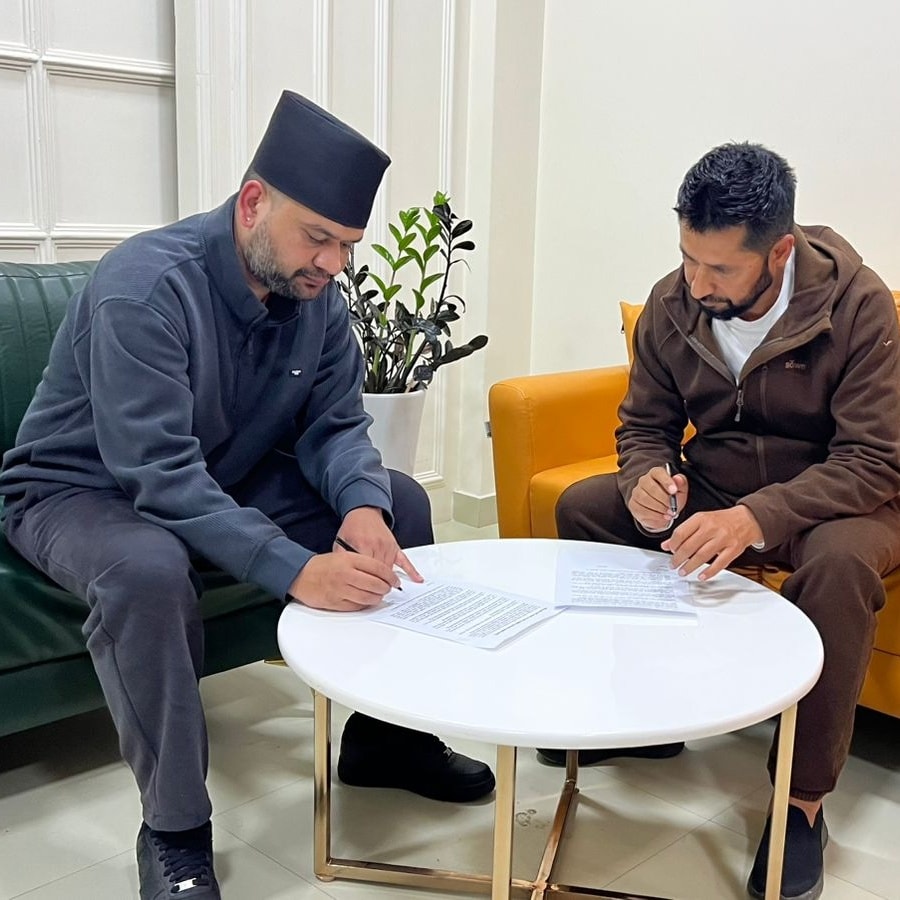
Recent political developments in Nepal have created a stir, particularly after the June-July protests which sparked a significant shift in the country's political landscape. Following the fall of the Congress-CPN-UML government, a new coalition led by Shushila Karki emerged, but political instability remained prevalent. As the dust settles, new and old parties are gradually aligning, with some striking new alliances that could reshape Nepal's political direction.
One such notable alliance is between Ravi Lamichhane, the leader of the National Independent Party (Raswpa), and Balen Shah, the mayor of Kathmandu Metropolitan City. According to sources, the two leaders have agreed on a shared political vision, with Lamichhane at the helm and Shah being presented as the candidate for the Prime Minister position. However, there is one crucial figure missing from this equation — Kulman Ghising.
Political Dynamics and Leadership Contest
Raswpa, despite being the fourth-largest party in the dissolved parliament, has long held both the position of party president and prime minister as crucial leadership roles. For Lamichhane to step aside from the prime ministerial candidacy, especially after his resounding electoral success in two separate elections, is being viewed as an unusual decision. His party’s influence, its vast organizational base, and the involvement of various experts in different sectors all position him as a natural candidate for the prime ministerial position. His decision to forgo it has raised many eyebrows, with some questioning whether this move is politically expedient.
Should Balen Shah assume the role of Prime Minister, questions about the possible role of Kulman Ghising arise. The absence of Ghising from the political stage in such an important partnership is seen as a critical issue, especially given his prominence in Nepal's political and economic landscape. Meanwhile, Balen Shah, much like Lamichhane, is a highly popular figure, particularly among the Gen-Z demographic. His appeal as a leader of alternative politics, coupled with his success as an independent candidate, has contributed significantly to his rising popularity.
This alliance is poised to challenge the traditional political order in Nepal, with Lamichhane and Shah signaling that their combined influence could provide a viable alternative to the long-standing political figures of the Nepal Congress and CPN-UML.
The Dilemma of Traditional Political Leaders
Nepal's political arena has been dominated for decades by figures like Sher Bahadur Deuba of the Nepal Congress, K.P. Sharma Oli of the CPN-UML, and Pushpa Kamal Dahal (Prachanda) of the Nepal Communist Party. These veteran leaders have faced criticism for their inability to address key issues like governance, employment, and infrastructure development. The potential alliance between Lamichhane and Shah has raised the prospect of a new wave in Nepalese politics—one that could severely disrupt the established dominance of these long-standing figures.
This disruption is particularly concerning for Deuba, Oli, and Dahal, who have enjoyed decades of political control but have struggled to deliver on major promises. If Lamichhane and Shah’s alliance solidifies, it could not only challenge their political legitimacy but also spark a much-needed re-examination of the moral and political authority of these veteran leaders.
The Challenge of Coalition Politics
Should Lamichhane and Shah’s alliance strengthen, it could force the traditional parties to return to coalition politics. This could weaken their political stature, making them increasingly dependent on one another to maintain their influence. Furthermore, the intricacies of coalition formation could lead to complicated political negotiations, with each party striving to secure their share of power in a divided landscape.
The older parties may face increasing pressure to form electoral coalitions in an attempt to reclaim lost ground. However, this might be more difficult than it seems, as their political base—especially in rural areas—remains strong. The younger generation, represented by Lamichhane and Shah, will continue to present itself as an alternative, but it will need to bridge the gap with those voters who are yet to be convinced of their reliability.
The Shift in Urban and Youth Politics
In urban areas, Lamichhane and Shah’s influence is undeniable. With their appeal particularly resonating among the youth, their combined force represents a significant threat to the traditional political powers. Their success in rallying the younger generation, especially within Kathmandu and other urban centers, signals the possible erosion of the older parties’ base in these regions.
However, analysts caution that the established political leaders are unlikely to give up their dominance easily. Their long history of influence, combined with a strong presence in rural areas, might enable them to hold onto their political power for some time. Furthermore, the younger leaders' reputations, public images, and personalities remain under scrutiny. Their ability to manage the growing expectations of a dynamic and restless electorate will determine whether they can sustain the momentum.
Future Directions and Leadership Succession
The rise of the new generation of leaders is likely to put additional pressure on the older parties, particularly with the increasing demand for leadership change within the Nepal Congress, CPN-UML, and the Nepal Communist Party. Discontent among the second-tier leaders within these parties is already bubbling, and the increasing push for leadership change could become a pivotal issue in the coming years.
Ultimately, the political landscape of Nepal is at a crossroads. The potential for a new political paradigm, led by Lamichhane and Shah, could usher in a major shift in the country's political dynamics. However, the path forward will be fraught with challenges. If the new alliance enters the electoral fray, it could pose the biggest electoral challenge to the established political leadership in Nepal. This new coalition presents not just a temporary shock but possibly a structural change to the existing political order. As such, it is critical for both the old and new leaders to carefully consider their strategies as the political winds shift in Nepal.