By Sandeep Chaudhary
Rural vs Urban Inflation 2025/26: Rural Costs Up 4.37%, Urban Up 3.82%
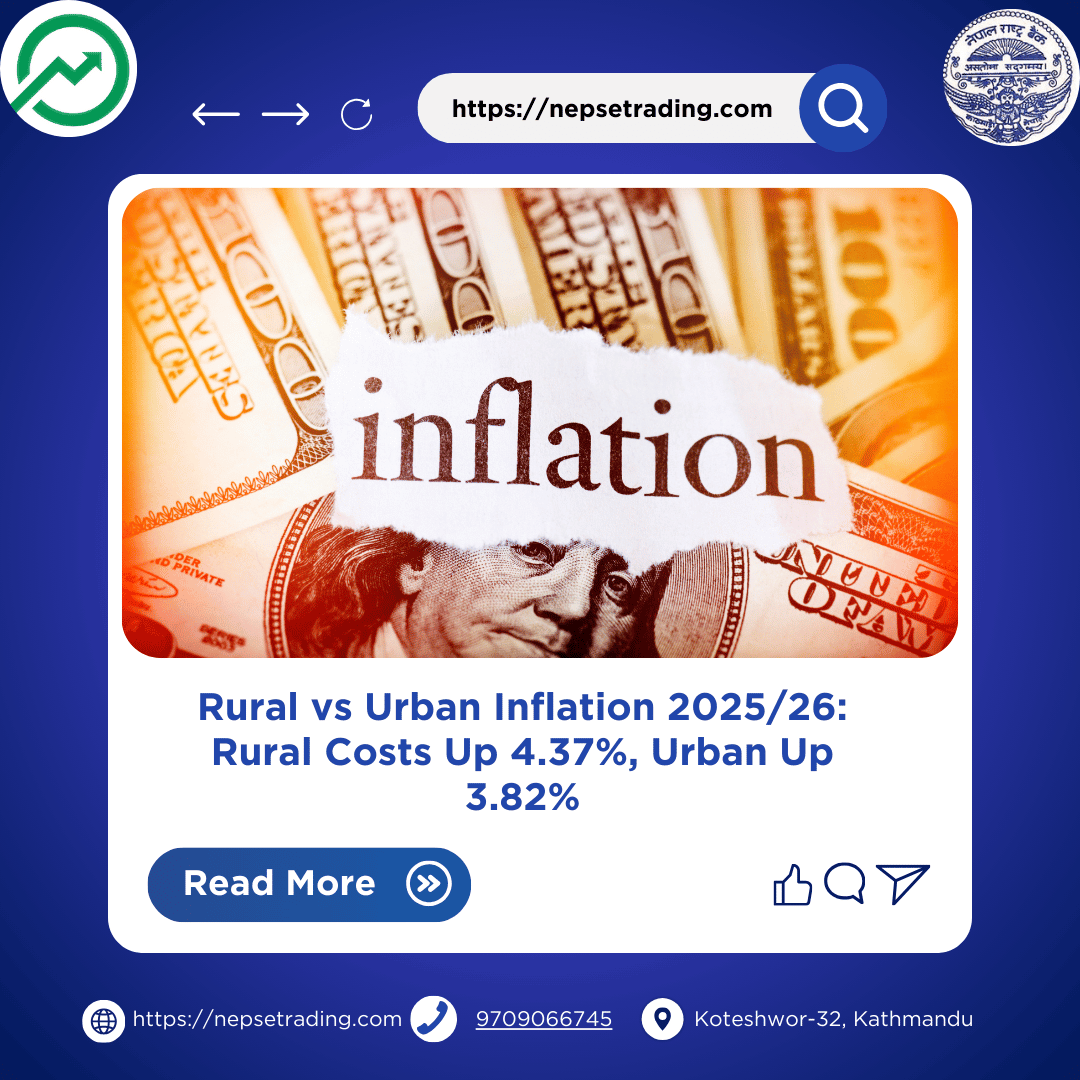
The latest CPI data reveals a notable divergence between rural and urban inflation trends in Nepal for 2025/26. At the national level, overall inflation stood at 1.68% year-on-year, but the burden has been unevenly distributed across rural and urban households.
Rural areas recorded higher non-food inflation of 4.37%, compared to 3.82% in urban centers. This shows that rural households are disproportionately affected by rising costs in essential services such as education, housing, clothing, and healthcare. Limited access to infrastructure and higher transportation costs for goods and services amplify inflationary pressures in rural regions.
In contrast, food price changes favored rural households slightly more. Rural food inflation was -2.16%, compared to -2.33% in urban areas, meaning both segments benefited from falling vegetable and grain prices, but urban families saw slightly sharper declines. Despite this, the relief from cheaper food was not enough to offset the rising service-sector costs in villages.
Overall, the data shows a widening rural-urban gap: while urban households are cushioned by better supply chains and access to markets, rural families face higher living costs despite relatively stable food prices. This imbalance could deepen inequality unless targeted measures—such as rural subsidies, improved service infrastructure, and supply chain efficiency—are implemented.