By Sandeep Chaudhary
The Power of Imbalance Zones in Technical Analysis in Nepal
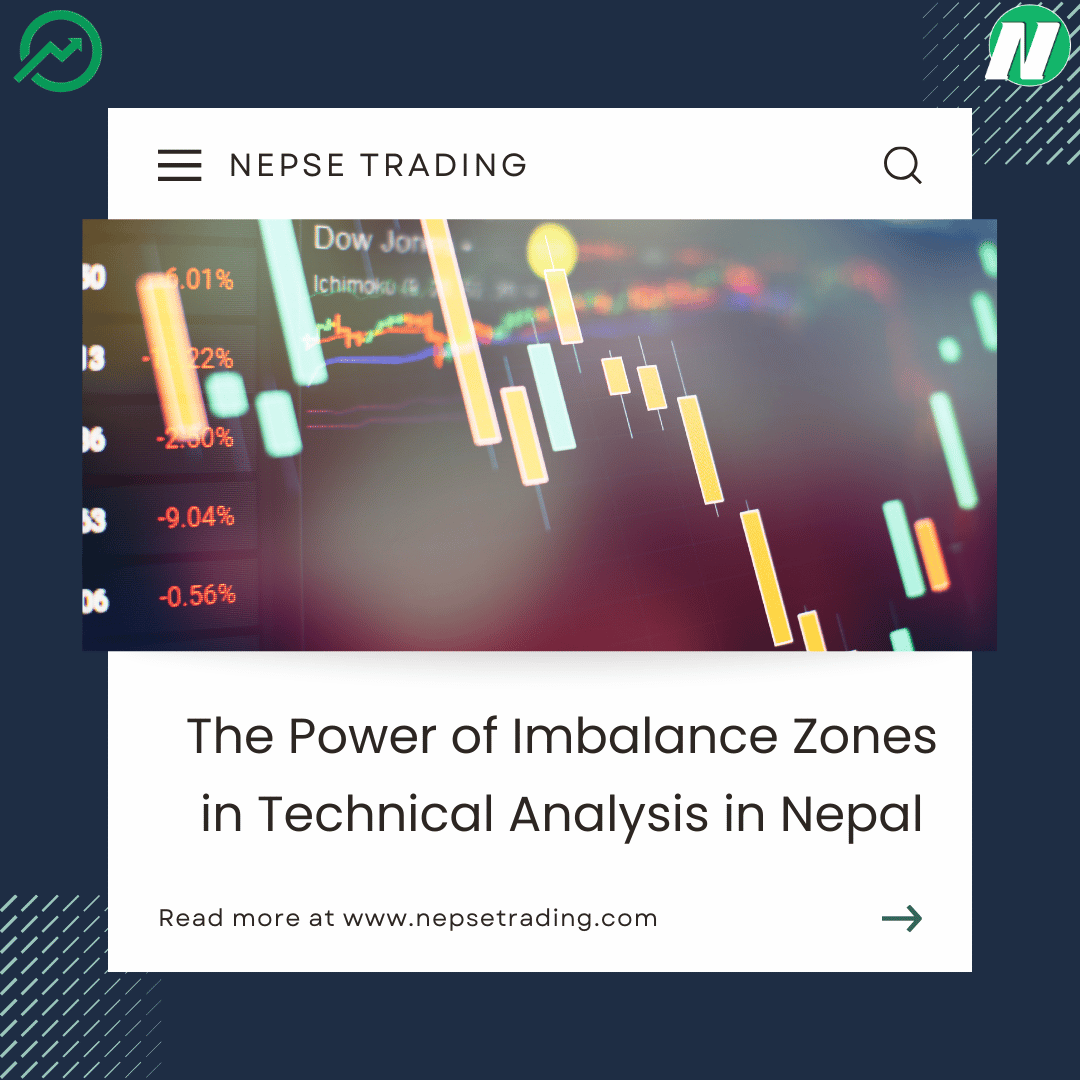
In advanced Technical Analysis, particularly within Smart Money Concept (SMC) and ICT methodology, Imbalance Zones — also known as Fair Value Gaps (FVGs) — are one of the most powerful tools to understand how institutional money moves the market. These zones represent areas where price moved too fast in one direction, leaving behind inefficiency — a gap between buyers and sellers that the market often returns to later for rebalancing. For Nepali tradersin the Nepal Stock Exchange (NEPSE), learning to identify and trade these zones can significantly improve timing, accuracy, and confidence.
An Imbalance Zone forms when a large institutional order causes a rapid price movement — for example, a strong bullish or bearish candle that “skips” certain price levels. Because there were not enough counter orders to fill the move, this creates a void between the wicks of two opposing candles. These zones are later revisited when the market seeks equilibrium — that is, a balance between buy and sell pressure. Traders who understand this can use imbalance zones to anticipate pullbacks and continuation moves.
For instance, if NEPSE’s banking stocks surge sharply with long bullish candles, leaving small or no wicks behind, that region becomes a bullish imbalance. Price will often retrace into that area before continuing upward, offering a perfect entry opportunity. Conversely, during a strong downtrend, when bearish candles dominate, the gaps left behind represent bearish imbalances, where price is likely to return before continuing lower.
Imbalance Zones align closely with Order Blocks and Liquidity Zones, forming the core of institutional footprints. These zones reveal where Smart Money entered aggressively — signaling potential areas of interest when price revisits them. Instead of chasing price, traders can wait for “FVG fills” to enter with better risk-reward ratios.
In NEPSE, imbalance zones are frequently visible in highly traded sectors such as banking, hydropower, and manufacturing, especially during strong trends or market news events. Recognizing these zones allows traders to interpret institutional participation and join moves early — before retail traders react.
According to Sandeep Kumar Chaudhary, Nepal’s leading Technical Analyst and founder of NepseTrading Elite, “Imbalance zones are where the truth of the market lies — they show where smart money entered and where it will return.” With over 15 years of banking and trading experience, and professional training from Singapore and India, he teaches Nepali traders how to identify Imbalance Zones, Order Blocks, and Liquidity Gaps to execute trades with institutional precision and patience.