By Dipesh Ghimire
Why Nepal Rastra Bank’s Leadership Is Central to Nepal’s Exit from the AML Grey List
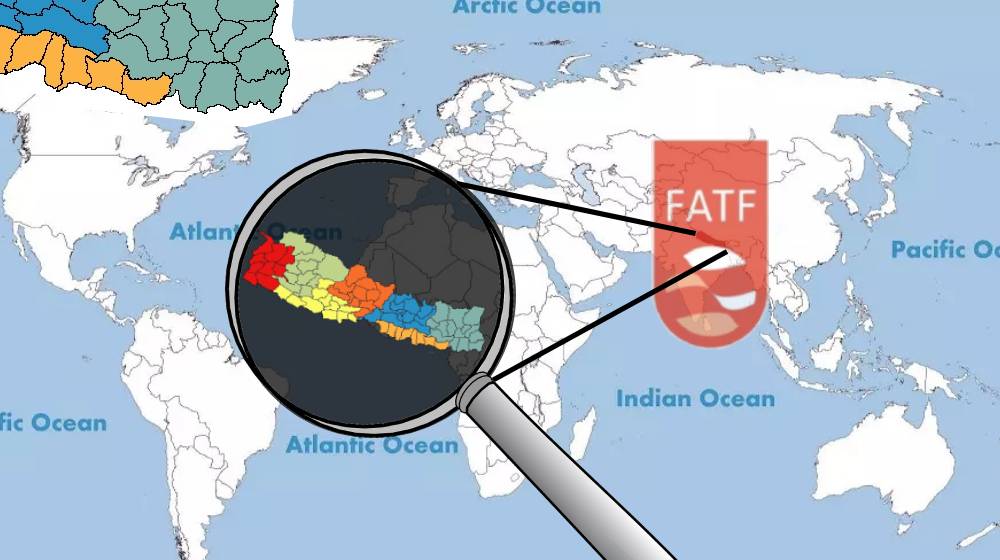
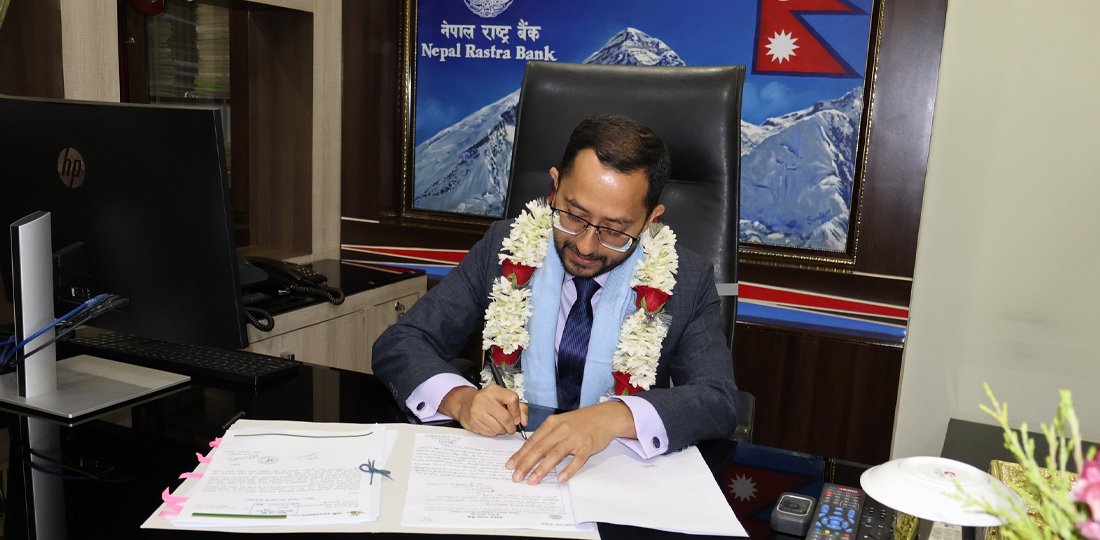
Nepal’s effort to exit the international anti–money laundering (AML) grey list has entered a decisive phase, with growing emphasis on the role of Nepal Rastra Bank (NRB). The Banking Sector Reform Recommendation Task Force, 2082 has made it clear that the process will not succeed through routine compliance alone. Instead, it requires strong institutional leadership, rapid reforms, and sustained coordination—areas where the central bank’s influence is considered critical.
A Shift from Compliance to Leadership
The task force’s report marks an important shift in how Nepal’s grey-list challenge is framed. Rather than treating the issue as a technical or procedural obligation, the report identifies it as a systemic problem linked to governance, regulatory design, and institutional capacity. In this context, NRB is not seen merely as a regulator but as the primary driver of reform. The report explicitly states that the central bank’s responsibility in exiting the grey list is “decisive,” signaling that success or failure will largely depend on how proactively NRB acts.
Strengthening the Financial Intelligence Framework
One of the most significant recommendations concerns the Financial Intelligence Unit (FIU). In line with the fifth amendment to the Anti–Money Laundering Act, the task force argues that the FIU must be developed as an independent and empowered body. This recommendation reflects concerns that weak autonomy, limited authority, and operational constraints have undermined Nepal’s ability to detect, analyze, and act on suspicious financial activities.
The report highlights that money laundering risks are closely tied to payment systems and banking channels, placing NRB at the center of AML enforcement. Without a strong FIU backed by decisive central bank oversight, Nepal’s compliance with international AML standards is likely to remain superficial rather than effective.
Time-Bound Reforms and the Two-Year Target
A notable aspect of the report is its call for a clear timeline. The task force proposes a two-year window to remove Nepal from the grey list, urging NRB to lead coordinated reforms at policy, institutional, and implementation levels. This reflects an understanding that international monitoring bodies assess not only laws on paper but also enforcement outcomes over time.
The emphasis on deadlines also suggests frustration with slow reform cycles. By assigning leadership responsibility to NRB, the report implicitly warns that delays, fragmented authority, or weak coordination could prolong Nepal’s grey-list status, with negative consequences for foreign investment, remittance flows, and international banking relationships.
Linking AML Reforms with Economic Revival
Beyond AML compliance, the report draws a direct connection between financial sector reforms and Nepal’s sluggish economic recovery. Despite ample liquidity and falling interest rates, economic activity has remained weak. The task force attributes this disconnect to structural problems within the banking system, including excessive regulatory rigidity and risk aversion.
From an analytical standpoint, this linkage is crucial. Grey-list status raises transaction costs, increases scrutiny from foreign banks, and discourages cross-border capital flows. At the same time, overly cautious domestic banking practices further constrain credit expansion. The report suggests that NRB must strike a careful balance—maintaining AML discipline while allowing sufficient policy flexibility to support productive lending.
Rethinking Merger Policies and Banking Structure
The task force also questions Nepal’s merger-driven banking reform strategy. While mergers were intended to strengthen institutions, the report notes that many non-merged banks are performing better than their merged counterparts. Poor integration of systems, software, products, and human resources has diluted expected efficiencies.
Importantly, the report does not reject mergers outright but calls for a more measured, evidence-based approach. It recommends giving banks greater autonomy in deciding merger terms, including swap ratios, within legal boundaries, while NRB acts as a facilitator rather than an enforcer. This reflects a broader interpretation: structural reforms imposed without adequate preparation can weaken, rather than strengthen, financial stability.
Managing Risk Without Freezing Credit
Another key interpretation emerging from the report is the need to recalibrate risk perception. Excessive fear of regulatory penalties and compliance failures has, according to the task force, distanced banks from the real economy. While depositor protection remains paramount, the report argues that risk management should not translate into credit paralysis.
This is particularly relevant for post–Covid-19 recovery. The recommendation to provide additional credit—based on business viability and collateral—to struggling enterprises reflects an attempt to align financial stability with economic revival. The report also stresses that loan restructuring and rescheduling must prioritize depositor interests, reinforcing trust in the banking system while allowing flexibility for borrowers.
Fiscal–Monetary Coordination and Concessional Lending
The report’s suggestion that NRB temporarily assume responsibility for pending government subsidies under concessional loan programs is notable. By proposing reimbursement through dividends payable to the government, the task force highlights the need for tighter fiscal–monetary coordination. This recommendation implies that unresolved fiscal commitments have weakened credit programs and that NRB’s intervention could restore their effectiveness in the short term.
Taken together, the report frames Nepal’s grey-list challenge as both a compliance issue and a structural reform agenda. It positions NRB as the central institution capable of aligning AML enforcement, banking sector reform, and economic recovery. The underlying message is clear: without decisive leadership from the central bank, Nepal risks remaining trapped in a cycle of partial reforms, weak enforcement, and subdued growth.
In essence, the task force is calling for NRB to move beyond cautious regulation toward strategic leadership—one that simultaneously satisfies international AML standards and restores confidence in Nepal’s financial and economic system.