By Sandeep Chaudhary
Why Nepal’s Non-Food Inflation is Stable Despite Rising Education & Housing Costs
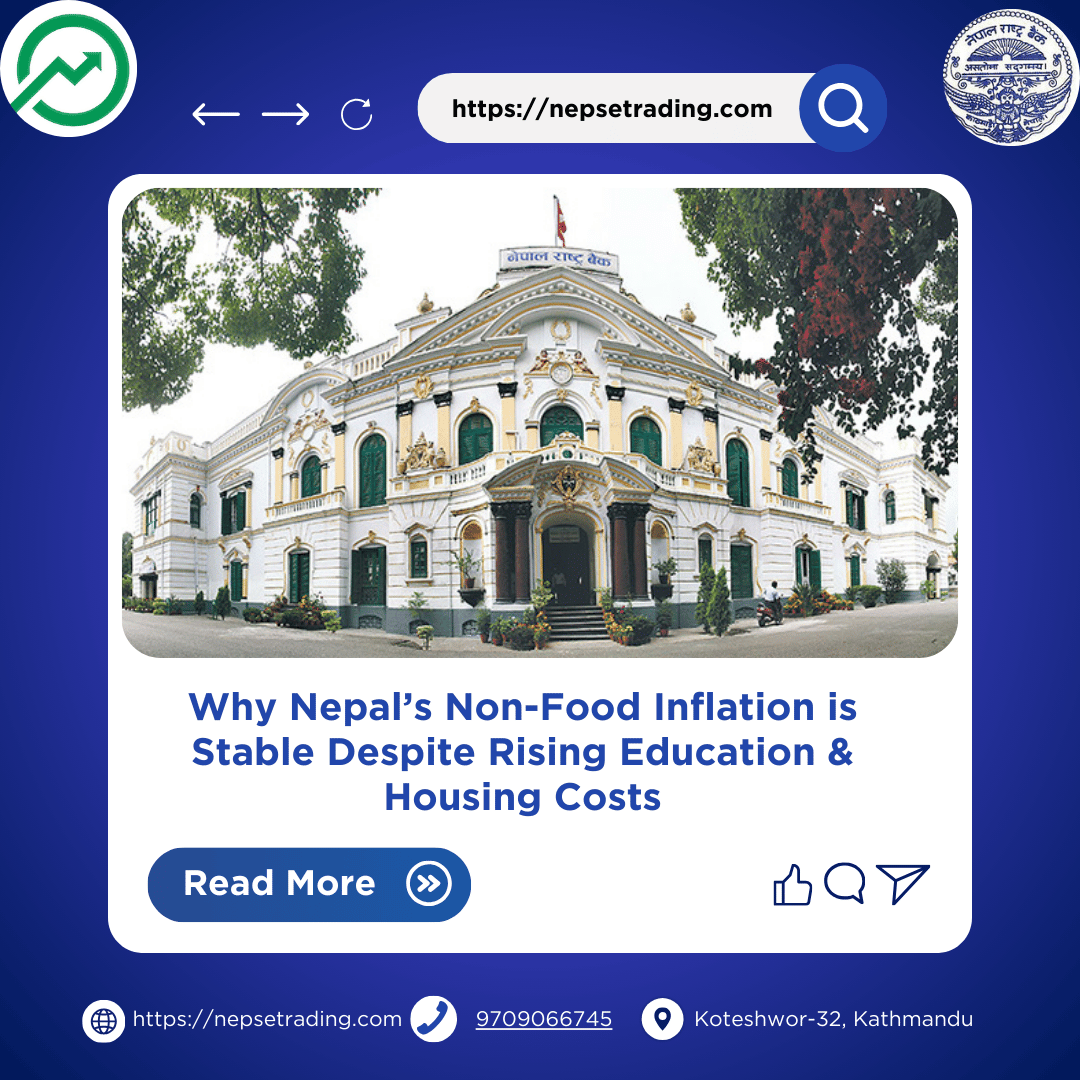
Nepal’s non-food inflation picture in the first month of FY 2025/26 presents an interesting contrast: some service sectors are driving strong price increases, while others are showing stability, keeping the overall non-food index largely balanced. The Non-food and Services group, which carries a dominant 64.51% weight in the CPI basket, rose by 3.95% year-on-year and 2.94% compared to three years ago. This signals moderate but steady price pressures, without the volatility seen in food categories.
Within this group, the sharpest rise was recorded in education costs, which climbed by 7.67% year-on-year, reflecting higher tuition fees, private schooling demand, and ancillary expenses like books and coaching. Similarly, clothes and footwear rose 6.84%, and miscellaneous goods and services surged 10.60%, all of which directly raise household living costs. Housing and utilities, another critical component, increased by 1.02% year-on-year, indicating ongoing but contained pressure from rents, water, and electricity.
However, other categories helped offset these gains. Health services rose by just 2.98%, transportation by 3.94%, and communication by 2.69%, all relatively mild compared to education. Even more striking, insurance and financial services fell slightly by -0.22%, while sectors like restaurants, recreation, and alcoholic drinks showed little or no increase. This mix of moderate rises and stability in key service costs has kept the overall non-food inflation relatively stable, despite significant jumps in selected areas.
This balance highlights that while Nepali households face rising costs in education and clothing, they are not yet seeing an across-the-board surge in non-food prices. The stability of housing, utilities, and health costs—combined with declines in financial services—has softened the impact of sector-specific inflation. Still, if education and service-related inflation continues at current rates, non-food inflation could gradually harden in the months ahead.