By Sandeep Chaudhary
Why Nepal’s Petroleum Imports Dropped by 5.6% Despite High Demand in 2025
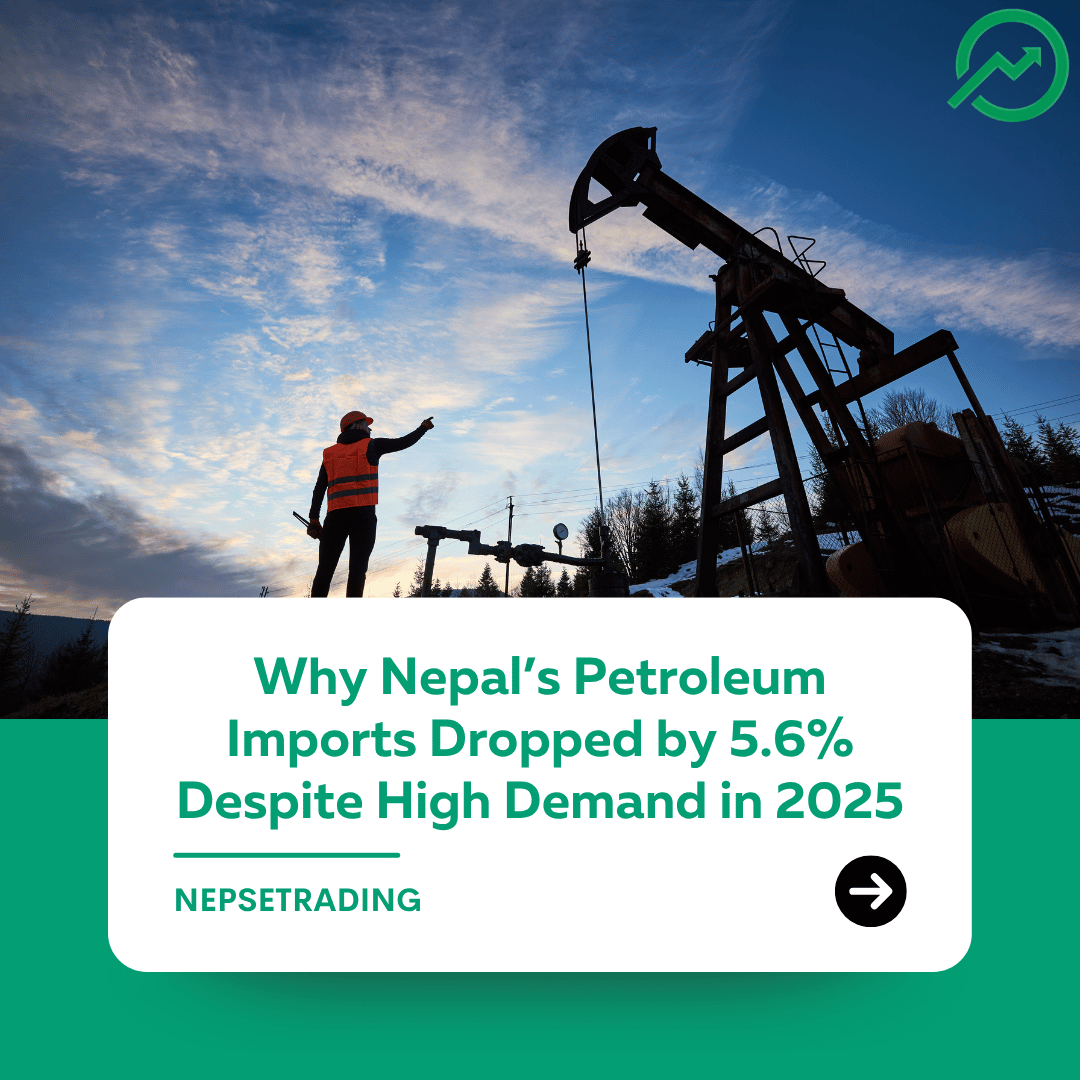
Nepal’s petroleum imports experienced a notable 5.6% decline in the first month of 2025/26, amounting to Rs. 18.46 billion, compared to Rs. 19.57 billion in the same period of 2024/25. This reduction is significant because petroleum products traditionally hold the largest share in Nepal’s total imports, and even in this period, they still accounted for 12.9% of total imports. At the same time, the overall imports of the country surged by 11.4%, showing that the drop in petroleum imports was not part of a broader contraction but rather the result of sector-specific changes in energy consumption, pricing, and policy. Several interrelated factors explain this decline. One major driver is the fall or stabilization of global crude oil prices, which directly reduces the import bill even when physical demand remains high. Additionally, Nepal’s growing reliance on domestic hydropower production has started to reduce petroleum dependency, especially for electricity generation and transport sectors. Over the past few years, Nepal has been expanding its hydropower capacity, and with new projects coming online, electricity supply has become more reliable, encouraging substitution of petroleum-based energy with domestic clean power. Alongside this, the increasing adoption of electric vehicles (EVs), both two-wheelers and four-wheelers, supported by government incentives, is gradually lessening demand for petrol and diesel.
Another important factor is the tight foreign exchange and import control policies introduced by Nepal Rastra Bank (NRB), which encouraged efficient use of petroleum and discouraged unnecessary imports. Similarly, improvements in public transportation networks, reduced speculative hoarding of fuel, and stricter monitoring of petroleum distribution also contributed to lower demand. Furthermore, the decline is partly structural, as households and industries are increasingly investing in alternatives like induction cooktops, electric heating systems, and solar energy, reducing long-term reliance on imported petroleum. Interestingly, while petroleum imports declined, other commodities surged drastically: crude soybean oil imports jumped by 707.9%, coal imports grew by 53.2%, rice imports rose by 45.9%, and transport equipment imports increased by 30.6%. These shifts indicate that Nepal’s import basket is undergoing a rebalancing process, with petroleum no longer growing at past rates while other essential goods and industrial inputs are rising.