Daily Movement in Deposits and Lending – Nepal’s Commercial & Financial Institutions
Author
Nepsetrading
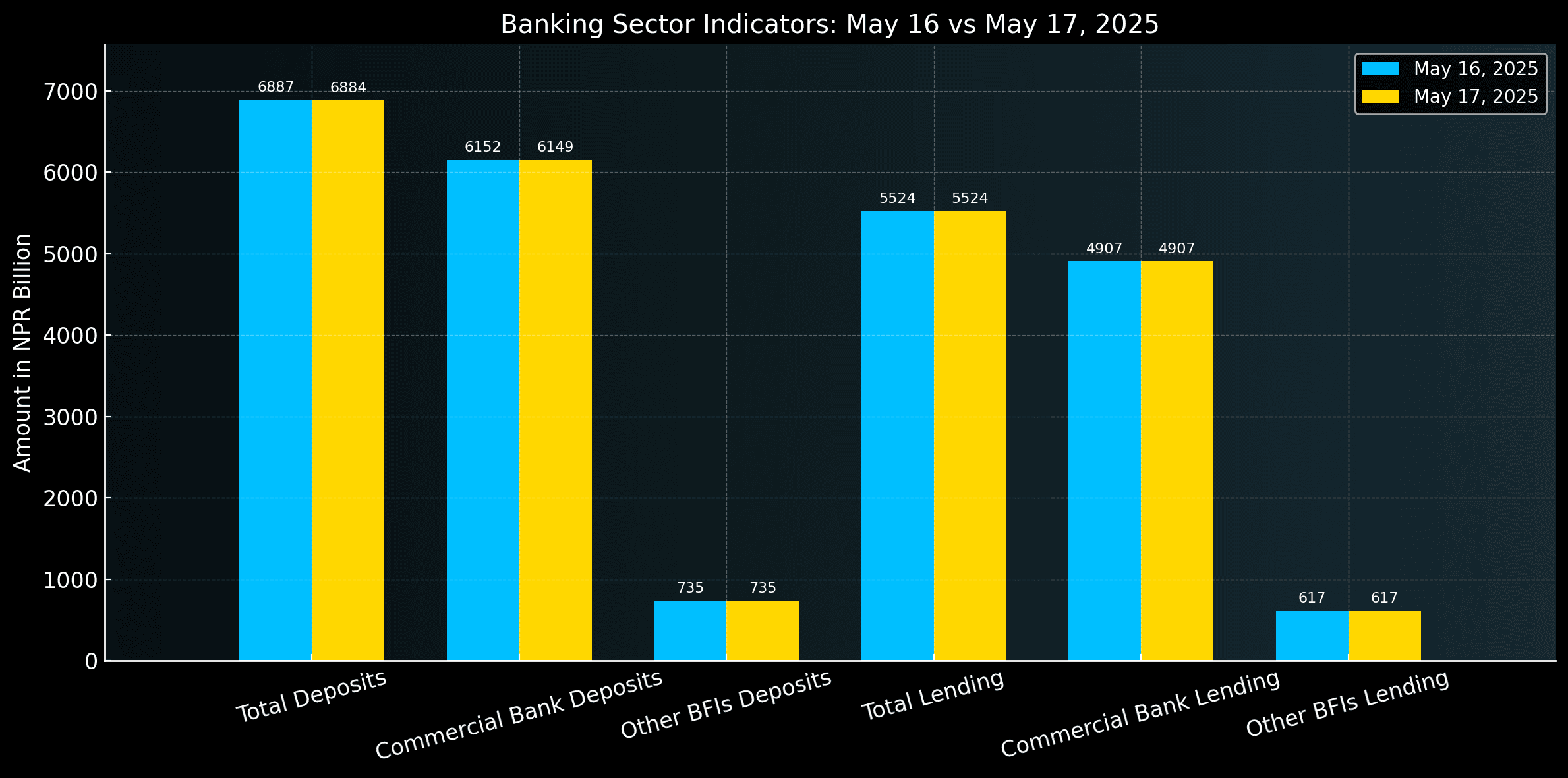
Nepal’s banking sector showed signs of overall stability on May 17, 2025, with marginal changes in key financial indicators compared to the previous day. According to the latest data, total deposits across all banking institutions stood at NPR 6,884 billion, a slight decrease from NPR 6,887 billion recorded on May 16. This decline of NPR 3 billion is relatively insignificant and does not signal a broader liquidity concern at this stage.
Commercial banks held the lion’s share of the deposits, amounting to NPR 6,149 billion—down by NPR 3 billion from the previous day. Deposits in other banks and financial institutions (BFIs) remained unchanged at NPR 735 billion, reflecting continued depositor confidence in non-commercial entities.
On the lending side, no changes were observed. Total lending across the banking system remained steady at NPR 5,524 billion. Of this, commercial banks accounted for NPR 4,907 billion, while other BFIs held NPR 617 billion in loans. This consistency in lending suggests that banks are maintaining a cautious yet steady credit flow, likely influenced by current macroeconomic signals and regulatory guidance.
The Credit-to-Deposit (CD) Ratio, a critical liquidity indicator, rose slightly to 79.04% from 79.01% the previous day. This marginal uptick reflects a stable balance between banks’ lending and deposit mobilization activities.
Meanwhile, the interbank interest rate for local currency (LCY) transactions remained unchanged at 3.00%, indicating continued ease in short-term liquidity among banks and minimal stress in interbank borrowing.
Overall, the latest figures indicate a balanced and stable financial system with manageable fluctuations in daily banking operations. However, the slight dip in deposits—particularly in commercial banks—will be closely monitored by market participants and regulators for any potential liquidity tightening signals.