By Dipesh Ghimire
Analysis of Poverty Distribution Across Nepal: A Look at the Districts
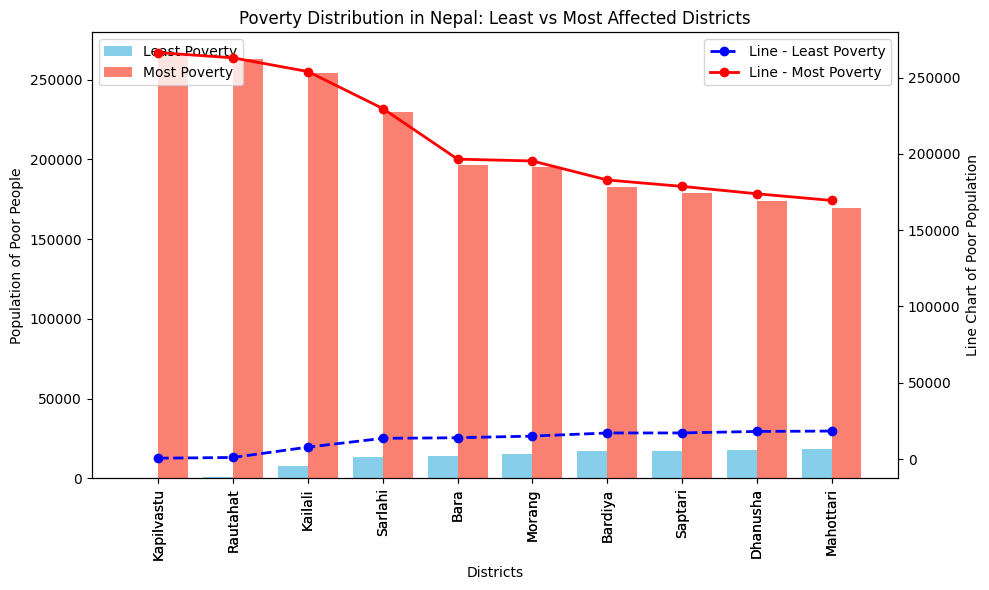
Nepal continues to grapple with poverty, with over 6.2 million people living below the poverty line. A recent study has revealed some stark disparities in poverty levels across the country, showing that while some districts have a significantly lower population of poor people, others are struggling with a much higher proportion of their population living in poverty. These findings come as part of a broader analysis of the poorest regions in Nepal, offering a glimpse into the socio-economic challenges that lie ahead for policymakers.
The Districts with the Least Poverty
Interestingly, some of the least affected districts in terms of poverty are located in more remote regions of Nepal. These include:
Manang: 598 people live in poverty
Mustang: 1,076 people
Rasuwa: 7,867 people
Dolpa: 13,612 people
Tehrathum: 13,996 people
Solukhumbu: 15,070 people
Magdi: 17,125 people
Parbat: 17,151 people
Rukum East: 18,129 people
Humla: 18,377 people
These districts represent the least populous areas in Nepal, and their low poverty figures may reflect better access to resources or unique socio-economic structures that contribute to lower poverty levels. It's important to note that some of these districts, such as Manang and Mustang, are famous for their tourism sectors, which may also contribute to lower poverty rates.
The Districts with the Most Poverty
On the other hand, the districts facing the highest levels of poverty include:
Kapilvastu: 266,343 people live in poverty
Rautahat: 262,905 people
Kailali: 253,928 people
Sarlahi: 229,694 people
Bara: 196,536 people
Morang: 195,352 people
Bardiya: 182,893 people
Saptari: 178,697 people
Dhanusha: 173,863 people
Mahottari: 169,491 people
These districts, particularly those in the southern Terai region, have the highest concentrations of poverty. This is reflective of long-standing structural issues such as limited access to education, healthcare, and economic opportunities, which are compounded by the region's vulnerability to natural disasters, agricultural dependency, and political instability.
Kathmandu’s Poverty Situation
Kathmandu, Nepal’s capital and economic hub, also faces significant poverty challenges. Within the Kathmandu district, there are 166,201 people living in poverty. Of this, 59,218 people live in Kathmandu Metropolitan City, the country’s largest urban center. While Kathmandu is home to a substantial proportion of Nepal’s wealth, it still struggles with urban poverty, particularly in the informal sectors, where workers often face low wages and limited social security.
Implications for Policy and Economic Development
These statistics reveal a clear divide between rural and urban poverty in Nepal. While remote areas like Manang and Mustang are faring better, larger districts like Kapilvastu and Rautahat highlight the continued struggle faced by rural and underdeveloped areas. These findings are essential for policymakers, as they underline the need for targeted interventions that not only focus on urban poverty but also address the deep-rooted issues in rural areas. Strategies for improving access to education, healthcare, and infrastructure, especially in the southern and mid-hill regions, will be crucial in reducing poverty over the long term.
Furthermore, the relatively high poverty rate in Kathmandu, despite its economic dominance, emphasizes the need for urban planning and welfare systems that cater to the marginalized sections of the population, particularly migrants and those in informal employment.
Conclusion: Bridging the Gap
As Nepal moves toward a more equitable economic future, bridging the gap between rich and poor regions will require concerted effort from both the government and civil society. Tackling poverty in Nepal is not just about increasing economic growth, but ensuring that the benefits of growth reach all corners of the country—especially those suffering from the highest levels of deprivation.
These figures provide a comprehensive overview of the existing challenges, but they also present an opportunity for policymakers to take a more targeted, data-driven approach in addressing the systemic issues that lead to poverty in Nepal. By focusing on education, healthcare, infrastructure, and sustainable development in the most affected regions, the country can gradually reduce its poverty rates and ensure a more prosperous future for all Nepalis.