By Dipesh Ghimire
Middle East War Escalates: Rising Casualties, Surging Oil Prices and Growing Global Economic Concerns
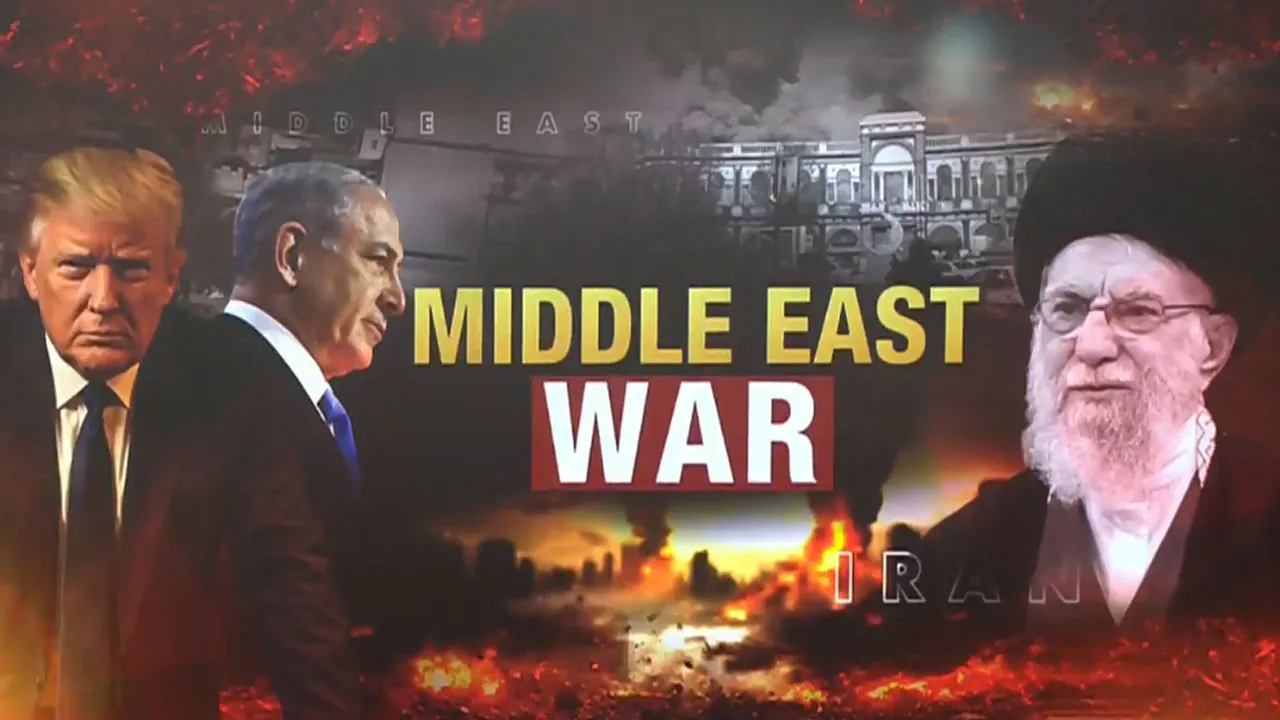
The war that began on February 28, 2026 in Iran, involving Iran, Israel and the United States, has rapidly escalated into one of the most serious geopolitical crises in recent years. According to international media reports, including coverage published by Al Jazeera on March 9, the conflict has already claimed the lives of more than 1,250 people. What initially appeared to be a direct confrontation between Iran and Israel has now expanded beyond those two countries, spreading tensions across several nations in the Persian Gulf region.
The conflict intensified dramatically during the early days of the war. Reports suggest that dozens of senior Iranian officials, including high-ranking military and political figures, were killed in the initial attacks. The incident sparked strong reactions globally, particularly because the strikes targeted key leadership figures of Iran. The event has triggered international debate about sovereignty, military intervention, and the increasing volatility of the Middle East.
In response to the attacks, Iran launched retaliatory operations targeting U.S. military bases and strategic assets across Gulf countries. According to Iran’s Islamic Revolutionary Guard Corps (IRGC), the strikes were carried out under a military campaign aimed at countering what Tehran described as aggression from the United States and Israel. As a result, tensions have expanded across the region, affecting countries such as Saudi Arabia, the United Arab Emirates, Qatar, Bahrain, Kuwait, Jordan, and Lebanon, where U.S. military presence or regional alliances have drawn them into the broader conflict environment.
Major global powers have reacted cautiously to the unfolding crisis. China and Russia have strongly criticized the escalation of military actions, calling for restraint and diplomatic dialogue. However, their response so far has remained largely diplomatic rather than military. Countries such as China and India are urging negotiations and dialogue to resolve the crisis, reflecting widespread concern that the conflict could spiral into a broader regional or even global confrontation.
One of the most immediate global impacts of the conflict has been seen in the international energy market. The war has disrupted oil infrastructure and threatened shipping routes in the Gulf, which is one of the world’s most important energy corridors. Following attacks on energy facilities, global crude oil prices surged sharply, with prices reportedly rising by around 24 percent and crossing $115 per barrel in early March. Analysts warn that if oil prices remain above $100 for an extended period, the global economy could face renewed inflationary pressure and economic instability.
The consequences of the conflict are not limited to energy markets alone. Rising fuel costs are already contributing to increased prices for food, transportation and other essential commodities worldwide. Economists note that developing and import-dependent countries are likely to suffer the most from such shocks. Nations that rely heavily on imported fuel and foreign employment income could face significant economic stress if the conflict continues.
For countries like Nepal, the implications are particularly concerning. Nepal’s economy is highly dependent on remittances from migrant workers, especially those employed in the Gulf region. Approximately 1.9 million Nepali workers are employed in Gulf countries, and their earnings contribute significantly to Nepal’s economy. Remittances currently account for around NPR 17 trillion annually, forming a crucial pillar of the country’s economic stability. Any prolonged instability in the Middle East could disrupt employment opportunities for these workers and reduce remittance inflows.
There are already signs that the conflict could directly affect Nepali workers in the region. Reports indicate that a Nepali worker in the United Arab Emirates recently lost his life while assisting in efforts to neutralize a drone near an international airport. While this appears to be an isolated incident, it highlights the growing risks faced by migrant workers living in areas affected by escalating military tensions.
Beyond immediate security concerns, the broader economic consequences could also be significant. If the war continues and spreads further across the Gulf, industries such as construction, aviation, logistics and energy—where many migrant workers are employed—could slow down or temporarily halt operations. This could lead to job losses and financial uncertainty for thousands of workers and their families back home.
Another concern is the disruption of global oil supply chains. Iran exports roughly 1.6 million barrels of oil per day, and any sustained disruption to that supply could have ripple effects across the global economy. Attacks on energy facilities, including reported strikes on major refining infrastructure such as facilities connected to Saudi Aramco, have heightened fears about long-term instability in the global energy market.
Experts warn that wars of this scale rarely end quickly. Once conflicts escalate and multiple countries become involved, the political and military dynamics often make de-escalation extremely difficult. Powerful nations may continue competing for strategic influence, while smaller and economically weaker countries bear the indirect consequences through inflation, disrupted trade, and economic instability.
Ultimately, the unfolding crisis highlights the vulnerability of smaller economies in an increasingly interconnected world. Countries like Nepal, which depend heavily on foreign employment and imported energy, remain particularly exposed to global geopolitical shocks. The situation underscores the need for long-term economic resilience, domestic employment generation, and stronger policies aimed at protecting citizens working abroad.
As tensions continue to rise in the Middle East, many countries are calling for diplomatic solutions to prevent the conflict from evolving into a wider global confrontation. For nations with limited economic and military influence, maintaining neutrality and prioritizing the safety and livelihood of their citizens abroad remains the most pragmatic approach. The coming weeks will be critical in determining whether diplomatic efforts succeed in containing the crisis—or whether the region moves closer to a broader and more destructive war.