By Dipesh Ghimire
Analyzing Global IME Bank’s Q2 Performance: A Balance of Stability and Growth Challenges
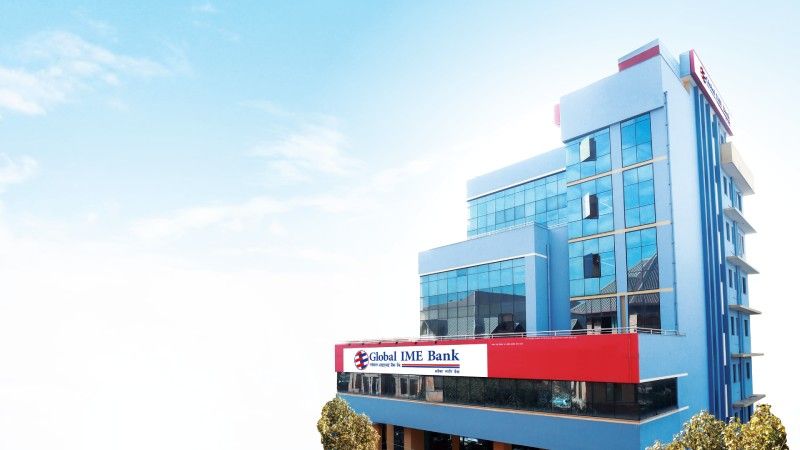
KATHMANDU – Global IME Bank (GBIME), the heavy hitter of Nepal’s banking sector, has unveiled its second-quarter financial results for the current fiscal year. While the headline numbers show a steady ship, a deeper dive into the balance sheet reveals a bank navigating through a complex interest rate environment while leaning on its massive scale for stability.
The Profitability Pivot The bank reported a net profit of NPR 3.25 billion, a 6.50% growth year-on-year. While a growth of six percent might seem modest compared to the high-flying years of the past, in the current sluggish economy, this represents a resilient performance. Interestingly, this profit growth did not come from its core lending business—net interest income actually fell by 3.33%. Instead, the bank compensated for this by boosting its non-interest income, particularly from fees and commissions, which jumped by nearly 10%.
Efficiency and Shareholder Value For the average investor, the Earnings Per Share (EPS) is the number that matters, and it has climbed to NPR 17.06. This is a vital sign of health, suggesting that even with its massive capital base of NPR 38.11 billion, the bank is still capable of generating meaningful returns for its shareholders. The Price-to-Earnings (P/E) ratio of 13.24 suggests that the stock is currently trading at a relatively conservative valuation, which may catch the eye of value investors looking for "undervalued" blue-chip stocks.
The Distributable Dilemma Despite the rise in net profit, the distributable profit tells a more cautious story. Standing at NPR 2.42 billion, with a distributable EPS of NPR 12.73, it indicates that a significant portion of the bank’s earnings is being diverted toward regulatory reserves or provisioning. For shareholders eyeing the next dividend cycle, this suggests that while the bank is profitable, the payout might be more conservative than the net profit growth implies.
Asset Strength and Market Position Global IME’s balance sheet remains a behemoth. With NPR 605 billion in deposits and NPR 432 billion in loans, the bank controls a massive slice of the Nepali market. The gap between its deposits and loans suggests a healthy liquidity cushion, though it also points to a broader challenge: the bank is sitting on a mountain of cash (liquidity) that it hasn't yet fully deployed into the credit market, likely due to low credit demand or a cautious lending stance to avoid bad loans.
The Bottom Line With a Net Worth per share of NPR 175.29, the bank remains one of the most financially stable institutions in the country. The "Double-B" growth (steady but not spectacular) reflects a transition phase. As interest rates stabilize and credit demand picks up in the second half of the year, Global IME is well-positioned to leverage its massive infrastructure to turn that liquidity into higher interest income.