By Dipesh Ghimire
Large Reservoir Hydropower Projects Key to Nepal’s Energy Security and Economic Sustainability
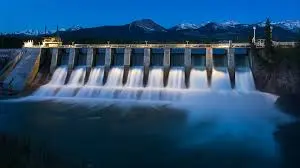
Kathmandu — Ensuring energy security, reducing electricity imports, and steering Nepal toward sustainable economic growth will require a decisive shift toward large-scale and reservoir-based hydropower projects, according to energy sector experts. Despite a significant rise in installed electricity capacity in recent years, Nepal continues to face seasonal power shortages due to its heavy dependence on run-of-river hydropower projects.
Speaking at an energy policy dialogue organized by Martin Chautari, former Chief Executive Officer of Hydroelectricity Investment and Development Company Ltd, Arjun Kumar Gautam, said that Nepal’s current hydropower expansion has not translated into year-round energy reliability. He explained that because most projects are run-of-river, electricity generation drops sharply during the dry season, forcing the country to import large volumes of power every year.
Gautam noted that this structural imbalance in generation has undermined the benefits of capacity expansion. While monsoon-season electricity surplus has become common, winter shortages remain persistent. As a result, Nepal continues to spend a substantial amount of foreign currency on electricity imports, weakening the country’s balance of payments and energy self-reliance.
According to Gautam, large reservoir-based hydropower projects are critical to stabilizing electricity supply throughout the year. Such projects can store water during the wet season and release it during dry months, ensuring consistent generation. He argued that energy self-sufficiency cannot be achieved without addressing seasonal variability, and reservoir projects offer the most viable solution.
Beyond domestic supply, Gautam emphasized the export potential of hydropower as a strategic economic opportunity. With rising energy demand in neighboring countries such as India and Bangladesh, Nepal is well positioned to develop hydropower as an export-oriented sector. Large-scale projects, he said, would allow Nepal to earn foreign exchange while strengthening regional energy cooperation.
A Broader Engine for Economic Growth
In a report presented during the discussion, Gautam highlighted that large hydropower projects should not be viewed solely as energy infrastructure. Instead, he described them as multi-dimensional economic drivers capable of stimulating industrial growth, tourism, agriculture, and the service sector. According to the analysis, such projects can generate employment, accelerate infrastructure development, and promote balanced regional growth.
Gautam also linked reservoir-based and multi-purpose hydropower projects to Nepal’s international climate commitments. As the country has pledged to move toward net-zero carbon emissions, clean and renewable energy sources will play a central role. He noted that reservoir projects contribute not only to electricity generation but also to flood control, irrigation, water management, and climate adaptation, making them particularly valuable in the context of increasing climate risks.
Reducing Dependence on Imported Energy
The continued reliance on fossil fuels and imported electricity, Gautam warned, poses long-term economic and strategic risks. Expanding domestic renewable energy production through large hydropower projects would help reduce Nepal’s trade deficit and strengthen energy independence. Over time, this shift could ease pressure on foreign currency reserves and create a more resilient energy system.
Policy, Investment, and Execution Challenges
Despite the government’s stated priority on large hydropower projects, actual progress on construction remains slow. Gautam pointed to limited financial capacity, complex approval procedures, policy uncertainty, and the absence of effective financing models as key obstacles. Without addressing these bottlenecks, he warned, Nepal risks missing a critical window to transform its energy sector.
However, the report also outlined potential solutions. Gautam argued that large projects could be realized by systematically mobilizing domestic financial resources, including banks and financial institutions, the Employees Provident Fund, the Citizens Investment Trust, insurance companies, the Social Security Fund, non-resident Nepalis, and remittance flows. If these resources are coordinated under a clear policy framework, he said, Nepal has the capacity to finance and build large reservoir hydropower projects.
Overall, the discussion underscored a central message: while Nepal has made visible progress in hydropower development, long-term energy security and economic transformation will depend on a strategic pivot toward large, reservoir-based, and multi-purpose projects—supported by coherent policy, innovative financing, and decisive execution.