By Dipesh Ghimire
Private Sector Anxiety Takes Center Stage as FNCCI Presses Political Parties for Policy Clarity
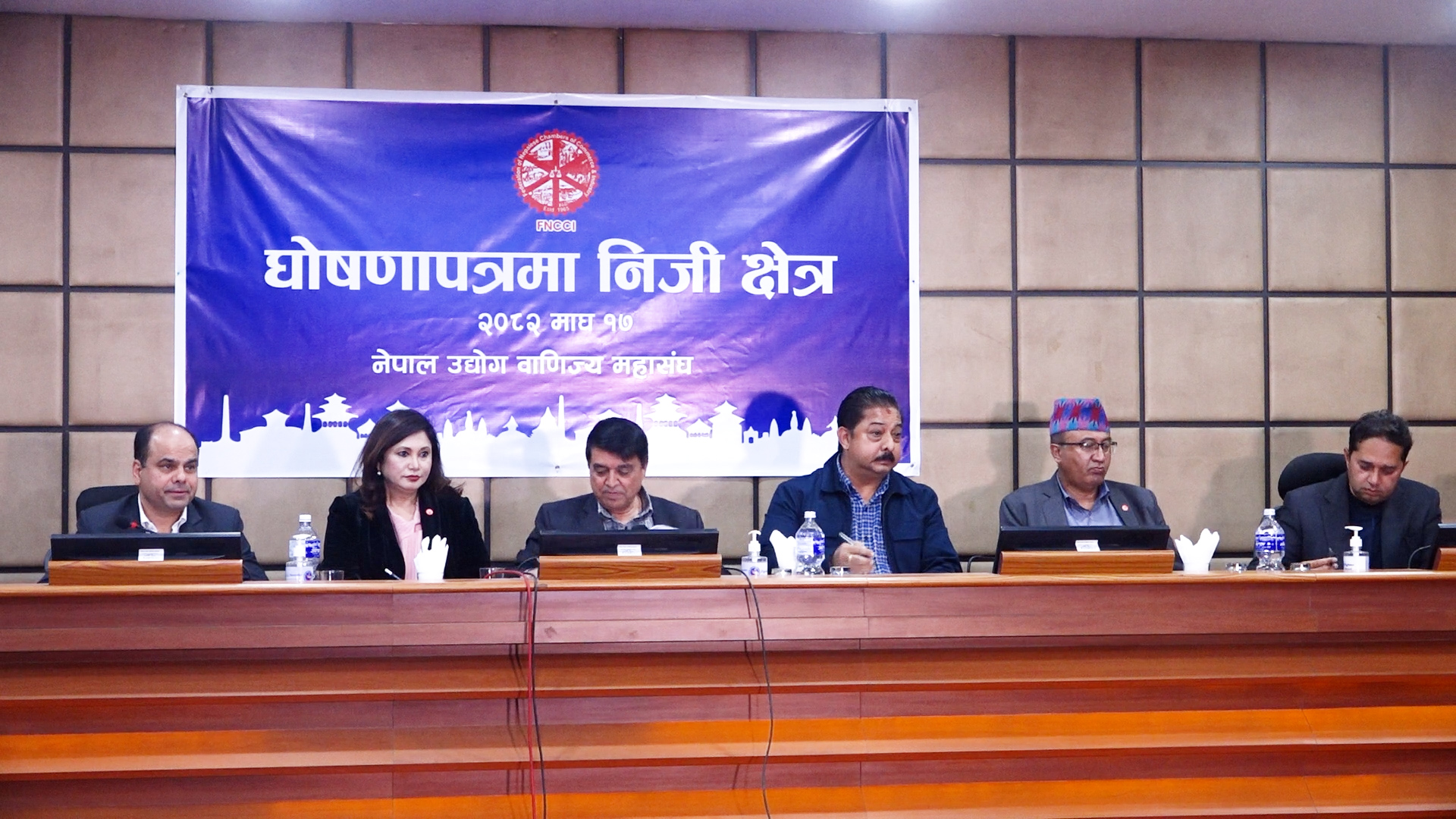
Kathmandu — With national elections approaching, concerns over Nepal’s economic direction are increasingly converging on the role of the private sector. The Federation of Nepalese Chambers of Commerce and Industry (FNCCI) has called on political parties to clearly articulate private sector–friendly policies in their election manifestos, warning that prolonged neglect of businesses could undermine economic recovery and long-term stability.
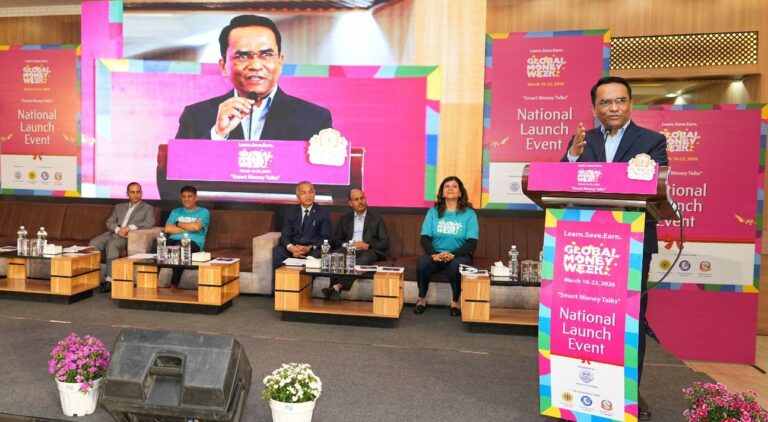
At a press briefing held in Kathmandu, FNCCI President Chandra Prasad Dhakal framed the issue not as a sectoral demand, but as a national economic concern. He argued that an economy in which the private sector contributes over four-fifths of GDP and generates the vast majority of jobs cannot afford prolonged uncertainty, weak confidence, and inconsistent policy signals. According to Dhakal, the erosion of private sector morale has reached a critical level, threatening investment flows at a time when the economy needs expansionary momentum.
One of the most telling indicators highlighted by FNCCI was the contradiction between banking liquidity and investment stagnation. Despite sufficient funds in the financial system, businesses remain reluctant to invest. This, Dhakal noted, reflects not a shortage of capital but a deficit of confidence. In economic terms, this signals heightened risk perception—where policy instability, regulatory unpredictability, and weak protection of assets discourage long-term commitments even when financing is available.
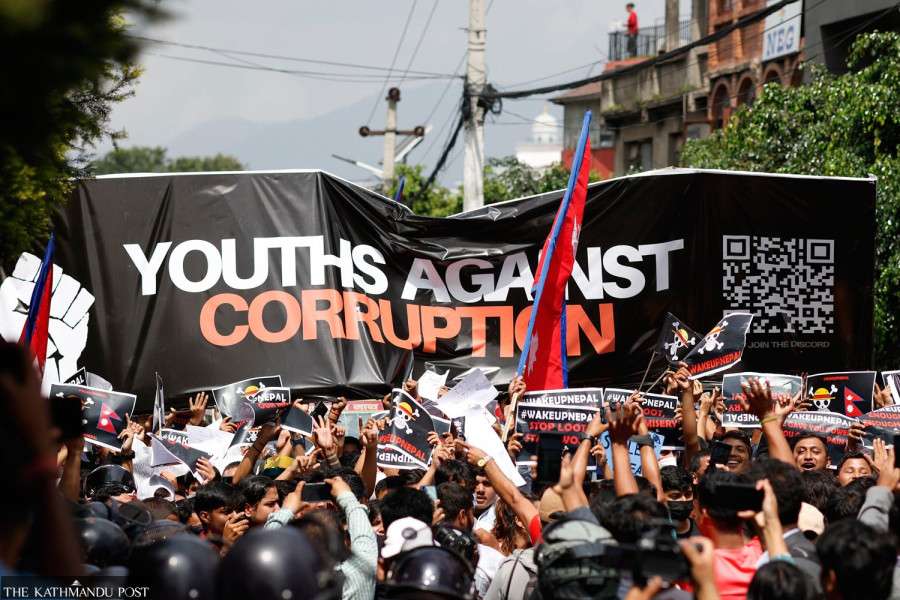
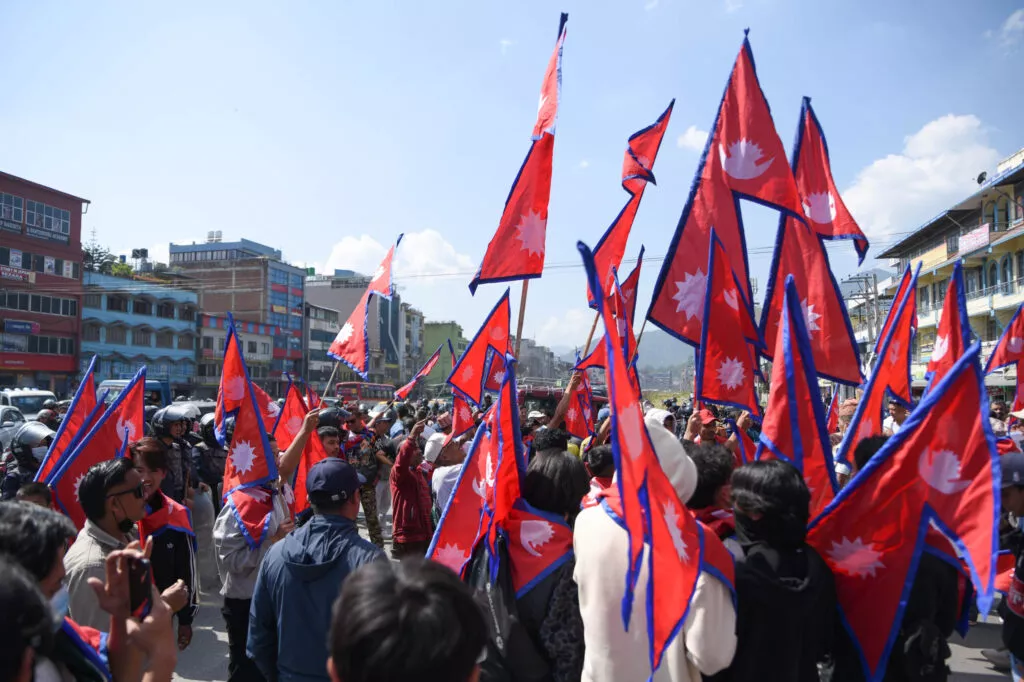
The federation also linked current investor hesitation to recent episodes of unrest. According to FNCCI estimates, protests in Bhadra 23 and 24 resulted in direct physical damage of around NPR 36 billion, while overall economic losses—including supply chain disruptions, lost production, and foregone revenue—approached NPR 80 billion. More damaging than the immediate losses, however, has been the lingering sense of insecurity. FNCCI argues that when businesses cannot be assured of physical and legal protection, capital naturally seeks safer environments.
Against this backdrop, FNCCI has proposed a Private Sector Protection and Promotion Plan, aimed at restoring trust between the state and entrepreneurs. The proposal includes declaring industrial and commercial areas as peace zones, establishing a specialized industrial security mechanism, and introducing a fast-track, single-window system for rebuilding damaged infrastructure. The underlying interpretation is clear: without institutional guarantees of safety and swift recovery, investment appetite will remain weak regardless of policy promises.
Beyond security, FNCCI’s critique extends to Nepal’s broader economic framework. The federation questioned whether the current socialism-oriented economic narrative and the three-pillar model—public, private, and cooperative—have delivered the expected outcomes in employment generation and capital formation. Its conclusion suggests that ideological positioning, without execution clarity, has diluted policy effectiveness and confused investor expectations.
Legal and procedural barriers emerged as another major concern. FNCCI identified more than a dozen laws, regulations, and administrative practices that it claims actively discourage entrepreneurship. The call to digitize the entire business lifecycle—from registration to closure—through the Nagarik App reflects a broader interpretation that Nepal’s business environment remains overly bureaucratic and transaction-heavy, increasing costs and delays for firms, particularly small and medium enterprises.
Sectoral priorities outlined by FNCCI further reveal its growth diagnosis. Agriculture and tourism were identified as underutilized employment engines, requiring targeted incentives rather than generic subsidies. Programs such as organic farming clusters, digital subsidy distribution, and export-oriented agriculture indicate a shift toward productivity-based support. In tourism, the federation’s emphasis on niche markets—such as wedding, conference, and destination tourism—signals recognition that traditional models alone may not deliver scale.
Energy and infrastructure were framed as critical multipliers rather than standalone sectors. FNCCI argued that private investment in hydropower, transmission lines, and airports must be facilitated through tax incentives, land acquisition support, and clear operational frameworks. The repeated mention of Nijgadh, Gautam Buddha, and Pokhara airports reflects concerns that infrastructure assets without viable operating models risk becoming fiscal liabilities instead of growth catalysts.
Tax policy, however, remains the most sensitive fault line. FNCCI’s demand for a simpler, stable, and competitive tax regime underscores private sector frustration with frequent changes, multiple VAT rates, and overlapping tax obligations. Proposals such as reducing taxes on productive industries, eliminating double taxation, and offering income tax rebates for reinvestment suggest an attempt to realign fiscal policy with growth and capital formation rather than short-term revenue extraction.
In its concluding message, FNCCI drew a direct link between private sector confidence and national prosperity. The federation argued that employment expansion, revenue growth, and economic resilience are outcomes—not inputs—and that they materialize only when businesses operate in a predictable, secure, and respectful policy environment. As political parties finalize their election manifestos, FNCCI’s intervention serves as both a warning and a policy roadmap: economic revival, it insists, will depend less on slogans and more on credible, implementable commitments to the private sector.