By Dipesh Ghimire
Probe Panel Recommends Criminal Charges Against Top Leadership Over Bhadra Violence
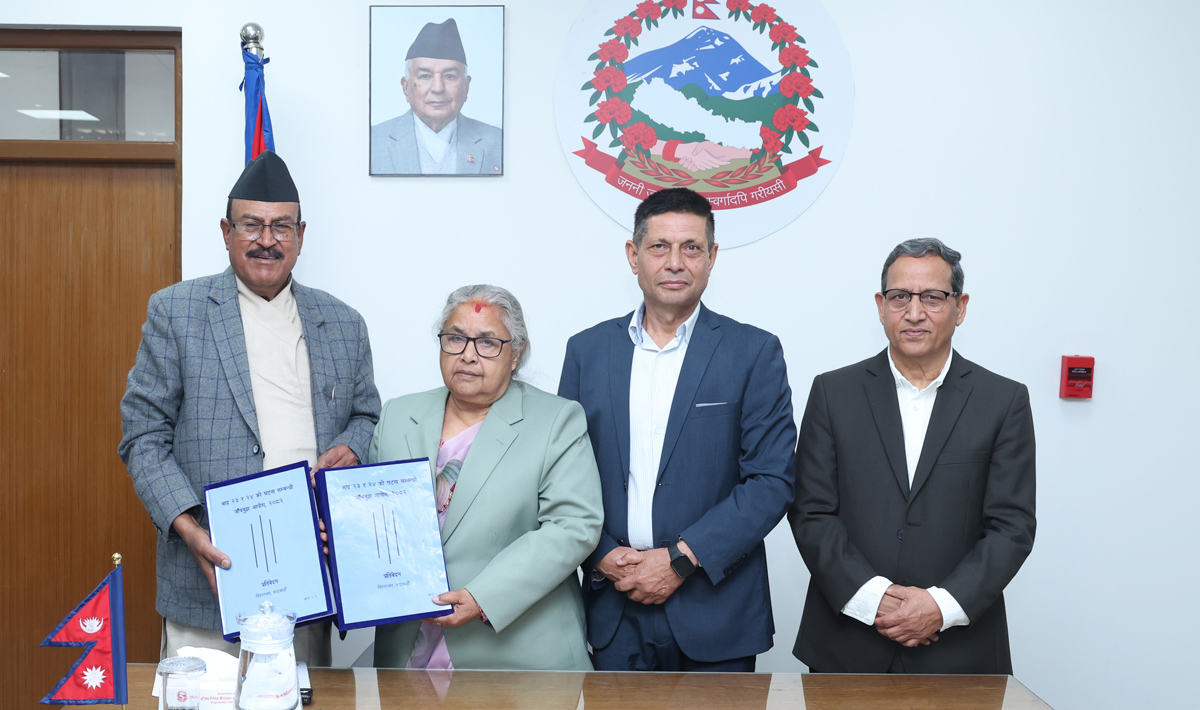
Kathmandu — A high-level investigative commission formed to examine the violent incidents of 23 and 24 Bhadra has recommended criminal proceedings against several senior political and security figures, including former Prime Minister KP Sharma Oli, Home Minister Ramesh Lekhak, and then Inspector General of Police Chandra Kuber Khapung. The commission’s report concludes that a pattern of inaction and delayed response at the highest levels contributed significantly to the escalation of violence and loss of life.
According to the findings, security forces continued firing for nearly four hours even before a formal curfew was imposed. Despite continuous updates from the ground indicating rising casualties, the political and security leadership failed to intervene decisively. The commission notes that there was neither a serious attempt to halt the use of force nor a parallel effort to initiate dialogue to de-escalate tensions. This absence of timely decision-making, it argues, reflects a critical breakdown in command responsibility.
The report has recommended legal action under Sections 181 and 182 of Nepal’s criminal code, which deal with deaths caused by negligence and recklessness. These provisions carry potential prison sentences ranging from three to ten years. By invoking these sections, the commission has framed the incident not merely as an operational failure but as a matter of criminal liability tied to leadership decisions.
Beyond the top leadership, the commission has extended its recommendations to other senior officials, including then Home Secretary Gokarna Mani Duwadi, Armed Police Force Chief Raju Aryal, National Investigation Department head Hutaraj Thapa, and Kathmandu’s Chief District Officer Chabilal Rijal. In their cases, the suggested charges fall under negligence, indicating systemic lapses across multiple layers of governance. Meanwhile, current police chief Dan Bahadur Karki has been recommended for departmental action rather than criminal prosecution.
The report also highlights institutional shortcomings within Nepal’s security apparatus. It points to weak coordination among the Nepal Police, Armed Police Force, and the Nepal Army during a critical period. Despite the availability of mechanisms for joint mobilization, including the option to deploy the army to stabilize the situation, no such decision was taken in time. This lack of coordination, the commission argues, allowed the situation to spiral beyond control.
A particularly sharp critique is directed at the role of the executive leadership. The report suggests that former Prime Minister Oli attempted to shift responsibility onto local administration. However, the commission firmly states that the office of the prime minister carries overarching accountability, both for effective governance and failures. It emphasizes that leadership cannot selectively claim credit while deflecting blame in times of crisis.
The National Security Council also comes under scrutiny. Even after 19 fatalities were reported by the evening of 23 Bhadra, the council failed to conduct a meaningful risk assessment for the following day. As a result, the violence on 24 Bhadra intensified further. The commission concludes that the absence of decisive strategic direction from the council contributed to a worsening security vacuum.
In addition, the report raises concerns over policy decisions taken during the crisis, including the shutdown of social media platforms. It states that such measures were implemented without adequate study or a clear operational framework, reflecting reactive rather than strategic governance. This, according to the commission, further complicated public communication and crisis management.
The violence itself is described as having elements of organized intent. Incidents of arson and vandalism on 24 Bhadra reportedly involved the use of petroleum products, targeted attacks on government infrastructure, and deliberate destruction of CCTV systems and data centers. These patterns suggest that at least some actors were operating with premeditated objectives rather than spontaneous unrest.
However, the commission acknowledges limitations in its investigation. Due to time and resource constraints, it was unable to fully probe all incidents or identify every individual involved. It has therefore recommended the गठन of a dedicated follow-up investigation team to continue identifying perpetrators and building prosecutable cases.
Although the report was submitted on 24 Falgun, the government initially withheld its publication. It was only after portions of the document surfaced publicly that a decision was made to release it formally and archive it in the Federal Parliament Secretariat. The move indicates both the sensitivity of the findings and the growing pressure for transparency.
The commission has also suggested recognizing individuals, including certain police personnel and civilians, who demonstrated exemplary conduct during the crisis. At the same time, legal experts have raised concerns that statutory limitations could hinder prosecution in some cases, potentially complicating the path to accountability.
Taken together, the report paints a picture of systemic failure—where delayed decisions, weak coordination, and absence of strategic leadership converged to produce a preventable tragedy. Its recommendations now place the burden on the state to determine whether accountability will be pursued through legal action or remain confined to documentation.