Top
Task Force on Constitutional Amendment Advances Agenda, Key Structural Changes Under Discussion
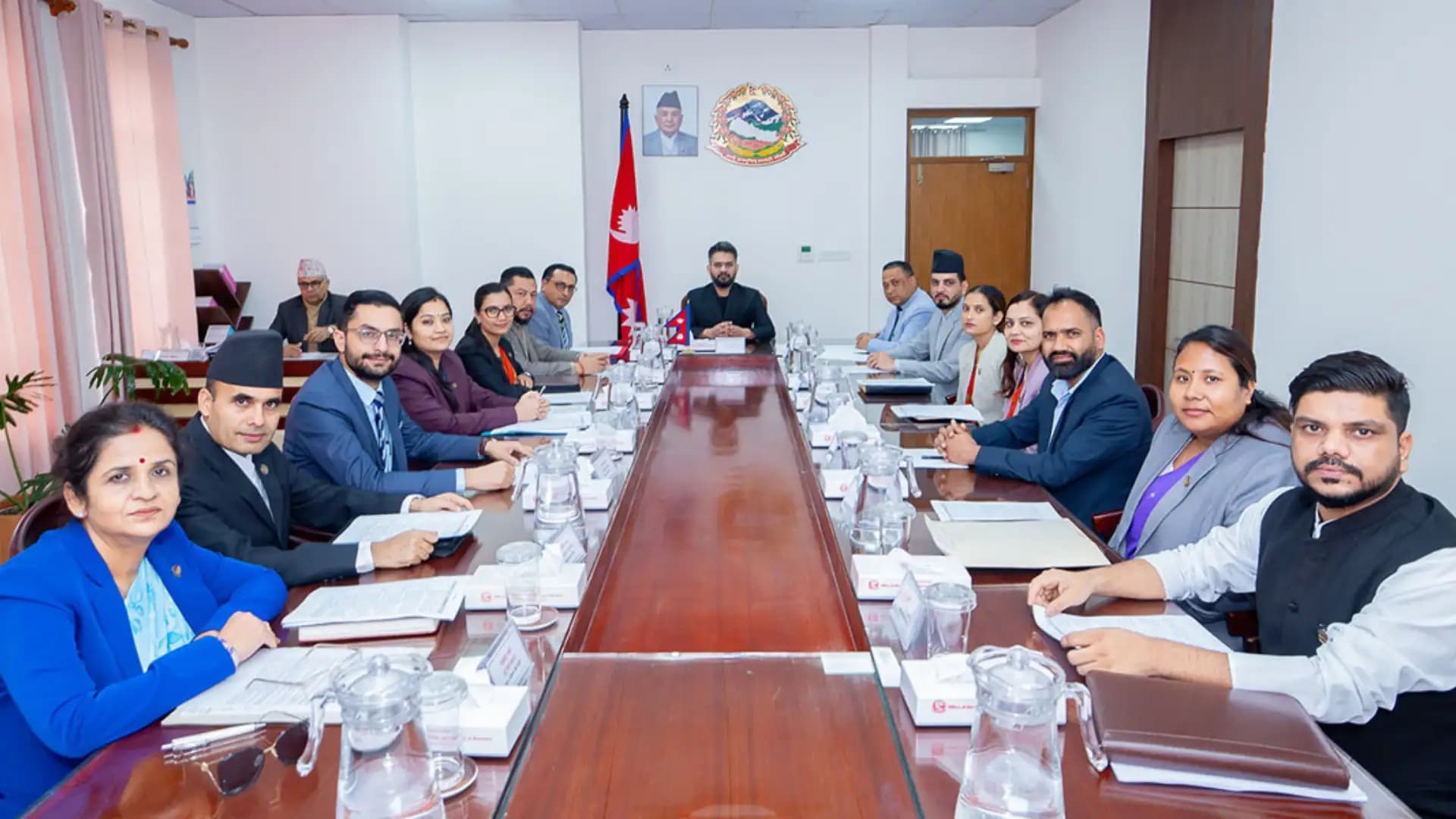
Task Force on Constitutional Amendment Advances Agenda, Key Structural Changes Under Discussion Kathmandu — A government-formed task force led by Asim Shah has moved forward in shaping a national debate on constitutional amendments, holding its second meeting on Thursday at the Office of the Prime Minister and Council of Ministers. The meeting, which lasted nearly two hours, finalized a structured work plan aimed at gathering expert and stakeholder input in the coming days.
Dipesh Ghimire
2 min readKathmandu — A government-formed task force led by Asim Shah has moved forward in shaping a national debate on constitutional amendments, holding its second meeting on Thursday at the Office of the Prime Minister and Council of Ministers. The meeting, which lasted nearly two hours, finalized a structured work plan aimed at gathering expert and stakeholder input in the coming days.
According to officials, the work plan presented by member secretary Pushpkar Sapkota was endorsed after incorporating suggestions from task force members. Starting next week, the panel will begin daily consultations with experts and concerned stakeholders, signaling an effort to build broader consensus before drafting a formal discussion paper. The leadership has committed to completing the document within the stipulated timeline and submitting it to the government.
At the center of the emerging debate are four major proposals that could significantly reshape Nepal’s political architecture. The first proposal explores whether the country should adopt a directly elected executive leadership model, potentially shifting power dynamics away from the current parliamentary framework. This reflects growing dissatisfaction in some political circles regarding instability caused by coalition politics and frequent government changes.
The second proposal questions the future of the existing mixed electoral system. Discussions are underway on whether to retain the hybrid model—combining first-past-the-post and proportional representation—or move toward a fully proportional system. This debate is likely to be contentious, as it directly affects political representation, inclusion, and the balance of power among parties.
A third proposal suggests redefining the role of the Vice President by assigning the position as chair of the National Assembly. This would streamline institutional roles while maintaining the ceremonial presidency. At the same time, the idea of a directly elected Prime Minister is being floated, indicating a possible hybrid model that blends elements of presidential and parliamentary systems.
The fourth proposal focuses on local governance, where the concept of non-partisan local elections has been introduced. Proponents argue that removing party affiliations at the local level could reduce political polarization and improve service delivery. However, critics may question its practicality in a deeply party-driven political culture.
Despite these wide-ranging discussions, the government has reportedly taken a firm stance against altering the federal structure, signaling that federalism will remain non-negotiable in any amendment process. This position suggests that while governance mechanisms may be revised, the foundational framework of the state will stay intact.
Notably, Nepali Congress has yet to nominate a representative to the task force, raising questions about the inclusiveness and political consensus of the process. Without participation from major parties, the legitimacy and acceptance of any proposed amendments could face challenges.
Overall, the ongoing process reflects an attempt to address structural inefficiencies in governance while navigating complex political realities. The coming consultations will be crucial in determining whether these proposals evolve into a broadly accepted reform agenda or remain contested ideas within Nepal’s political discourse.
Written by
Dipesh Ghimire
Related News
Nepal’s Economy
7 min read
Nepal's Terms of Trade Deteriorate by 16.9 Percent: Import Prices Surge 24 Percent While Export Prices Crawl at 3.1 Percent
In-depth analysis of Nepal's trade structure and export-import price indices — FY 2082/83, Ten Months (Through Baisakh 2083)
Dipesh Ghimire
·10 Jun, 2026

Nepal’s Economy
6 min read
Trade Deficit Crosses Rs.1,443 Billion: Exports Grow But Imports Outpace Them, China-Bound Exports Collapse by 41 Percent
In-depth analysis of Nepal's foreign trade — FY 2082/83, Ten Months (Through Baisakh 2083)
Dipesh Ghimire
·10 Jun, 2026
Nepal’s Economy
5 min read
Prices Climbing Faster: Nepal's Inflation Crosses Five Percent in Baisakh, Signaling a New Pressure Point
Detailed analysis of consumer and wholesale price movements — FY 2082/83, Ten-Month Review
Dipesh Ghimire
·10 Jun, 2026
Nepal's Economy
5 min read
Nepal's Economy Shows Resilience: Foreign Reserves Surge, Remittances Soar in FY 2082/83
Based on ten-month data (through Baisakh 2083) released by Nepal Rastra Bank
Dipesh Ghimire
·10 Jun, 2026