By Dipesh Ghimire
Election Commission Issues 64-Point Code to Regulate Campaigning for House of Representatives Poll
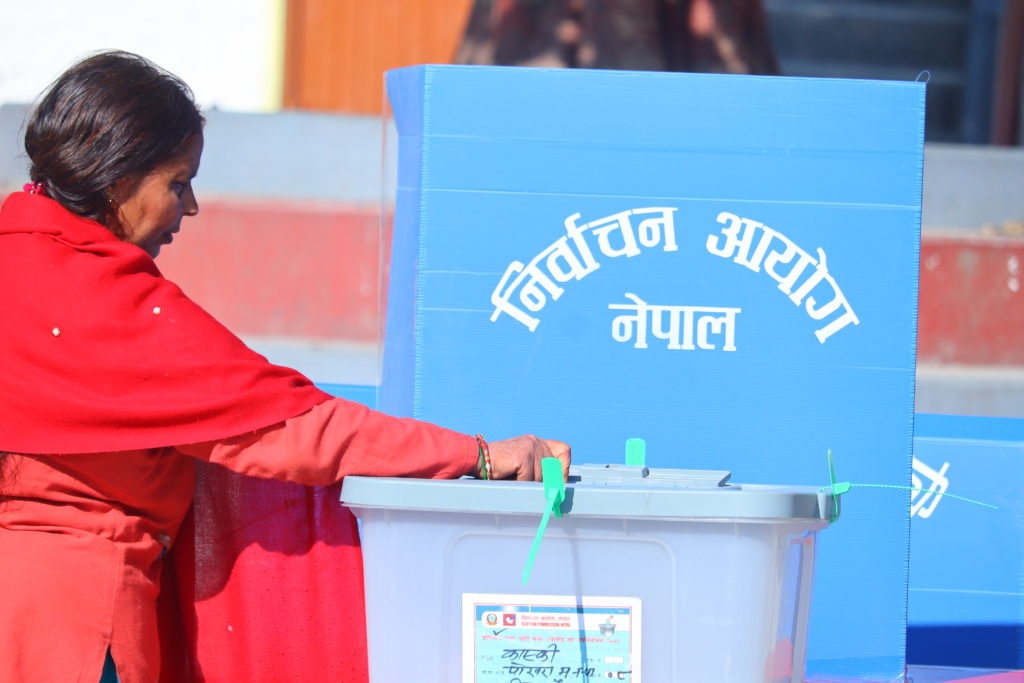
The Election Commission of Nepal has issued a detailed 64-point directive to political parties and candidates contesting the upcoming House of Representatives election scheduled for Falgun 21. The guidelines were made public through a press statement before the official campaign period began, with the aim of ensuring a free, fair, and dignified electoral process.
The Commission said the directive is intended to prevent malpractice, intimidation, and misuse of money and power during the campaign. Under the new rules, candidates and political parties are strictly prohibited from obstructing anyone’s right to contest, campaign, or vote. Acts such as issuing threats, offering financial incentives, enforcing social boycotts, displaying weapons or explosives, and influencing voters through gifts, cash, food, or entertainment have been categorically banned.
According to the schedule, political parties and candidates are allowed to organize rallies, public meetings, corner meetings, and door-to-door campaigns only between Falgun 4 and Falgun 18. From 48 hours before polling begins until the completion of vote counting, all forms of campaigning will be prohibited. The Commission says this “silence period” is essential to protect voters from last-minute influence.
The directive also emphasizes the protection of national unity, sovereignty, social harmony, and the multi-party democratic system. Campaign activities that promote hatred based on religion, caste, ethnicity, region, or community are forbidden. Personal attacks, character assassination, and speeches that incite violence or unrest are also strictly barred.
To strengthen financial transparency, candidates have been instructed to conduct all election-related spending through banks or financial institutions. Donations exceeding Rs 25,000 must be received through designated bank accounts. Candidates must submit original bills and receipts when requested and are required to present a full income and expenditure report within 35 days of the announcement of election results.
The Commission has also imposed strict limitations on campaign materials. Apart from single-color leaflets of prescribed size, the use of posters, wall writings, banners, digital boards, flex prints, and glow signboards has been prohibited. These measures are aimed at controlling visual pollution and excessive campaign spending.
Placing party flags or election symbols on private property or public spaces will require prior approval from property owners or concerned authorities. Campaign materials installed within 300 meters of polling centers must be removed before the start of the restricted period. The Commission says this is necessary to maintain neutrality around voting areas.
The directive further bans interference in voting and vote counting processes. Activities such as preparing fake ballot papers, damaging ballot boxes, confiscating voter identity cards, or preventing voters from entering polling stations are considered serious offences. Only authorized personnel will be allowed inside polling and counting centers.
For public gatherings and rallies, organizers must obtain permission from local administration and inform the police at least 24 hours in advance. Campaign programs may only be held between 7 a.m. and 7 p.m. The use of children in political activities and any form of communal or sectarian propaganda have also been prohibited.
Election officials say these provisions are designed to balance freedom of political expression with public order and safety. By regulating the time, place, and manner of campaigning, the Commission aims to minimize conflict and disruption during the election period.
The Commission has warned that violations of the directive will lead to legal action under existing federal laws. Depending on the nature of the offence, candidates and parties may face fines, disqualification, or criminal prosecution.
Observers view the 64-point guideline as one of the most comprehensive campaign regulations introduced in recent years. However, they note that effective enforcement will be crucial. Past elections have shown that strong rules alone are not enough without consistent monitoring and prompt action against violators.
In its statement, the Commission urged all political parties, candidates, and stakeholders to fully respect the code of conduct. It emphasized that public cooperation and responsible political behavior are essential for ensuring that the election remains credible, peaceful, and trustworthy.