By Dipesh Ghimire
Government Proposes Major Overhaul of Central Bank Law to Strengthen Independence and Governance
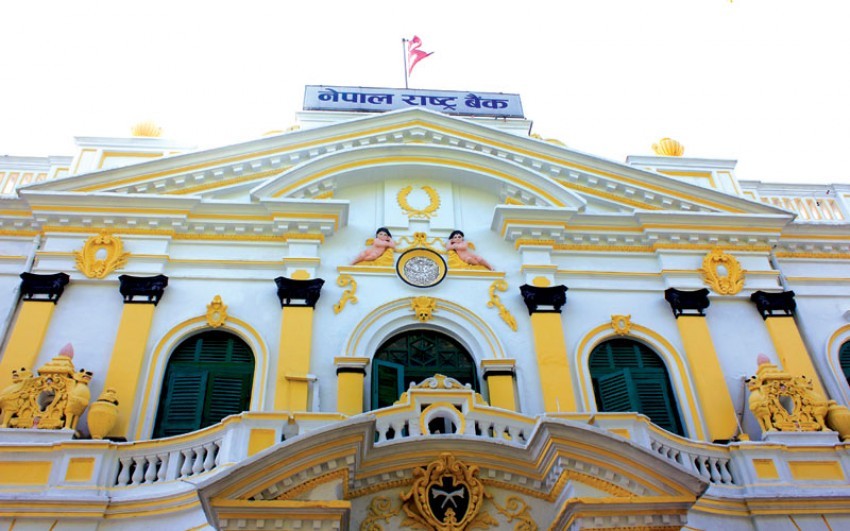
The government has proposed sweeping amendments to the law governing the country’s central bank, aiming to restructure its board, tighten the appointment and removal process of the governor, and reinforce institutional autonomy. The draft amendment to the Nepal Rastra Bank Act seeks to align the central bank’s framework with internationally accepted standards and reduce political influence over monetary authorities.
Under the proposed revision, the board of Nepal Rastra Bank will be expanded from seven to nine members. The new structure will include five independent non-executive directors, giving them a majority position. Officials say this change is intended to limit direct government intervention and strengthen professional oversight in policy-making.
The amendment also introduces stricter eligibility criteria for board members. Individuals holding more than one percent share in any bank or financial institution will be barred from serving as directors, down from the current five percent threshold. Reappointment will be limited to a single term, and former central bank employees will be subject to a three-year cooling-off period before becoming eligible for board positions.
According to the Ministry of Finance Nepal, the amendment is designed to modernize the central bank’s objectives, structure, and functions. The proposal seeks to revise the existing multi-purpose mandate and clearly define “price stability” as the bank’s primary objective. Other responsibilities, including maintaining financial and external sector stability and supporting government economic policy, will be pursued only if they do not conflict with this core mandate.
One of the most significant changes is the removal of provisions that allow the government to issue direct instructions to the central bank. This move is widely viewed as a step toward strengthening monetary policy independence, a long-standing demand from financial experts and international institutions.
The draft law also tightens the process for appointing and removing the governor. Chief executive officers of banks and financial institutions will no longer be eligible for the post. Instead, candidates must have at least ten years of experience as deputy governors, university professors, senior executives in international financial institutions, or in equivalent positions.
The proposal further requires that a new governor be appointed at least one month before the incumbent’s term ends, reducing the risk of leadership gaps. In cases of dismissal, officials must be given an opportunity to present their explanation. A special recommendation committee, led by a former chief justice of a high court and including a former governor, will oversee removal procedures.
The amendment also brings digital banking and digital currency under a clear legal framework. Institutions operating without physical branches through digital platforms will be formally recognized as “digital banks.” Similarly, central bank digital currency (CBDC) will be included in the legal definition of money, laying the foundation for potential future issuance.
In terms of fiscal and financial stability, the draft allows the central bank to provide overdraft facilities to the government for up to 180 days in times of resource shortages. Such borrowing will be capped at five percent of the previous year’s revenue and will carry interest at the bank rate. The loan will be documented through negotiable instruments.
The proposal also strengthens the central bank’s role as the lender of last resort. In the event of systemic liquidity stress, the bank will be empowered to extend emergency loans to financial institutions for up to six months to prevent broader financial instability.
Supervisory authority is set to be expanded as well. The central bank will be formally designated as a macroprudential authority, with powers to regulate and monitor not only banks but also their subsidiaries, financial holding companies, digital banks, remittance service providers, and payment system operators.
On financial management, the amendment prohibits any reduction in the central bank’s capital base and allows it to request capital injections from the government when necessary. It also proposes the creation of several reserve funds, including general reserves, revaluation reserves, financial development funds, and special reserves. The financial development fund will be capped at five percent of total monetary liabilities.
The draft further mandates that monetary policy be announced within 15 days of the start of each fiscal year. It also introduces new refinancing mechanisms based on the quality of lending, aiming to promote responsible credit practices.
Finance Ministry officials say the amendment is necessary to implement reform programs outlined in the annual budget, monetary policy, and strategic plans. They argue that the changes will strengthen regulatory capacity, improve governance standards, and enhance confidence in the financial system.
The government has released the draft bill for public feedback before submitting it to Parliament. If passed, this will mark the tenth amendment to the Nepal Rastra Bank Act since its enactment in 2002.
Economists see the proposal as a landmark reform that could reshape Nepal’s monetary governance. While many welcome the focus on independence and professionalism, some caution that effective implementation and political commitment will be crucial. Without consistent enforcement, they warn, even strong legal provisions may fail to deliver meaningful institutional change.
If adopted in its current form, the amendment is expected to significantly influence how monetary policy, financial supervision, and digital finance are managed in Nepal, potentially bringing the country’s central banking framework closer to global best practices.