By Dipesh Ghimire
Government Actions Deepen Public Distrust in Insurance Sector

Kathmandu: Public confidence in Nepal’s insurance sector is weakening, not solely because of insurers’ shortcomings, but increasingly due to the government’s own actions and inactions. Delayed claim settlements, unfulfilled subsidy commitments, and policy inconsistency have collectively created an environment of distrust that continues to widen between insurers and policyholders.
For most policyholders, insurance is purchased with a simple expectation: life insurance should return meaningful financial value over time, while non-life insurance should fully compensate for losses when damage occurs. These expectations are neither unreasonable nor excessive, as they align with the fundamental principles of insurance itself. However, repeated gaps between expectation and actual payouts have fueled dissatisfaction among the insured.
A common grievance among policyholders is that insurance claims rarely result in full compensation for losses incurred. While insurers argue that payouts are governed strictly by policy terms and insured values, many policyholders feel shortchanged. This gap often arises not from deliberate denial, but from limited understanding of policy coverage, premium structures, and valuation limits at the time of purchase.
Insurance agents were expected to serve as the bridge between insurers and policyholders, clearly explaining premium levels, coverage limits, and claim conditions. However, inadequate training and weak accountability mechanisms have left many agents ill-prepared to guide customers effectively. As a result, policies are often sold without sufficient explanation, weakening trust even before a claim is filed.
Policyholders themselves also contribute to the problem by prioritizing lower premiums over adequate coverage. In an effort to minimize costs, many insure assets below their actual value. When losses occur, insurers are legally bound to compensate only up to the insured amount, leaving policyholders disappointed. This mismatch between insured value and actual loss remains one of the most common sources of conflict in the insurance process.
Insurers, on the other hand, argue that they cannot exceed contractual obligations, regardless of policyholders’ expectations. When claims are settled strictly according to policy terms, dissatisfaction grows—not because the settlement is unlawful, but because the policyholder was inadequately informed at the outset. This persistent communication failure has steadily eroded confidence in insurance services.
Despite gradual expansion in information technology, Nepal’s insurance sector has yet to fully embrace digital systems. While the regulator has encouraged digital transactions, claim settlement processes remain largely manual. Experts argue that full digitalization of claim submission and payment could significantly improve transparency, efficiency, and public trust.
Another major source of frustration is delayed claim settlement. While insurers are required to process claims within specified timeframes, delays often occur due to incomplete documentation. In many cases, policyholders submit required documents—such as police or medical reports—well after filing claims, slowing the process further. This procedural delay is frequently perceived as intentional obstruction, even when it is not.
Beyond operational issues, the most damaging blow to public trust has come from the government’s failure to honor its own insurance commitments. The prolonged suspension of payments for COVID-19 insurance and agricultural insurance has left policyholders waiting for billions of rupees in unsettled claims.
Under the fiscal year 2020/21 budget, the government announced a 50 percent subsidy for COVID-19 insurance. Encouraged by this assurance, insurers sold policies to approximately 1.3 million individuals. However, despite claims filed by more than 129,000 policyholders, outstanding payments worth around NPR 11 billion remain unpaid. Insurers, lacking the financial capacity to absorb these liabilities alone, have been forced into legal battles to recover dues.
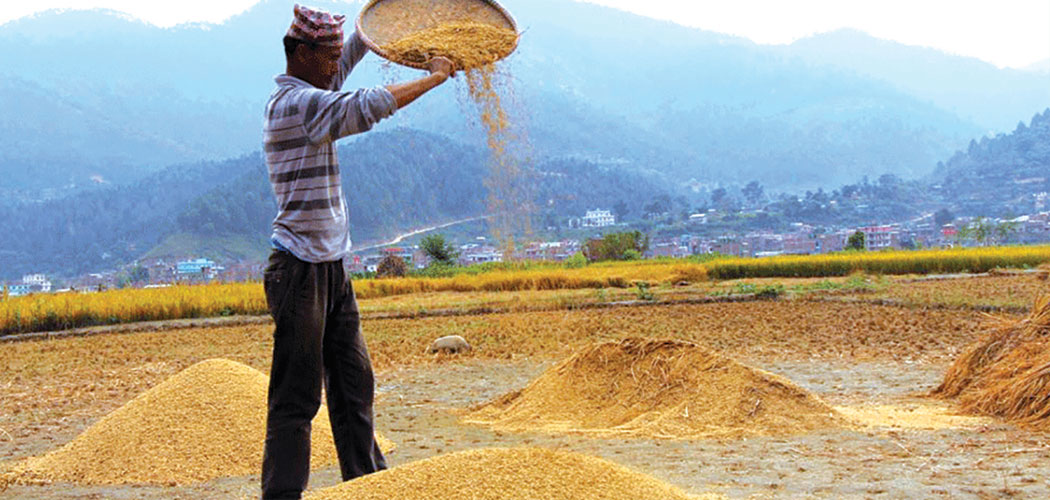
A similar situation has unfolded in agricultural insurance, where farmers—many with limited financial capacity—remain unpaid for insured losses. The health insurance sector faces comparable stress, with hospitals increasingly reluctant to provide services due to delayed reimbursements. These failures have collectively damaged the credibility of insurance as a reliable risk-management tool.
Industry experts emphasize that insurance is not an optional service but a necessity, particularly in a disaster-prone country like Nepal. Frequent floods, landslides, earthquakes, and infrastructure risks demand mandatory insurance coverage across sectors. Effective insurance systems could reduce disaster recovery costs for both citizens and the state.
While the insurance industry itself has grown stronger through mergers and capital expansion, public trust has not kept pace. Regulatory reforms have increased insurers’ capital strength and reduced unhealthy competition, but without timely government payments and consistent policy enforcement, structural improvements alone cannot restore confidence.
Analysts warn that unless the government fulfills its financial commitments and strengthens insurance awareness at all levels, distrust will continue to deepen. Insurance functions on confidence; once that trust is broken, rebuilding it requires more than policy reforms—it requires accountability, clarity, and timely action from the state itself.