Top
Government to Probe Assembly Industries After Consumer Complaints Surge
Government to Probe Assembly Industries After Consumer Complaints Surge The government has initiated a detailed investigation into Nepal’s assembly-based automobile industries after growing public complaints that state-provided tax concessions have failed to benefit consumers. Despite receiving wide-ranging exemptions in customs duty, excise duty, income tax and electricity tariffs, assembly industries are alleged to have retained the financial gains themselves without reducing retail vehicle prices. According to officials, concerns have intensified in recent months as consumers repeatedly reported to Hello Sarkar—the government’s public grievance system—that vehicles assembled in Nepal remain as expensive as fully imported units, despite the heavy tax relief provided to the industry. Consumers expected significantly lower prices, but the market has shown “no visible difference,” triggering frustration and questions over policy effectiveness.
Dipesh Ghimire
3 min read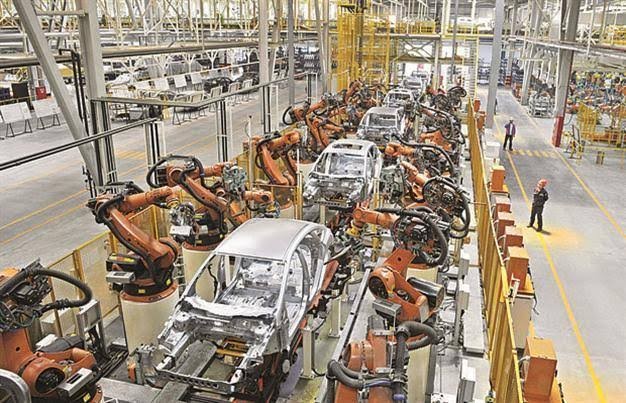
The government has initiated a detailed investigation into Nepal’s assembly-based automobile industries after growing public complaints that state-provided tax concessions have failed to benefit consumers. Despite receiving wide-ranging exemptions in customs duty, excise duty, income tax and electricity tariffs, assembly industries are alleged to have retained the financial gains themselves without reducing retail vehicle prices.
According to officials, concerns have intensified in recent months as consumers repeatedly reported to Hello Sarkar—the government’s public grievance system—that vehicles assembled in Nepal remain as expensive as fully imported units, despite the heavy tax relief provided to the industry. Consumers expected significantly lower prices, but the market has shown “no visible difference,” triggering frustration and questions over policy effectiveness.
Department Seeks Clarifications From Automobile Associations
In response, the Department of Commerce, Supplies and Consumer Protection has begun collecting data and conducting an internal study. The department has formally written to the two umbrella bodies of automobile traders—NADA Automobile Association of Nepal and Nepal Automobiles Importers and Manufacturers Association (NAIMA)—seeking detailed breakdowns of production cost, pricing parameters, and consumer discounts offered by companies utilizing government concessions.
Officials said the inquiry aims to verify whether companies receiving state benefits are actually producing vehicles at lower cost, how many units they have assembled, and whether those reduced production costs are translated into consumer prices. The department has emphasized that the concessions were granted with the explicit intention of promoting local assembly and lowering retail prices—not to increase profit margins for manufacturers.
Tax Relief Measures Under Question
During the tenure of former Finance Minister Janardan Sharma, the government introduced a generous incentive package for assembly-based automobile industries. The policy granted 25% exemption in customs duty, 50% exemption in excise duty, 40% relief in income tax, and additional discounts on electricity tariffs for companies assembling vehicles in Nepal.
Experts now argue that although these concessions amount to a significant financial benefit for manufacturers, they have not produced the expected outcome. The state has foregone substantial revenue, yet consumers continue to pay high prices, leading to criticism that the policy has disproportionately favored private companies at the expense of the public.
Complaints Transmitted to the Ministry for Action
Government sources confirmed that Hello Sarkar has forwarded several complaints to the Office of the Prime Minister and Council of Ministers, which in turn transmitted them to the Ministry of Industry, Commerce and Supplies. The ministry has directed the Department of Commerce to conduct a factual assessment.
A senior official at the department told Economic News that the investigation will focus on three core questions:
How many vehicles were produced by each assembly company using government concessions?
What is the cost difference between locally assembled and fully imported vehicles?
How much price benefit—if any—was passed on to consumers?
The official stated, “We have sought detailed information from NADA and NAIMA. Only after analyzing these details will we know whether companies misused state facilities or acted within acceptable boundaries.”
Interpretation: Policy Intent vs. Market Reality
Analysts say the issue highlights a broader challenge in Nepal’s industrial policy—the gap between incentives offered by the government and the actual benefit passed to the public. While the assembly policy was designed to promote domestic production, create jobs and make vehicles more affordable, the lack of price reduction suggests either inefficiency in the industry or intentional retention of profit margins.
Moreover, the rising public dissatisfaction indicates that consumers are increasingly aware of government concessions and expect transparency from businesses. If the investigation reveals that companies indeed failed to reflect tax savings in their pricing, the government may revise or withdraw concessions, or introduce stricter monitoring mechanisms.
The ongoing probe marks one of the most significant scrutiny efforts into Nepal’s assembly sector in recent years. As data collection progresses, both policymakers and consumers await clarity on whether the billions in tax exemptions served national interests or merely boosted private profits. The findings are expected to influence future industrial incentives, consumer protection policies and the overall credibility of government-supported manufacturing initiatives.
Advertisement
Written by
Dipesh Ghimire