By Dipesh Ghimire
Hilton Reinsurance Dispute Escalates as Probe Report Reaches Anti-Graft Commission
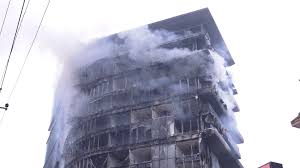
The investigation report prepared by Nepal’s insurance regulator into the controversial reinsurance arrangement linked to Hilton Hotel has formally reached the Commission for the Investigation of Abuse of Authority, marking a critical escalation in one of the most sensitive insurance-sector controversies in recent years. The report was forwarded through the Ministry of Finance following repeated concerns over regulatory violations, potential financial manipulation, and institutional silence during a high-value risk transfer process.
The case centers on allegations that reinsurance coverage for riot and terrorism risks was arranged retrospectively—after physical damage had already occurred at Hilton Hotel—raising serious questions about intent, compliance, and governance. The scale of the potential insurance claim, estimated to run into billions of rupees, prompted regulators to treat the matter as one involving systemic risk rather than a routine procedural lapse.
Regulatory Probe Triggered by Whistleblower Complaint
The controversy came to light after a formal complaint was lodged at the CIAA, alleging that established reinsurance procedures mandated by the Nepal Insurance Authority were deliberately bypassed. The complaint claimed that policies were backdated and routed outside the compulsory reinsurance pool mechanism, allegedly to ensure that a large post-loss claim could be processed.
Acting on the complaint, the CIAA, on Kartik 11, instructed the Insurance Authority—via the Finance Ministry—to conduct a full investigation into the reinsurance trail, including premium transfers, correspondence between institutions, and compliance with the Insurance Act. This directive effectively placed the regulator itself under scrutiny, testing its willingness and ability to act independently.
Finance Ministry Rejected Initial Report
Although the Insurance Authority completed its investigation and submitted a report in Mangsir, the Finance Ministry declined to accept it in its original form. Ministry officials cited the report’s lack of specificity, noting that while it mentioned the possibility of action, it failed to clearly identify which company committed which offense, under which legal provisions, and with what recommended penalties.
This rejection proved significant. It indicated that the government was unwilling to endorse vague regulatory conclusions in a case involving large sums and a state-owned entity. The ministry directed the Authority to resubmit the report with company-wise findings, clearly mapped legal violations, and defined enforcement measures.
Revised Report Names Four Companies
Following the ministry’s intervention, the Authority revised the report and submitted a detailed version to the CIAA. The revised document brings four entities within the scope of potential regulatory action: Oriental Insurance, Nepal Reinsurance Company, Himalayan Reinsurance, and Alliant Reinsurance Broker.
According to the findings, Oriental Insurance issued primary coverage worth nearly NPR 5 billion for Hilton Hotel but failed to ensure that riot and terrorism risks were reinsured through the mandatory Nepal Reinsurance pool. Nepal Reinsurance Company, despite receiving formal communication, did not issue a clear acceptance or rejection, effectively remaining silent at a critical stage of the process.
Procedural Breakdown and Risk Transfer Outside the Pool
The investigation further found that after Nepal Reinsurance failed to respond, Oriental Insurance routed the reinsurance premium through Alliant Reinsurance Broker. The broker, in turn, forwarded the premium to Himalayan Reinsurance. Himalayan later claimed that although the premium was received, it did not accept coverage for riot-related risks.
Regulators concluded that this fragmented chain of actions—marked by silence, informal routing, and disputed acceptance—constituted a collective failure to comply with statutory reinsurance requirements. The Authority’s report states that each entity played a role in undermining the integrity of the regulated risk-sharing framework.
Authority Struggles to Enforce Its Own Findings
Despite confirming regulatory violations, the Insurance Authority has yet to take decisive enforcement action. Sources say the Authority’s board has discussed the issue twice but failed to reach a conclusion. The involvement of the state-owned Nepal Reinsurance Company is widely seen as a complicating factor, creating institutional hesitation in pursuing penalties.
This reluctance has raised broader concerns about regulatory independence and equal enforcement of the law. Analysts note that the credibility of Nepal’s insurance supervision framework depends not only on identifying violations but also on enforcing consequences, regardless of ownership structures.
Legal Provisions Allow for Strong Action
Under Section 138 of the Insurance Act 2079, insurers and intermediaries that violate regulatory directives or submit misleading information may face escalating fines, starting from NPR 200,000 and rising to NPR 5 million for repeated offenses. Section 134 further empowers the Authority to impose corrective orders, suspend officials, freeze dividends, restrict business operations, or even seek license cancellation through the courts.
While these provisions give the regulator broad enforcement authority, the Hilton case illustrates the gap that can emerge between legal power and institutional resolve.
Origins of the Hilton Reinsurance Controversy
The dispute traces back to damage caused to the Hilton Hotel Kathmandu during the “Gen-Z” protests on Bhadra 23 and 24. The hotel, backed by the Shankar Group, suffered extensive structural damage, triggering the prospect of a massive insurance claim.
The allegation that reinsurance coverage for riot and terrorism risks was finalized only after the damage had occurred lies at the heart of the controversy. If proven, such an act would not merely constitute a regulatory violation but could amount to a fundamental breach of insurance principles.
A Test Case for Insurance Governance
With the investigation report now formally before the CIAA, the Hilton reinsurance dispute has entered a decisive legal phase. Observers say the outcome will serve as a test of Nepal’s commitment to transparent insurance governance, particularly in cases involving powerful corporate interests and state-owned institutions.
Beyond individual penalties, the case has exposed structural weaknesses in reinsurance oversight, communication failures between institutions, and the risks posed by regulatory hesitation. How authorities respond in the coming weeks may shape confidence in Nepal’s insurance system for years to come.