By Dipesh Ghimire
Legal Scrutiny Intensifies Over CDSC Chief’s Appointment as Capital Market Risks Mount
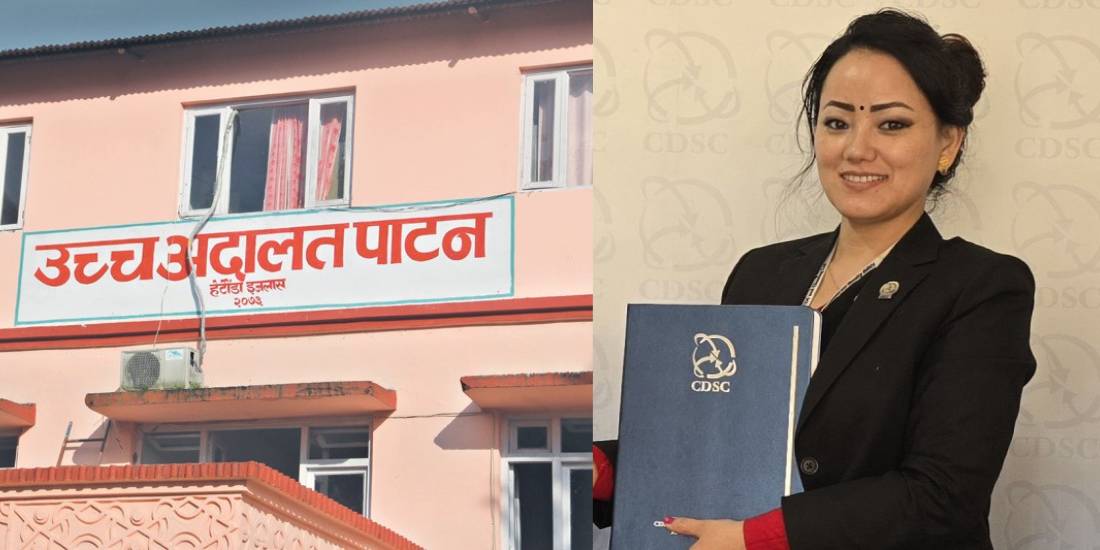
A legal challenge questioning the appointment and continuation of the Managing Director and Chief Executive Officer of CDS and Clearing Limited (CDSC) has reached the Patan High Court, bringing renewed focus on governance standards within Nepal’s capital market infrastructure. The writ petition raises constitutional and legal concerns, arguing that the leadership dispute has already begun to affect market stability and investor confidence.
Filed by senior advocate Uttam Bahadur Shrestha, the petition names CDSC Managing Director and CEO Prabin Pandak along with seven other entities involved in the appointment process as respondents. The petitioner contends that the appointment was made in violation of prevailing laws and institutional regulations, warning that its continuation could deepen systemic risks in the financial sector.
Alleged Legal Flaws in Appointment Process
At the center of the dispute is the claim that Pandak’s four-year appointment, approved by the CDSC board on Poush 14, 2081, contradicts service regulations governing employees of the Nepal Stock Exchange (NEPSE). According to the writ, Pandak is a ninth-level NEPSE employee who was sent on unpaid deputation, a status that—under existing rules—cannot exceed one year.
The petition argues that granting a full four-year executive term under such circumstances violates principles of rule of law, good governance, and equal application of administrative norms. Legal experts note that if these claims are upheld, the case could set an important precedent for appointments across public financial institutions.
Market Operations Caught in the Fallout
Beyond procedural legality, the writ highlights operational disruptions allegedly linked to CDSC’s current leadership. It points to the unresolved dual ISIN (International Securities Identification Number) issue, which has reportedly stalled the share dematerialization process and rendered a significant volume of founder shares inactive.
According to the petition, these unresolved technical and administrative problems have placed investors’ funds—estimated at around NPR 35 billion—in a state of uncertainty. Market participants say such delays undermine the basic settlement and custody functions that CDSC is mandated to provide, amplifying systemic risk.
Impact on Investors and Foreign Participation
The legal filing also raises concerns about the broader investment climate. It claims that uncertainty surrounding CDSC’s leadership and operational paralysis has effectively created an undeclared barrier for foreign investors, complicating entry and exit processes in Nepal’s capital market.
Analysts observe that institutional credibility is particularly critical at a time when Nepal is seeking to attract foreign capital and modernize its market infrastructure. Any perception of weak governance at core institutions like CDSC could deter long-term investment and raise the cost of capital.
Court Moves Toward Interim Review
A single bench of Judge Avani Mainali Bhattarai has scheduled a hearing for Chaitra 8 to consider an interim order. The court will hear arguments from both sides before deciding whether Pandak’s continuation in office should be allowed while the case is under consideration.
Legal observers say the interim hearing will be crucial, as it may indicate how the court views the balance between administrative continuity and alleged legal violations.
Governance Questions Extend Beyond One Appointment
While the case focuses on a single executive position, experts say its implications go much further. CDSC plays a central role in clearing, settlement, and securities custody, making its leadership integral to the functioning of the entire capital market.
The petition argues that allowing a potentially unlawful appointment to stand would weaken accountability mechanisms and normalize regulatory exceptions. Conversely, a strict judicial interpretation could reinforce compliance and restore confidence in institutional governance.
A Test for Capital Market Institutions
As the Patan High Court prepares to examine the matter, investors, regulators, and policymakers are closely watching the outcome. The case has reopened debate over transparency, merit-based appointments, and adherence to service regulations in market institutions.
The court’s eventual ruling is expected to clarify not only the legality of Pandak’s appointment but also the broader standards governing leadership selection in Nepal’s financial sector. For a capital market striving for credibility and stability, the decision could mark a defining moment.