By Dipesh Ghimire
Over NPR 3 Billion Recovered for Victims of Troubled Cooperatives; NPR 34 Billion Still Pending
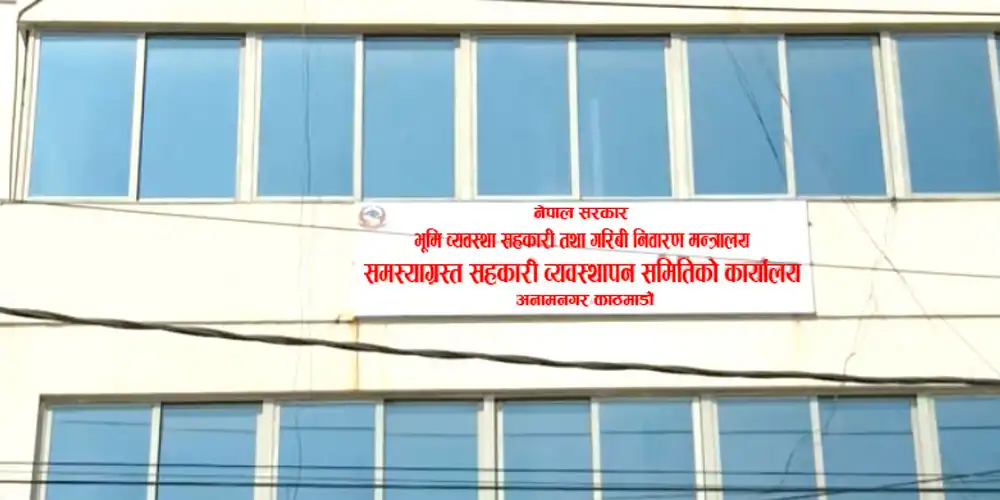
The Office of the Problematic Cooperative Management Committee has successfully returned and reconciled a total of NPR 3.71 billion (3,716,605,654) to victims of troubled cooperatives. According to Committee Chairperson Mr. Shreeman Kumar Gautam, a total of 61,094 depositors had filed complaints stating that their savings amounting to NPR 38.42 billion (38,429,632,730) were embezzled, misused, or misappropriated by various cooperatives.
As per the Committee, NPR 34.71 billion (34,713,027,076) is still pending to be returned to depositors. The Committee has taken on the responsibility of managing assets and settling liabilities of cooperatives declared problematic for acting against cooperative principles and misusing savers' funds. So far, 23 cooperatives have been declared problematic, and the Committee is currently in the process of settling accounts and returning funds for three of them.
Between last Kartik and Ashar 15 (roughly November to late June), the Committee has proposed returning NPR 298.2 million (29,82,08,128) to 56,106 depositors from affected cooperatives. However, it was revealed in today’s press conference that this recovered amount covers only 41% to 57% of the depositors’ original savings.
The Committee’s Member Secretary Mr. Keshav Prasad Paudel mentioned that based on current analysis, there is very little possibility of fully recovering 100% of the embezzled savings. However, every effort is being made to return the maximum possible amount to affected depositors.
The Committee has the authority to take ownership of cooperatives involved in embezzlement, freeze the assets and transactions of their operators, and is pursuing a structured plan to recover loans, sell assets, and return collected funds, according to member Mr. Kashichandra Baral.
Some of the cooperatives listed as problematic include:
Oriental Cooperative Ltd.
Standards Saving and Credit Cooperative Ltd.
Prabhu Savings and Credit Cooperative Ltd.
Societal Savings and Credit Cooperative Ltd.
Luh Nibha Multipurpose Cooperative Ltd.
Pashupati Savings and Credit Cooperative Ltd.
Shivshikhar Multipurpose Cooperative Ltd.
Tulsi Bahumi Cooperative Ltd.
Additionally, the Committee noted that NPR savings of 56,106 people are still pending from institutions like:
Hamro Naya Krishi Cooperative
Krishi Bikas Multipurpose Cooperative
Kantipur Saving and Credit Cooperative
Laligurans Multipurpose Cooperative
Gautamshree Multipurpose Cooperative
Gorkha Saving and Credit Cooperative
Nepal Cooperative Financial Institution
The Committee was established in Poush 2074 (Dec 2017) and became active from Ashar 18, 2075 (July 2018). It operates under the federal government, implementing various strategic plans to return the savings of citizens trapped in problematic cooperatives.