By Sandeep Chaudhary
Vietnam Tourist eVisa for Nepali Citizens 2026: Updated Rules
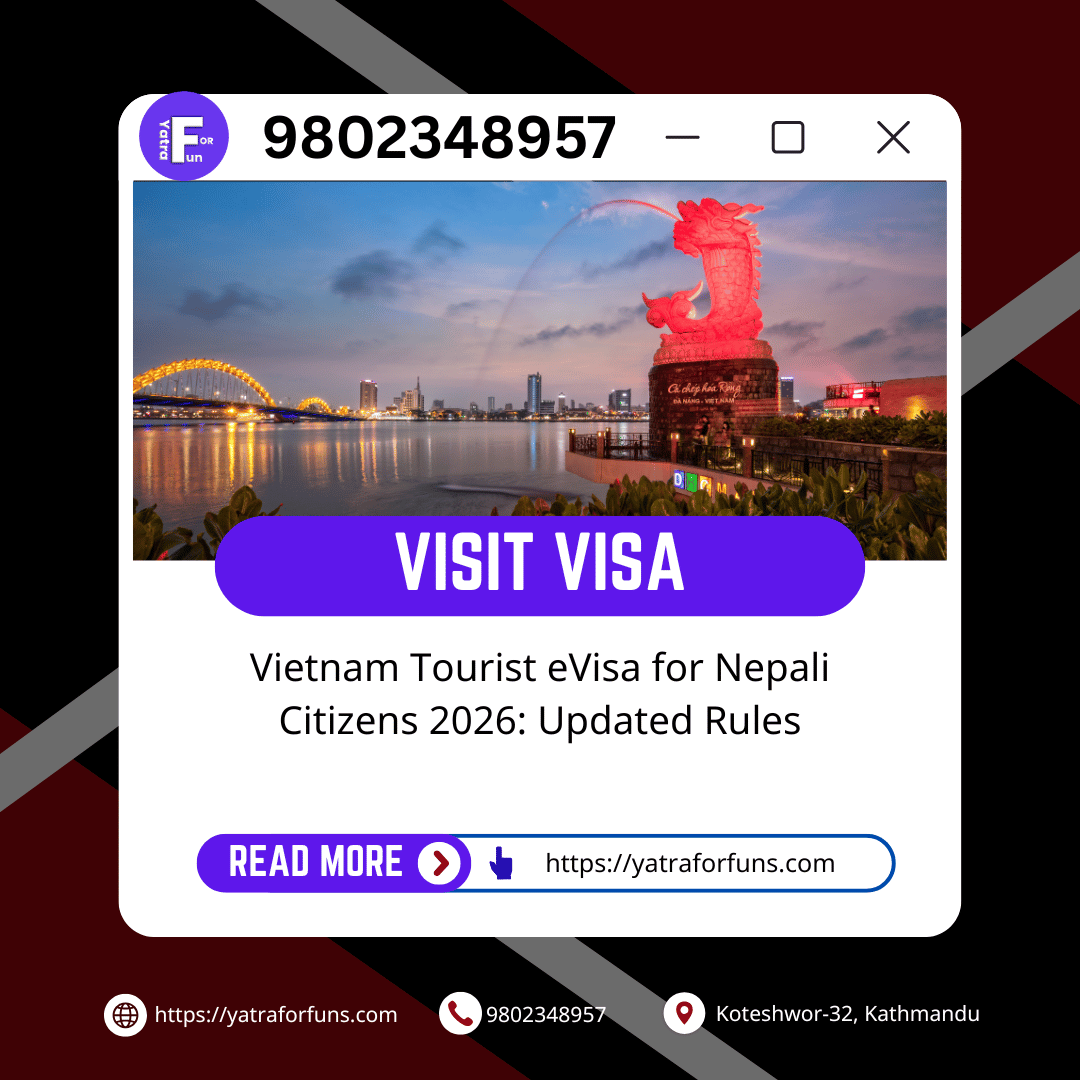
Vietnam has become a highly attractive destination for Nepali travelers thanks to its rich history, natural beauty, vibrant cities, and affordable travel options. In 2026, Vietnam continues to offer a Tourist eVisa system for Nepali citizens, allowing travelers to apply online with clearly defined rules, entry points, and compliance requirements. Understanding these updated regulations is essential to ensure a smooth and successful visa application and entry into Vietnam.
Under the Vietnam Tourist eVisa policy, Nepali applicants must complete the application accurately, sufficiently, and honestly in English. All information provided must be true and verifiable. For questions with multiple choices, applicants are required to select all relevant answers. If the option “Others” is chosen, specific and clear details must be declared. Any dishonest, misleading, or false information identified by the Viet Nam Immigration Authority will result in the denial of the eVisa application.
The Vietnam Tourist eVisa is issued only to foreigners who are currently outside Vietnam and wish to enter the country. Applicants who are already temporarily residing in Vietnam are not eligible to apply for an eVisa. Once approved, the electronic visa allows entry and exit only through border gates officially approved by the Government of Vietnam. Travelers must carefully select their intended port of entry and exit during the application process.
Vietnam permits eVisa holders to enter through a wide range of international land border gates, including major crossings in provinces such as Kon Tum, Quang Binh, Ha Tinh, Lang Son, Quang Tri, Lao Cai, Tay Ninh, An Giang, Dien Bien, Cao Bang, Tuyen Quang, Son La, Gia Lai, Dong Thap, Da Nang, and others. Rail entry is also permitted through the Lao Cai international railway border gate. These land routes are commonly used by travelers entering Vietnam from neighboring countries.
For travelers arriving by air, Vietnam allows eVisa entry through major international airports, including Noi Bai in Hanoi, Tan Son Nhat in Ho Chi Minh City, Da Nang, Cam Ranh, Phu Quoc, Can Tho, Cat Bi, Van Don, Phu Bai, Lien Khuong, Chu Lai, Vinh, Dong Hoi, Phu Cat, and Tho Xuan airports. Air entry remains the most convenient option for Nepali travelers flying directly or via transit hubs.
Vietnam also permits eVisa holders to enter and exit through a large number of sea border gates, including major ports such as Da Nang Port, Hai Phong Port, Ho Chi Minh City Port, Nha Trang Port, Quy Nhon Port, Chan May Port, Vung Tau Port, Phu Quoc ports, and many others across coastal provinces. These ports are especially relevant for cruise travelers or those entering Vietnam by sea.
There are specific categories of foreigners who are not required to apply for an electronic visa under Vietnamese law. These include members of high-level official delegations invited by the Vietnamese government, such as delegations of the General Secretary of the Communist Party, the President, the Prime Minister, the Chairman of the National Assembly, and other senior state officials. It also includes members of diplomatic missions, consular offices, representative offices of international organizations under the United Nations, and intergovernmental organizations, along with their spouses and children under 18 years of age. Individuals visiting or working with diplomatic missions and international organizations also fall under this category. These travelers must apply through inviting or sponsoring agencies and submit a written visa request to the competent authority of the Ministry of Foreign Affairs instead of using the eVisa system.
For standard Vietnam Tourist eVisa applicants from Nepal, the document requirements are simple. Applicants must submit a passport copy and a recent photograph. A bank statement is not required for the Vietnam Tourist eVisa, making the process easier compared to many other destinations. However, travelers must still ensure that their passport is valid and their personal details match exactly across all submitted documents.
The Vietnam Tourist eVisa is strictly for tourism and short-term visit purposes. Nepali travelers can use this visa for sightseeing, leisure travel, cultural exploration, and personal visits. Working, engaging in profit-making activities, or overstaying beyond the permitted duration is strictly prohibited. Violations of visa conditions or Vietnamese laws may result in fines, deportation, or legal consequences.
Travelers are advised to carry both printed and digital copies of their approved eVisa, along with their passport and travel itinerary, when entering Vietnam. Immigration officers may request these documents at the port of entry.
For Nepali citizens who want a smooth, accurate, and stress-free Vietnam Tourist eVisa application, professional assistance is highly recommended. Yatra For Fun Pvt. Ltd. provides complete Vietnam visa assistance services, including document verification, application guidance, and follow-up support until visa approval.
For expert Vietnam visa assistance, visit https://yatraforfuns.com.
You can contact Yatra For Fun Pvt. Ltd. via Phone or WhatsApp at +977-9802348957, +977-9708072951, +977-9709066745, and +977-9709066517. The landline number is +977-01-4110514, and email inquiries can be sent to [email protected] or [email protected].
The office of Yatra For Fun Pvt. Ltd. is located at Koteshwor-32, Kathmandu, Nepal, near Rastriya Banijya Bank, Koteshwor Branch.
By understanding the updated Vietnam Tourist eVisa rules for 2026 and following all declaration instructions carefully, Nepali travelers can enjoy a smooth entry and a memorable journey to Vietnam with confidence and peace of mind.