By Dipesh Ghimire
Intellectual Property Law Workshop Highlights Need for Practical Reforms in Nepal
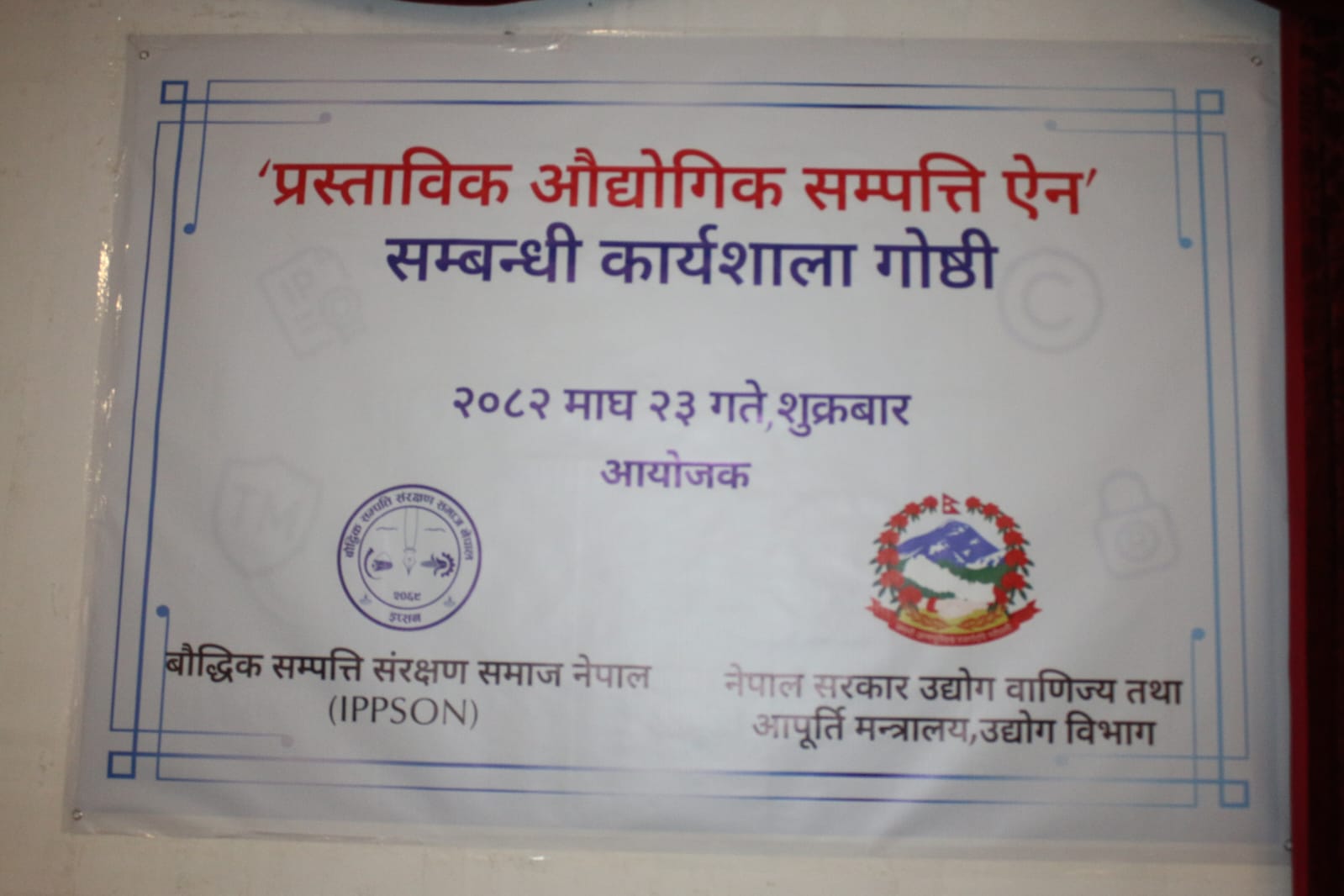
A workshop on the proposed Intellectual Property Act was concluded in Kathmandu on Friday, bringing together policymakers, legal experts, and stakeholders to discuss the future of intellectual property protection in Nepal. The program was jointly organized by the Intellectual Property Protection Society Nepal (IPPSN) and the Department of Industry under the Ministry of Industry, Commerce and Supplies. The event aimed to gather expert opinions and improve the effectiveness of the proposed legislation.
The workshop was chaired by IPPSN President Bisu Kumar KC, who stressed the importance of strong intellectual property laws in promoting innovation and entrepreneurship. He said weak legal protection discourages inventors, artists, and businesses from investing in new ideas, ultimately affecting economic growth.
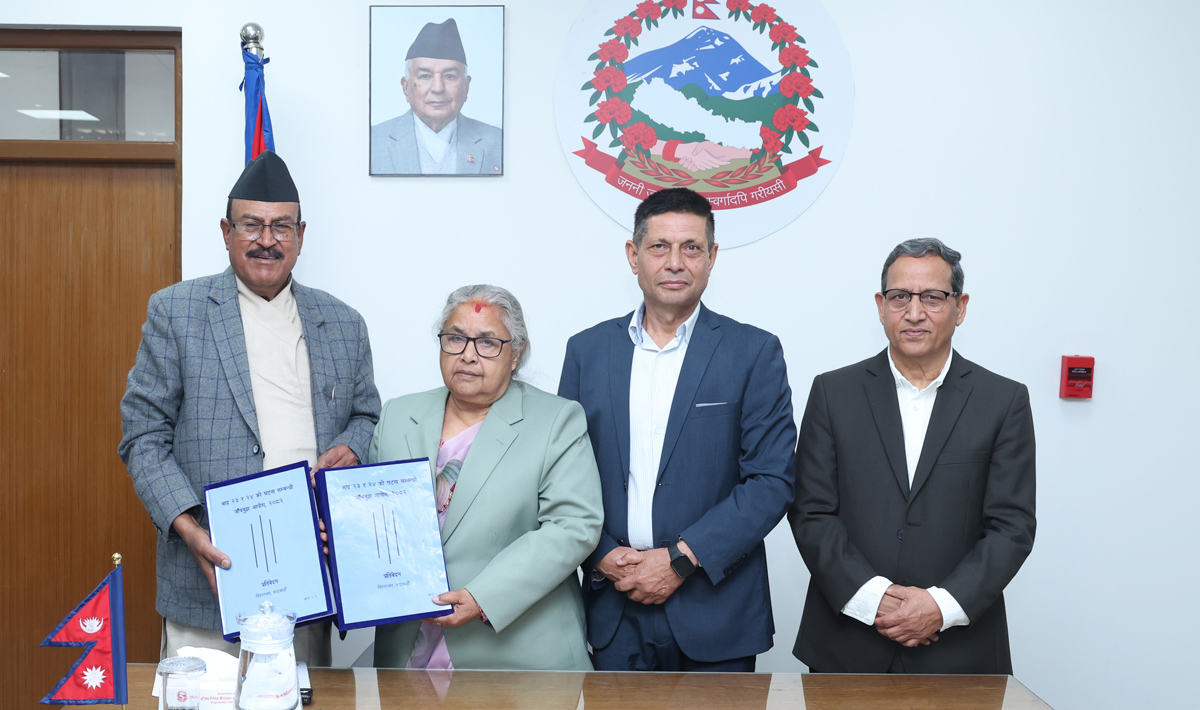
Distinguished guests at the program included former minister and secretary Shankar Prasad Koirala and ministry secretary Dr. Ram Prasad Ghimire. Director General of the Department of Industry Jitendra Bastet, along with senior officials and technical staff, also participated in the discussions.
During the workshop, participants focused on major provisions of the proposed Act, including trademarks, geographical indications, patents, and administrative arrangements. Experts noted that Nepal’s existing intellectual property laws are scattered across different legal instruments and lack coordination. The proposed Act is expected to integrate these provisions into a single, comprehensive framework.
Legal experts Laxmi Sapkota, Priya Shrestha, Sajjanwar Singh Thapa, and Priyank Adhikari presented detailed reviews of the draft law. They pointed out weaknesses in enforcement mechanisms, institutional capacity, and dispute resolution systems. According to them, legal reforms will only be meaningful if supported by strong implementation structures.
Several speakers emphasized that Nepal’s intellectual property system has not yet matched international standards. They highlighted the need for digital registration platforms, transparent procedures, and faster settlement of disputes. Aligning domestic laws with global practices, they argued, would help attract foreign investment and strengthen export-oriented industries.
Speaking as the chief guest, Minister for Industry, Commerce and Supplies Anil Kumar Sinha said that Nepal does not lack experts in the field of intellectual property. However, he stressed that expert knowledge must be translated into practical action. He called for stronger coordination among government agencies, legal institutions, and the private sector.
The minister further stated that effective intellectual property protection is directly linked to innovation, job creation, and economic development. He noted that entrepreneurs and researchers are more confident in commercializing their ideas when their rights are properly protected.
Participants also highlighted the need to raise public awareness. Many small businesses, startups, and creators, they said, are still unaware of their intellectual property rights. Without proper understanding, they remain vulnerable to infringement and unfair competition. Experts recommended nationwide awareness campaigns and capacity-building programs alongside legal reform.
At the conclusion of the workshop, stakeholders agreed that continuous dialogue among government bodies, legal professionals, civil society, and the private sector is essential for meaningful reform. They emphasized that such consultative platforms help ensure that laws are practical, inclusive, and responsive to real market needs.
Observers believe that if the proposed Intellectual Property Act is adopted and enforced effectively, it could become a major milestone for Nepal’s innovation ecosystem. With strong institutions and political commitment, the law is expected to promote creativity, encourage investment, and strengthen the country’s long-term economic competitiveness.