By Dipesh Ghimire
Excess Liquidity Poses Growing Challenge for Nepal’s Banking System
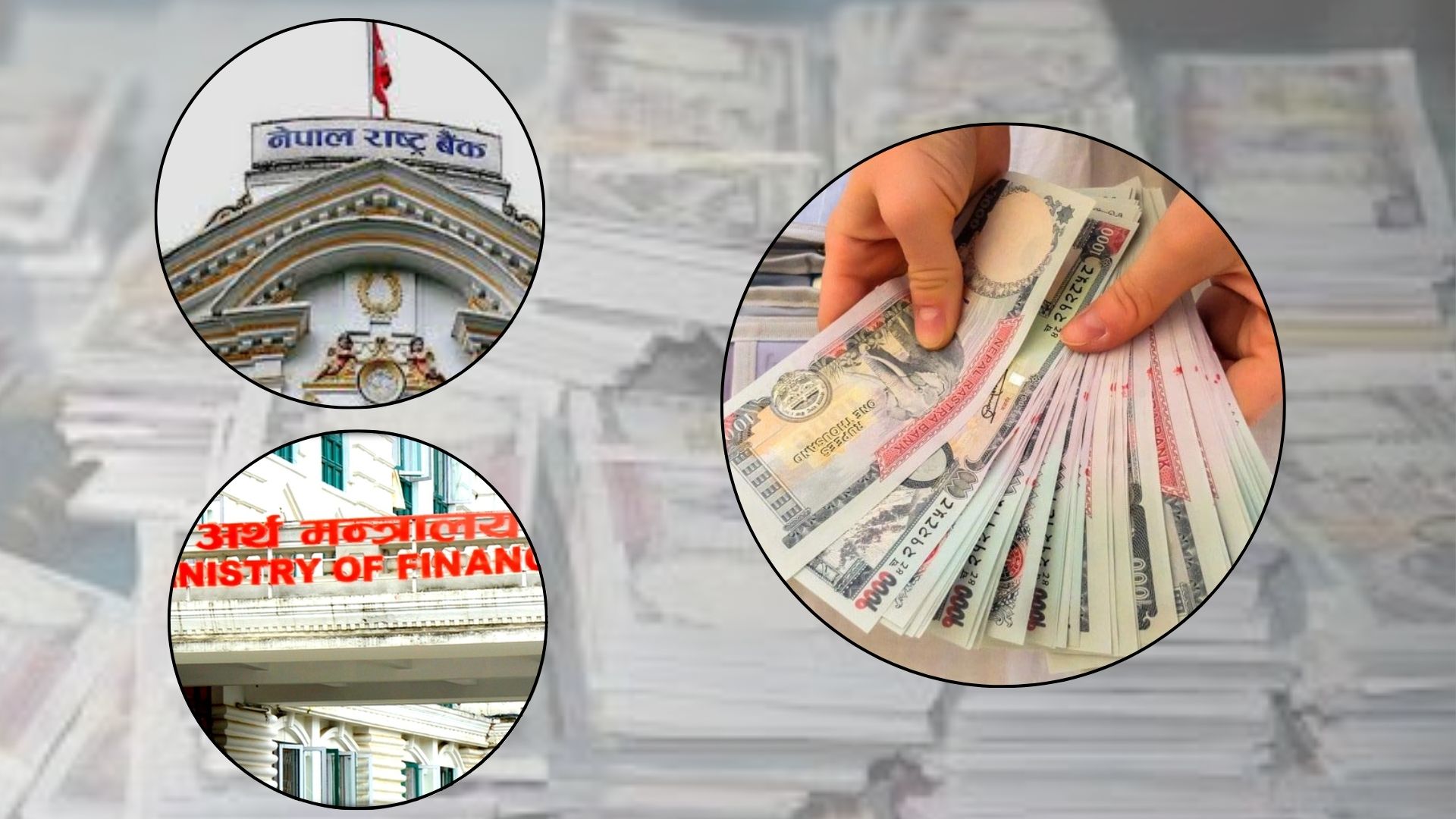
The rising level of excess liquidity in Nepal’s banking system has increasingly become a major concern for financial regulators. Despite having abundant funds, banks are struggling to channel money into productive sectors due to weak credit demand and sluggish economic activities. As a result, a large volume of idle capital has accumulated within the financial system.
In recent months, lending activities have slowed as businesses remain cautious and investment confidence stays low. Industries, trade, and construction sectors have not expanded at the expected pace, reducing the demand for bank loans. This imbalance between deposits and credit has widened, creating pressure on banks to manage surplus funds effectively.
With liquidity continuing to rise, interbank interest rates have dropped sharply, reaching around 2.75 percent. Such low rates indicate that banks have excess money but limited opportunities to lend. To prevent rates from falling below the lower limit of the interest rate corridor, the Nepal Rastra Bank has been actively withdrawing funds from the market through various monetary instruments.
As part of this effort, the central bank has announced plans to absorb NPR 50 billion for a period of 42 days through a deposit auction. The auction will be conducted via an online bidding system, allowing banks and financial institutions to submit bids within a specified time. Interest rates will be determined competitively, reflecting market conditions.
Only licensed ‘A’, ‘B’, and ‘C’ class financial institutions are eligible to participate in this process. Priority in fund allocation will be given to institutions offering lower interest rates, encouraging cost efficiency and disciplined bidding. This mechanism aims to stabilize short-term interest rates and reduce excess liquidity in the system.
Over NPR 860 Billion Parked at the Central Bank
Due to prolonged surplus liquidity, a significant portion of banks’ funds is now parked at the central bank. According to recent data, more than NPR 861 billion is currently deposited at Nepal Rastra Bank through various instruments. This includes funds placed in deposit auctions, standing deposit facilities, and central bank bonds.
Of the total amount, around NPR 474 billion has been absorbed through deposit auctions, NPR 186 billion through standing deposit facilities, and nearly NPR 200 billion through central bank bonds. This large-scale parking of funds reflects banks’ limited ability to deploy capital in the real economy.
Financial experts say that while such measures help stabilize short-term market conditions, they also highlight deeper structural weaknesses. Excessive dependence on central bank facilities suggests that private-sector investment remains weak and economic momentum is yet to recover fully.
Deposits Rise, Credit Growth Remains Weak
Currently, total deposits in Nepal’s banking system stand at around NPR 7.7 trillion. However, credit growth has not kept pace with deposit expansion. This gap has widened over time, reinforcing surplus liquidity and reducing banks’ interest income potential.
The decline in lending has also affected banks’ profitability. With fewer loans being issued, interest-based earnings have weakened, forcing banks to rely more on low-yield instruments. This trend could limit their long-term financial strength if it continues.
Economists warn that prolonged excess liquidity may distort market signals. Low interest rates can discourage savings, reduce returns for depositors, and weaken incentives for productive investment. In the long run, this could slow overall economic growth.
Central Bank’s Management Strategy
To manage liquidity and maintain monetary stability, Nepal Rastra Bank has been using open market operations such as deposit collection tools, standing facilities, and bond issuances. These instruments allow the central bank to regulate money supply and control short-term interest rate fluctuations.
However, experts argue that technical tools alone cannot solve the problem. Sustainable liquidity management requires stronger economic activities, improved business confidence, and supportive government policies that encourage private investment.
They emphasize the need for faster infrastructure development, industrial expansion, and policy stability to revive credit demand. Without such measures, surplus funds are likely to remain trapped within the financial system.
Outlook
The current situation shows that Nepal’s banking sector is financially liquid but economically constrained. While banks have sufficient resources, limited lending opportunities have restricted their role in driving economic growth.
Unless economic activities gain momentum and private-sector confidence improves, excess liquidity will continue to challenge monetary management. For now, controlling surplus funds remains one of the central bank’s most critical tasks, reflecting broader concerns about the pace of economic recovery.
Market observers believe that addressing structural weaknesses and stimulating investment will be essential to convert idle capital into productive growth. Only then can the banking system fully support Nepal’s long-term development goals.