By Dipesh Ghimire
Middle East Tensions Hit Nepal’s Tourism Hard, Sauraha Sees Sharp Decline in Visitors
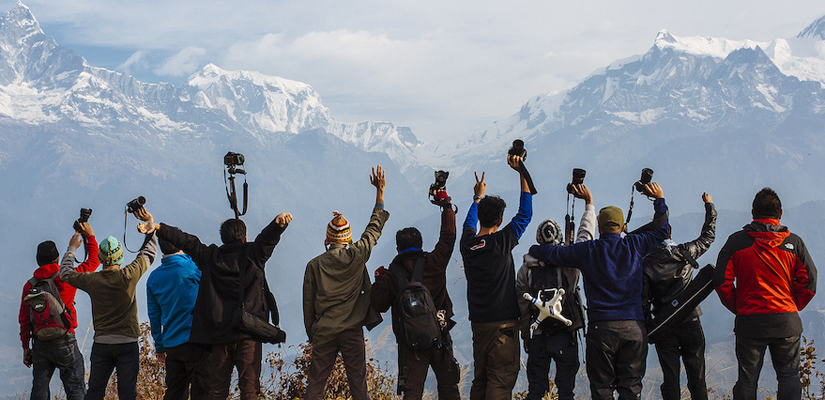
The escalating military tensions in the Middle East have begun to cast a visible shadow over Nepal’s tourism sector, with one of the country’s key destinations, Sauraha in Chitwan, witnessing a sharp drop in tourist arrivals. Industry stakeholders report that rising airfare costs and concerns over travel safety have forced many international visitors to cancel their trips, disrupting what is typically the peak tourist season.
Tourism entrepreneurs in Sauraha say that visitors from countries other than India, China, and Australia have significantly reduced, with many cancelling bookings altogether. In previous years, hotels in the region would operate at around 80 percent occupancy during this time. However, this season, occupancy has dropped drastically to nearly 20 percent, reflecting the severity of the downturn. The sector, which had already been affected by election-related disruptions, is now facing compounded challenges due to global geopolitical instability.
According to Om Prakash Pandey, President of the Regional Hotel Association Chitwan, February through April is considered the prime tourist season for Sauraha, when wildlife visibility is at its best due to dry forest conditions. Despite this natural advantage, the current crisis has deterred travelers. He noted that even tourists from countries not directly involved in the conflict have cancelled their bookings, indicating that the perception of global travel risk has widened beyond the immediate conflict zones.
The impact is not limited to foreign tourists. Vice President of the association, Gunaraj Thapaliya, pointed out that domestic tourism has also slowed. Rising costs, combined with concerns for relatives living in conflict-affected regions, have dampened the travel appetite among Nepalis. Additionally, the sharp increase in airfares has made travel less accessible, further discouraging both domestic and international visitors.
Hotel operators have reported significant booking cancellations. Tourism entrepreneur Suman Ghimire stated that around 50 percent of reservations in his hotel have been cancelled, particularly by tourists from Europe, the United Kingdom, the United States, and Germany. While some bookings for the later months of October and November remain intact, the immediate season appears unlikely to recover unless the geopolitical situation stabilizes quickly.
Similarly, Prakash Neupane, General Manager of Banbas Resort, emphasized that disruptions in international flight routes—especially those relying on Middle Eastern transit hubs—have had a direct impact on tourist inflows. With several flights affected or rerouted, accessibility to Nepal has become more complicated, discouraging travel plans. He described the situation as a significant setback for the country’s hospitality industry.
Tourism entrepreneur Santosh Giri echoed similar concerns, stating that the closure or disruption of key transit airports used by travelers heading to Nepal has forced many to cancel their trips. The broader uncertainty created by the conflict has reduced the willingness of tourists to travel for leisure, particularly to long-haul destinations.
The economic implications of this downturn are substantial. Sauraha alone hosts 148 hotels with a capacity to accommodate around 7,200 tourists. The sector provides direct employment to approximately 6,400 individuals, with over 12,000 more benefiting indirectly. A prolonged decline in tourist arrivals could therefore have serious consequences for livelihoods in the region.
Sauraha, known for its proximity to Chitwan National Park, offers unique attractions such as sightings of rare one-horned rhinoceroses, Bengal tigers, and gharial crocodiles, along with rich birdlife. The area also showcases the indigenous Tharu culture, which has long been a key attraction for both domestic and international visitors. In addition, the region regularly hosts institutional events and even destination weddings, particularly for Indian tourists.
However, the current crisis highlights the vulnerability of Nepal’s tourism sector to global events beyond its control. From political instability at home to geopolitical tensions abroad, the industry remains highly sensitive to external shocks. As the peak season slips away under the shadow of conflict, stakeholders are left hoping for a swift resolution that could restore confidence and revive tourist inflows in the months ahead.