By Dipesh Ghimire
Anti-Money Laundering Push Seen as Key to Nepal’s Exit from Grey List

Kathmandu — Nepal’s renewed focus on tackling money laundering is increasingly being viewed as a decisive factor in its potential removal from the international “grey list,” a status that signals heightened monitoring of a country’s financial system. Policymakers and analysts alike suggest that effective enforcement of anti-money laundering (AML) measures could significantly improve Nepal’s global financial standing and restore investor confidence.
At its core, money laundering refers to the process of converting income generated through illegal or criminal activities into seemingly legitimate assets. According to international standards set by the Financial Action Task Force, it involves disguising the origin, ownership, or destination of illicit funds to integrate them into the formal economy. This practice not only distorts financial systems but also undermines governance, tax compliance, and economic transparency.
Experts explain that the process of money laundering typically unfolds in three stages. The first stage, often called placement, involves depositing illicit funds into banks or financial institutions, sometimes by breaking large sums into smaller transactions to avoid detection. The second stage, layering, is more complex, where the origin of the funds is obscured through multiple transactions such as share trading, cross-border transfers, or fictitious payments. The final stage, integration, brings the funds back into the economy through investments in real estate, businesses, or other assets, making the money appear legitimate.
Nepal’s inclusion on the grey list reflects concerns that its financial and regulatory systems have not been sufficiently robust in preventing such activities. Being on this list does not impose direct sanctions but places the country under increased scrutiny by international financial institutions. This can lead to higher transaction costs, stricter due diligence requirements, and potential hesitancy among foreign investors and partners.
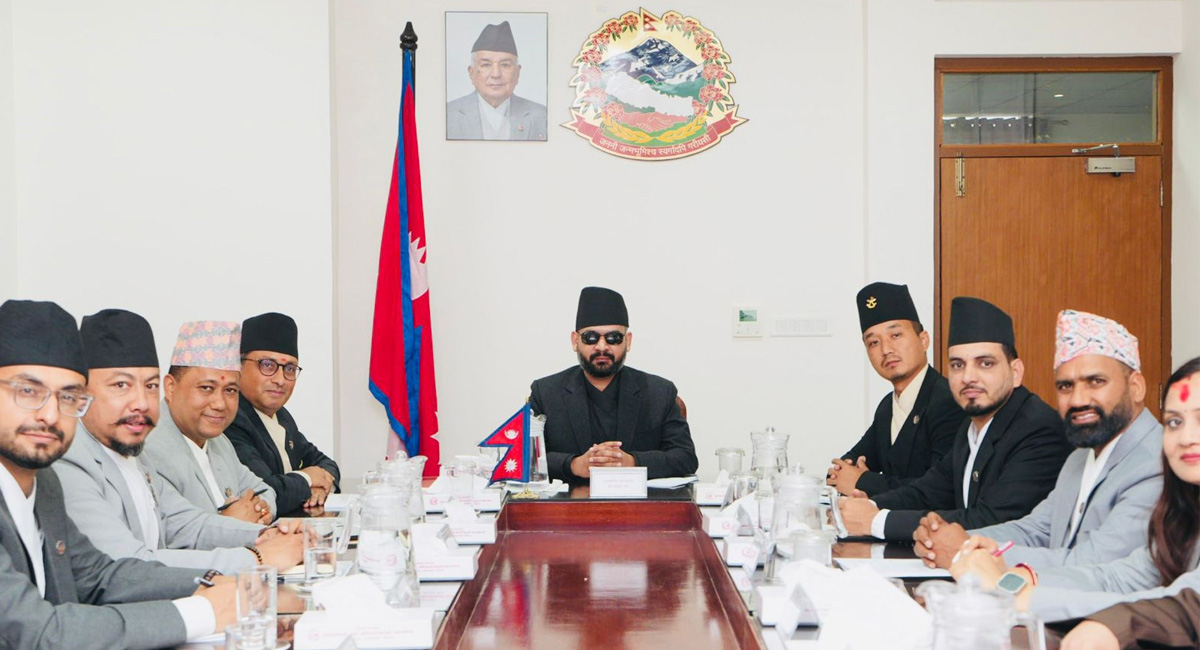
Authorities in Nepal have acknowledged both internal and external challenges in addressing money laundering. Weak institutional coordination, limited enforcement capacity, and gaps in regulatory compliance have historically hindered progress. Officials from the Department of Money Laundering Investigation emphasize that strengthening regulatory bodies, improving inter-agency collaboration, and enhancing monitoring mechanisms are essential to overcoming these challenges.
The role of banks and financial institutions is particularly critical in this effort. Financial experts note that many laundering activities rely on formal banking channels to legitimize illicit funds. Therefore, stricter compliance measures, enhanced customer due diligence, and real-time monitoring of suspicious transactions are necessary to detect and prevent such activities. A more vigilant financial sector could act as the first line of defense against financial crimes.
Nepal has already established a legal framework to combat money laundering, including the Money Laundering Prevention Act, 2008, and several related laws addressing organized crime, asset seizure, and mutual legal assistance. However, implementation has remained uneven, with enforcement gaps often limiting the effectiveness of these laws. Strengthening execution, rather than merely expanding legislation, is now seen as the immediate priority.
From a broader economic perspective, unchecked money laundering poses serious risks. It discourages law-abiding businesses, increases systemic financial risks, and complicates the formulation of sound economic policies. Moreover, it can erode public trust in financial institutions and weaken the overall investment climate.
The implications of exiting the grey list are equally significant. Improved compliance with international AML standards would not only enhance Nepal’s credibility but also facilitate smoother cross-border financial transactions and attract foreign investment. Conversely, failure to act decisively could risk escalation to more severe classifications, such as blacklisting, which would have far-reaching consequences for the country’s financial and economic integration.
In this context, Nepal’s intensified focus on AML reforms signals a strategic attempt to align with global financial norms. If backed by consistent enforcement, institutional accountability, and technological integration, these efforts could mark a turning point in strengthening the country’s financial integrity and unlocking new economic opportunities.