By Dipesh Ghimire
Economic Uncertainty, Global Conflict, and Policy Pressure Put Nepal’s New Finance Leadership to the Test
Kathmandu — Nepal’s economic landscape is entering a critical phase where restoring confidence among businesses, farmers, entrepreneurs, and the general public has become an urgent priority. Amid slowing economic activity and subdued investment sentiment, policymakers are increasingly under pressure to create an environment where citizens can see viable opportunities within the country rather than looking abroad for stability and growth.
The challenge has intensified for Finance Minister Swarnim Wagle, who faces a compressed timeline to deliver results. With the national budget scheduled for announcement on Jestha 15, expectations are high for a policy framework that not only addresses immediate economic concerns but also lays the groundwork for long-term structural transformation. However, the broader global context—particularly escalating conflicts in the Middle East—has introduced additional layers of complexity that could directly impact Nepal’s fragile economic recovery.
Rising geopolitical tensions, especially involving key oil-producing regions, have already begun to influence global energy markets. Disruptions in critical supply routes such as the Strait of Hormuz have heightened risks in oil transportation, pushing petroleum prices upward. For a country like Nepal, which is heavily dependent on imported fuel, this translates into increased transportation costs, higher production expenses, and ultimately, inflationary pressure across essential commodities including food, construction materials, and daily consumer goods.
The inflationary outlook appears particularly concerning. As energy costs rise globally, the ripple effects are expected to cascade through supply chains, affecting everything from agricultural inputs to industrial production. Economists warn that sustained price increases could erode purchasing power, dampen consumption, and further slow economic momentum. In such a scenario, maintaining macroeconomic stability while protecting vulnerable populations becomes a delicate balancing act for policymakers.
Another major area of concern lies in Nepal’s dependence on remittances, a cornerstone of its economy. With nearly 1.7 million Nepali workers employed in Middle Eastern countries, prolonged conflict in the region poses significant risks to both employment and income flows. Remittances, which contribute roughly 25–30 percent of Nepal’s GDP, could face disruptions if geopolitical instability leads to job losses or forced repatriation of workers. Although recent data shows a strong inflow—over Rs 10.62 trillion in the first half of the fiscal year, marking a 39.1 percent increase—this trend may not be sustainable under prolonged external shocks.
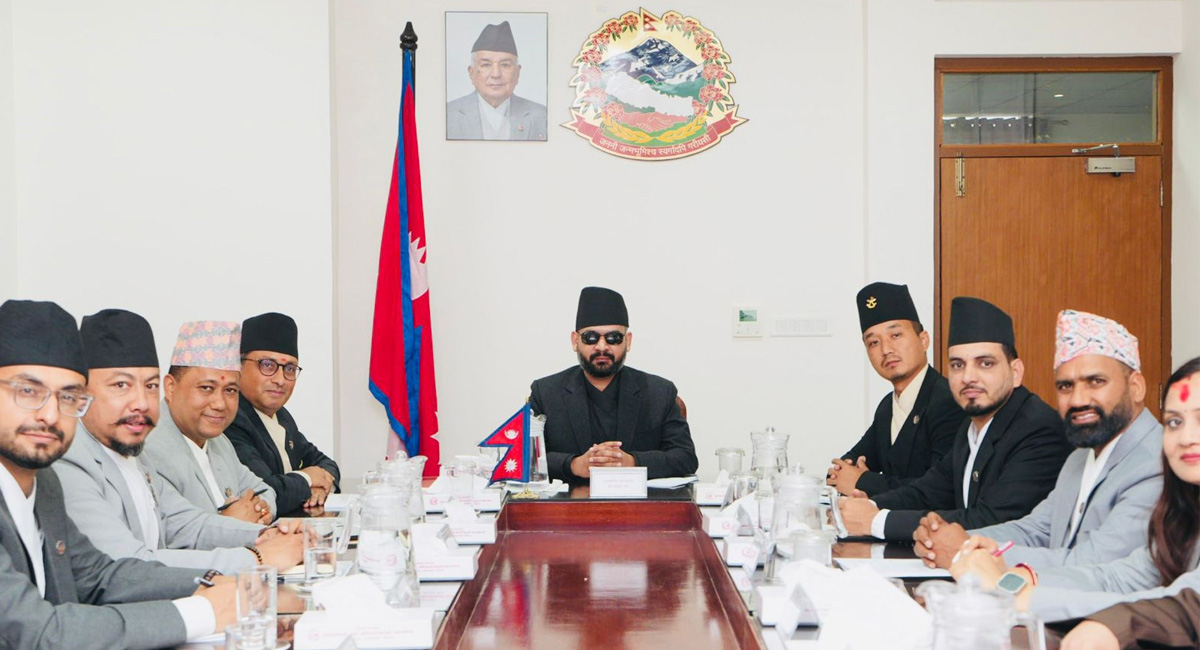
The government has acknowledged these risks and proposed forming a high-level inter-ministerial task force to assess and respond to the evolving situation. Coordinated by the Ministry of Foreign Affairs, the task force will include representatives from key ministries such as finance, labor, industry, and energy. Its mandate is to deliver short-, medium-, and long-term policy recommendations aimed at mitigating the economic, social, and employment-related impacts of global crises. The emphasis on rapid assessment and coordinated action reflects a growing recognition of the interconnected nature of global and domestic economic challenges.
Domestically, the government is also under pressure to fulfill ambitious commitments outlined in its political manifesto. Among the most sensitive issues is the promise to return funds to victims of cooperative financial institutions within 100 days of forming the government. With tens of thousands of affected depositors and financial liabilities potentially reaching billions of rupees, the implementation of such a plan presents both fiscal and administrative challenges. While proposals such as a revolving fund to compensate small depositors have been discussed, questions remain about sustainability and scalability.
Structural reforms outlined in the policy agenda further highlight the government’s intent to reshape the economy. These include improving the business environment by eliminating outdated laws, promoting innovation and entrepreneurship, and introducing a one-stop service center to streamline investment processes. There is also a proposal to bring large cooperatives and microfinance institutions under stricter supervision by the central bank, aiming to address regulatory gaps and restore trust in non-banking financial sectors.
At the same time, debates around monetary policy—such as revisiting the long-standing exchange rate peg with the Indian rupee—signal a willingness to rethink foundational aspects of Nepal’s economic framework. While such changes could offer new opportunities, they also carry risks that require careful analysis and international consultation.
Ultimately, the underlying theme across all these developments is the need to rebuild confidence. Business leaders and economists stress that without trust—both in policy direction and institutional capacity—economic recovery will remain elusive. Increasing capital expenditure, ensuring timely tax refunds such as VAT credits, expanding energy consumption, and facilitating credit flow into productive sectors are seen as immediate steps that could help revive economic activity.
In a period marked by both domestic expectations and external uncertainties, Nepal’s economic trajectory will depend largely on the government’s ability to translate policy intent into effective action. The coming months, particularly with the budget announcement on the horizon, are likely to be decisive in determining whether the country can navigate these challenges and set itself on a path toward sustainable growth.