By Dipesh Ghimire
Nepal Stock Exchange Needs Restructuring for Competitiveness and Growth

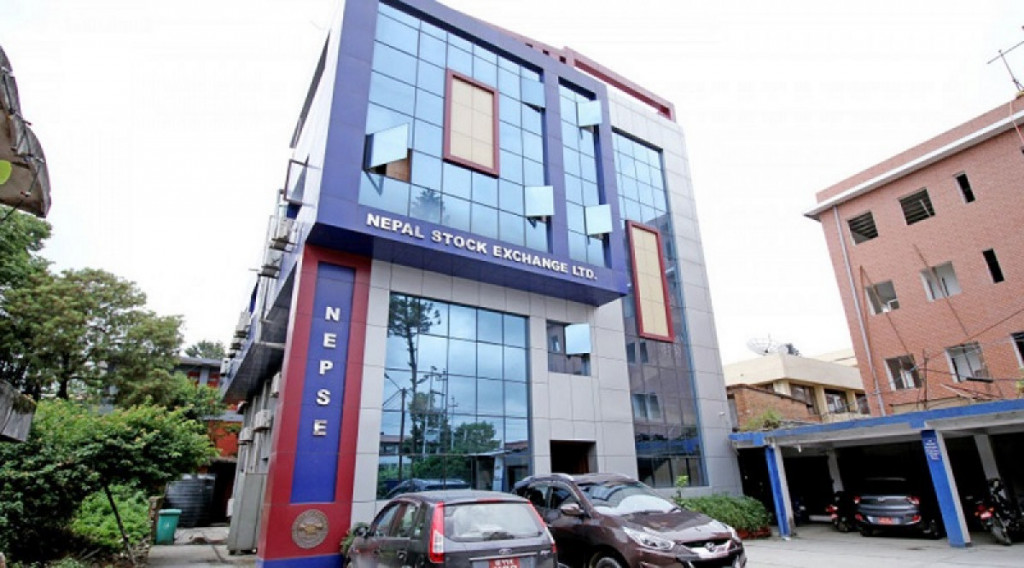
The need to restructure Nepal Stock Exchange (NEPSE) for enhanced competitiveness has been a topic of discussion for decades. Several government reports over the years have pointed out the necessity of restructuring NEPSE to make it more business-oriented and competitive. A recent government budget presentation has reiterated this goal by including plans for NEPSE's restructuring.
As part of this initiative, the government formed a committee under the leadership of Prakash Jung Thapa in 2022, tasked with studying and proposing recommendations for NEPSE's restructuring. The committee’s report focused on key areas such as capital increase, changes to the ownership structure, inclusion of strategic partners, and modifications to the board of directors. These proposals aim to transform NEPSE into a more efficient and competitive exchange.
Global Perspectives on Stock Exchange Ownership
The restructuring of stock exchanges globally has followed varied models. For instance, in Bangladesh, the Dhaka Stock Exchange transitioned into a corporate structure in 2013. This exchange is primarily owned by brokerage firms (74.57%), with minority stakes held by individual shareholders (0.43%) and strategic partners such as Shanghai and Shenzhen stock exchanges (13.75%).
In contrast, China’s Shanghai and Shenzhen exchanges remain fully government-owned. Similarly, the Hong Kong Stock Exchange became a corporate entity in 2000, with full ownership held by the Hong Kong Exchange Group, which itself is listed on the exchange.
Other countries such as India, Indonesia, and Malaysia have also adopted corporate models for their exchanges, with varying ownership structures involving a mix of institutional and individual investors, and strategic international partnerships. For example, the Bombay Stock Exchange (BSE) in India transitioned into a corporate model in 2007, with the largest shareholding held by public investors (48.80%), followed by foreign portfolio investors (16.80%).
Technological Advancements in Global Stock Exchanges
A key factor in the success of modern stock exchanges has been the adoption of advanced trading technologies. Leading exchanges around the world have invested heavily in automated trading systems and mobile-based platforms to provide investors with faster, transparent, and secure trading experiences.
In Bangladesh, the Dhaka Stock Exchange implemented the Nasdaq X-Stream iNet matching engine in 2018, which can efficiently handle large order volumes and complex order types. This platform also uses a monitoring technology called "SMARTS" developed by Nasdaq to track market abuses.
In China, the Shanghai Stock Exchange uses the Next Generation Trading System (NGTS), which supports millions of transactions per second. This system is integrated with AI-based data monitoring that tracks every account in real-time.
Hong Kong's Stock Exchange, after replacing its older systems, developed the Orion Trading Platform, connecting with other exchanges like Shanghai and Shenzhen. The Indian National Stock Exchange (NSE) uses the National Exchange for Automated Trading (NEAT) system, which has automated much of the trading process.
Similarly, Pakistan's Stock Exchange adopted the Z-Trade system in 2023 to monitor insider trading and fraud. Sri Lanka has fully digitized its operations and introduced an e-KYC system for account opening via mobile phones.
The Case for NEPSE's Modernization
Nepal's capital market has long struggled with a lack of competition and limited capital inflows. The government's focus on restructuring NEPSE is an attempt to address these issues by modernizing its infrastructure and aligning it with global standards. This move is essential for attracting foreign investment, enhancing market liquidity, and creating a more dynamic financial ecosystem.
To ensure success, NEPSE must look at the technological innovations of exchanges like those in Bangladesh, China, and Hong Kong. The implementation of state-of-the-art automated trading platforms, as well as integrating mobile and online trading systems, would significantly enhance the trading experience for Nepali investors.
Furthermore, adopting a more flexible ownership structure with both public and strategic private partnerships will help inject much-needed capital and bring in expertise that can drive growth. Just as India’s NSE and BSE have shown, diversifying ownership and bringing in international strategic partners could provide NEPSE with the boost it needs to thrive in the competitive global market.
For Nepal’s stock exchange to become competitive and cater to the growing demands of investors, it must embrace the global best practices in terms of ownership models, technological advancements, and market transparency. The restructuring efforts outlined in the government’s budget, combined with technological modernization, will provide NEPSE with the tools necessary to compete effectively in the global financial market. The time has come for Nepal to take bold steps towards creating a robust and dynamic capital market that can contribute to the country's economic growth.