By Dipesh Ghimire
NEPSE’s Decline Reflects a Deeper Shift: From Price Correction to Crisis of Confidence
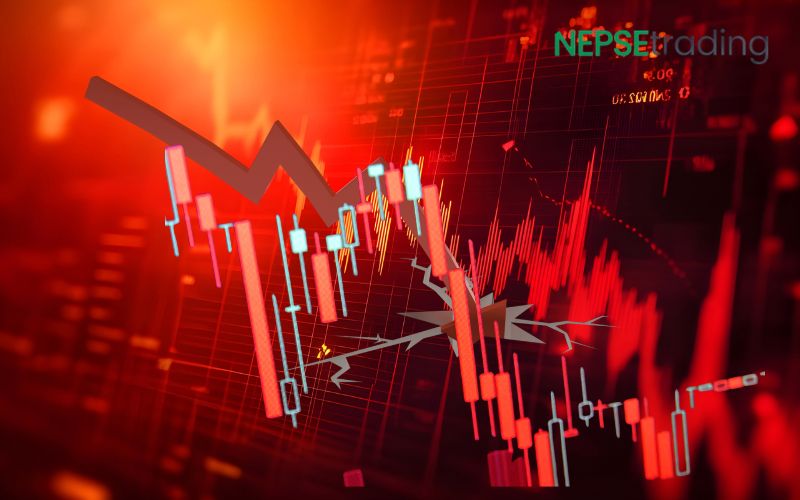
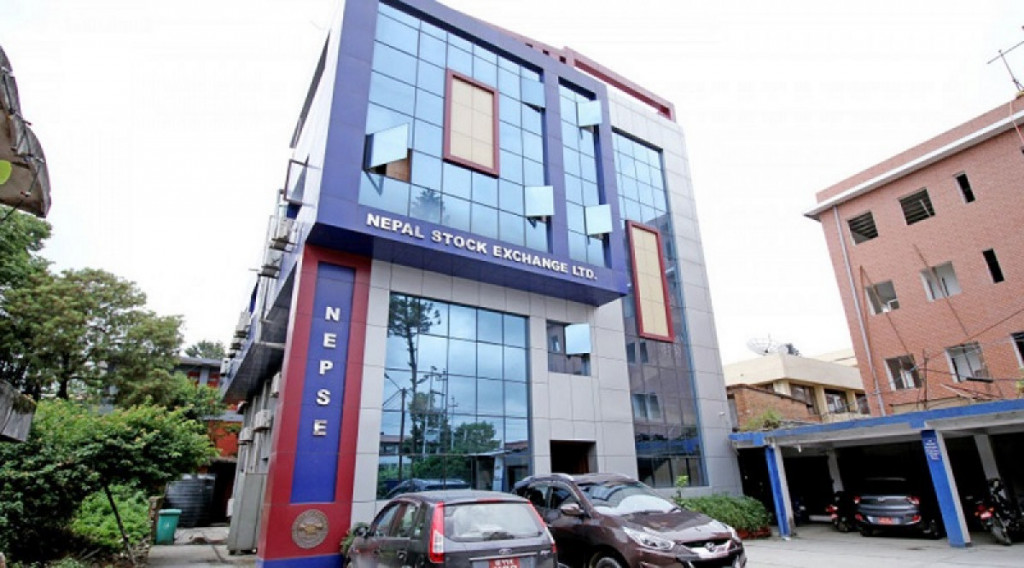
Kathmandu. The recent downturn in Nepal’s stock market is no longer just a story of falling numbers—it is increasingly becoming a reflection of shifting investor psychology. While the NEPSE index has been under pressure for several sessions, the underlying driver appears to be more complex than routine market correction. The ongoing wave of investigations, policy tightening, and governance actions has introduced a new layer of uncertainty, reshaping how investors perceive the market.
At first glance, the current developments should have strengthened confidence. A new government taking office, initiating accountability measures, and accelerating investigations into financial irregularities typically signals a move toward transparency and institutional strength. In theory, such actions should reassure investors that the system is becoming cleaner and more reliable. However, the market’s reaction suggests otherwise.
Instead of confidence, fear has dominated sentiment. A key psychological shift is now visible among investors, who are increasingly questioning the very foundation of the market. The central concern being quietly raised is whether past market movements were driven by genuine capital flows or influenced by undisclosed financial practices. This emerging skepticism has proven to be more powerful than any positive policy signal, as it directly challenges trust—the core pillar of any financial market.
The recent behavior of the market supports this interpretation. The sharp decline, accompanied by sustained trading activity, indicates that investors are not withdrawing due to lack of interest but are actively repositioning in response to perceived risk. This type of movement is often associated with a transition phase, where confidence weakens before a new equilibrium is established. In such periods, even fundamentally strong signals can fail to trigger a recovery if psychological assurance is missing.
From a structural standpoint, the market appears to be undergoing a trust reset. Analysts argue that stock markets are not purely governed by financial metrics or technical indicators; they are driven largely by collective belief in fairness, transparency, and sustainability. When this belief is shaken, price movements tend to amplify, as seen in the current scenario. The NEPSE’s recent decline, therefore, is not just a technical breakdown—it is a reflection of this deeper erosion of confidence.
Yet, there is another dimension to this development. While the short-term impact has been negative, the long-term implications could be constructive. If the ongoing investigations lead to greater transparency, stricter enforcement, and improved governance standards, the market may eventually emerge stronger. Such phases of correction often act as a cleansing mechanism, removing distortions and laying the groundwork for more sustainable growth.
The key question, however, lies with the investors themselves. The market now stands at a crossroads—between a system driven by speculative, fast-moving capital and one built on transparency and long-term value. The direction it takes will depend on whether participants are willing to adapt to a more disciplined environment or continue to chase short-term gains despite heightened risks.
In conclusion, the current phase of the NEPSE represents more than a cyclical downturn. It marks a psychological turning point where trust, rather than liquidity or valuation, has become the defining factor. Until investors regain clarity and confidence in the system’s fairness, any recovery is likely to remain superficial. A deeper, more sustainable rebound will require not just policy assurance, but visible proof that the market operates on transparent and equitable foundations.